In a large facility, the ventilation system is out of sight and easily forgotten, until airflow drops, energy bills climb or the air turns stuffy. Ducts, coils and air handling units quietly fill with dust, grease and debris that hurt both health and efficiency. Industrial HVAC cleaning tackles the problem at the source. Here is what it involves, how it is done and why it pays off.
Key takeaways
- Dirty HVAC ducts and coils harm air quality, waste energy and shorten equipment life.
- Cleaning covers ducts, coils, dampers, fans, filters, grilles and air handling units.
- Professionals follow source-removal methods with HEPA vacuums, brushes and inspection.
- Clean systems run more efficiently, cut energy bills and reduce breakdowns.
- In food and pharma facilities, clean air is a compliance requirement, not an option.
Why HVAC and duct cleaning matters in large facilities
In factories, warehouses and large commercial buildings, the ventilation system moves huge volumes of air every day. Over time, ducts and coils fill with dust, debris, grease and even mould. That build-up degrades indoor air quality, chokes airflow, forces the system to work harder and can spread contaminants across the whole site.
Cleaning the HVAC system is therefore both a health and an efficiency measure. It is a specialised field within industrial cleaning , detailed alongside other methods in our complete guide to industrial cleaning .
What gets cleaned in an HVAC system
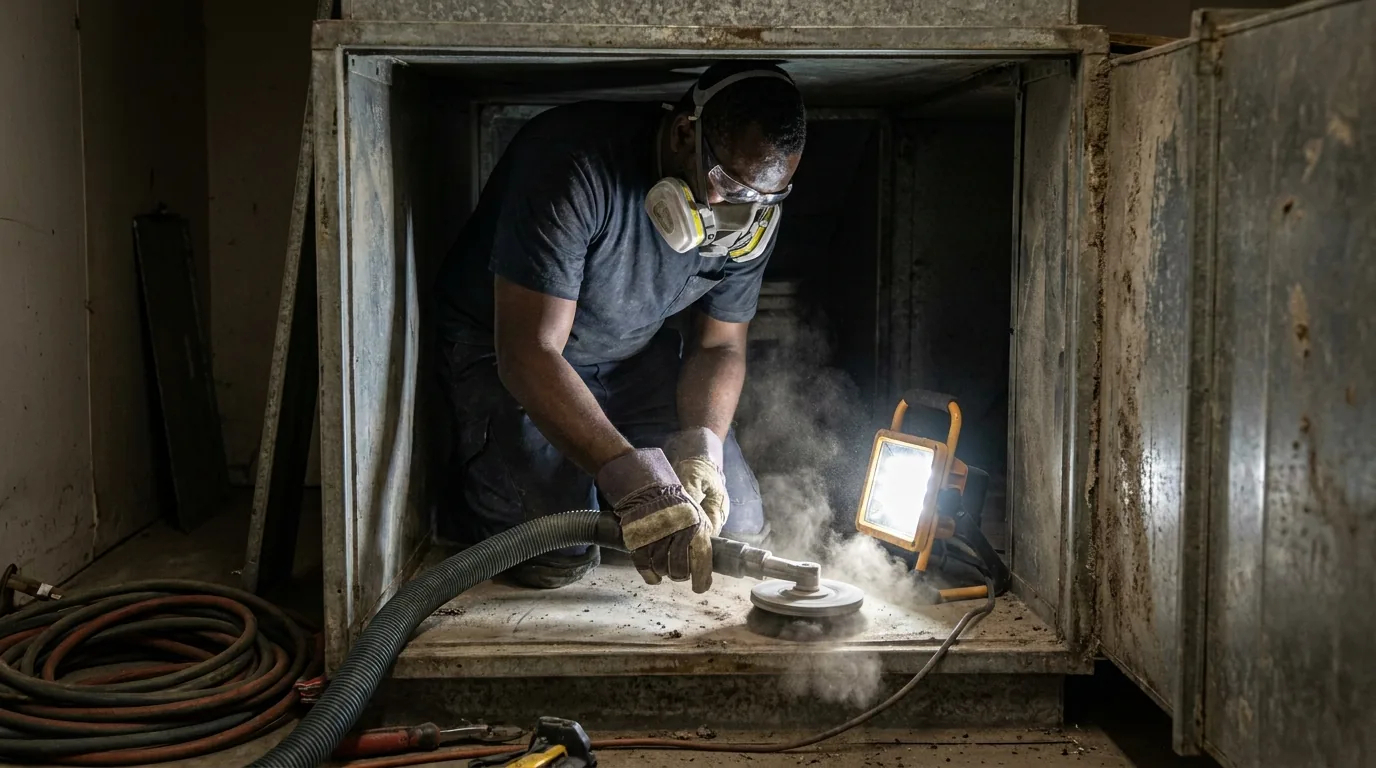
Source removal means contaminants are physically extracted from the ducts, not just stirred up.
A full HVAC clean addresses every part where air travels and dirt collects:
-
Ductwork: supply and return ducts where dust and debris accumulate.
-
Coils: heating and cooling coils that lose efficiency when clogged.
-
Fans and blowers: moving parts that wear faster when dirty.
-
Dampers and grilles: airflow controls and vents.
-
Filters: cleaned or replaced to protect the whole system.
-
Air handling units (AHUs): the heart of the system, including drain pans.
Skipping any of these leaves a weak link that recontaminates the clean parts.
Methods and standards
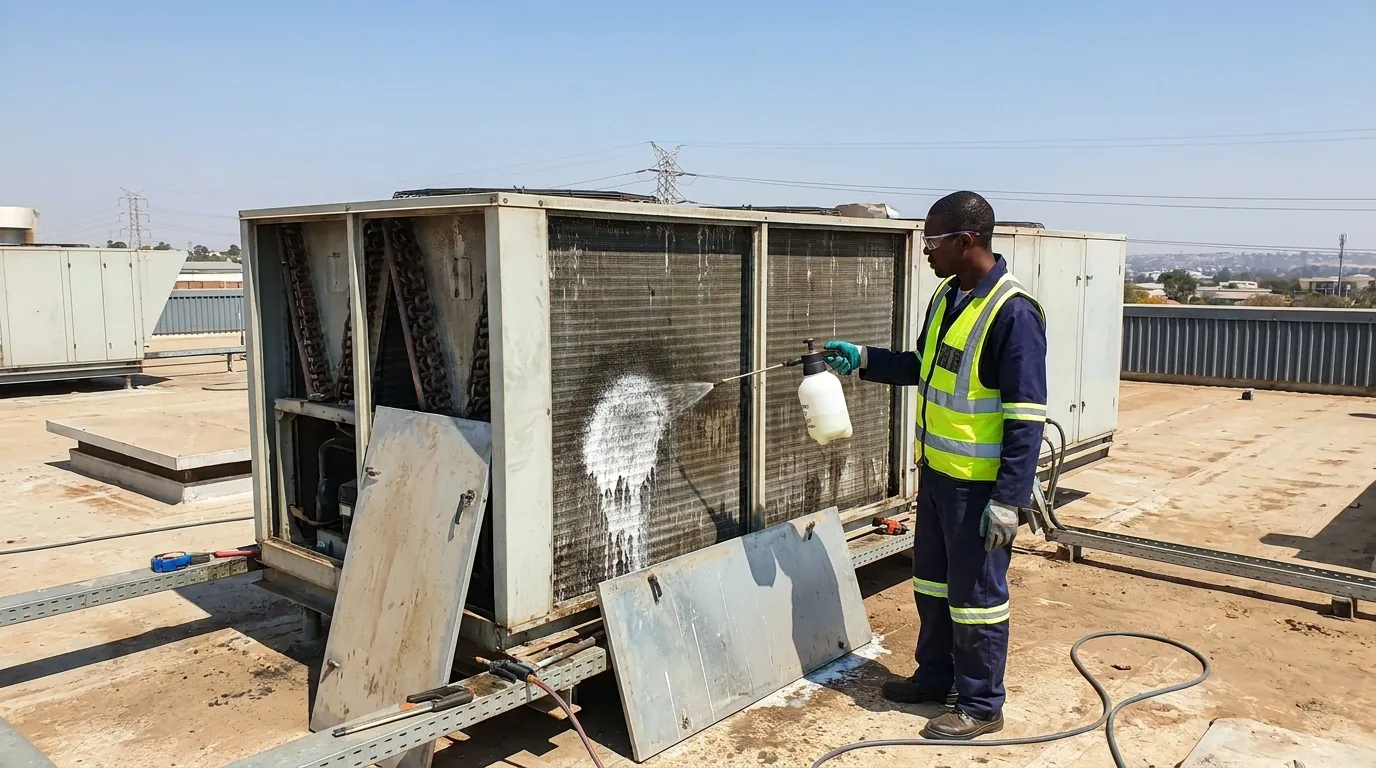
Cleaning coils and air handling units restores airflow and energy efficiency.
Professional HVAC cleaning follows recognised standards, notably the NADCA ACR standard for assessing, cleaning and restoring HVAC systems. The core principles are:
-
Inspection first: assess the system before cleaning to target the real problems.
-
Source removal: physically remove contaminants rather than pushing them elsewhere.
-
HEPA vacuums, brushes and agitation: dislodge and capture dust safely.
-
Post-clean verification: confirm the system is genuinely clean.
The same source-removal logic underpins hygiene-critical cleaning in our articles on food industry cleaning (HACCP) and pharmaceutical plant cleaning (GMP) , where air quality is tightly controlled.
The benefits for your facility
HVAC cleaning pays for itself in several ways:
| Benefit |
How it works |
| Lower energy bills |
Clean coils and ducts reduce resistance and run cost |
| Better air quality |
Less dust, mould and contaminants in the air |
| Fewer breakdowns |
Cleaner fans, motors and coils last longer |
| Stable airflow |
No hot and cold spots, better comfort and control |
Studies on large buildings have shown significant annual energy savings from thorough HVAC cleaning, on top of the health and reliability gains. In a hot climate, where cooling runs hard, those savings add up fast.
Choosing a provider and setting a schedule
HVAC cleaning is technical work best left to trained specialists. Look for:
-
Recognised standards and training (such as NADCA-based methods).
-
Proper equipment: HEPA vacuums, duct brushes, inspection cameras.
-
Experience in large industrial and commercial systems, with references.
-
Inspection and reporting before and after the job.
Frequency depends on the environment: dusty or greasy facilities need more frequent cleaning, while cleaner sites can extend intervals. A provider can recommend a schedule after inspection, much like the wider programmes described in our guide to factory cleaning services .
Frequently asked questions
Why is industrial HVAC cleaning important?
Dust and debris in ducts and coils reduce air quality, restrict airflow, waste energy and cause breakdowns. Cleaning restores efficiency, protects health and extends the life of the system.
How is HVAC ductwork cleaned?
Professionals inspect the system, then use HEPA vacuums, brushes and agitation to physically remove contaminants (source removal), rather than pushing them further into the ducts. The work is verified afterwards.
Does HVAC cleaning really save energy?
Yes. Clean coils and ducts let air flow with less resistance, so the system uses less energy for the same output. In large, cooling-heavy facilities the savings can be substantial.
How often should HVAC systems be cleaned?
It depends on the environment. Dusty or greasy facilities need more frequent cleaning; cleaner sites can wait longer. A professional inspection sets the right interval for your building.
Is HVAC cleaning required for food or pharma sites?
In hygiene-critical environments, clean air is part of compliance (HACCP, GMP). Regular, documented HVAC cleaning helps meet these standards and avoid contamination.