Key takeaways
- Industrial cleaning is far broader than office cleaning: it covers tanks, pipelines, heat exchangers, cleanrooms, food lines and production halls, with dedicated equipment and trained crews.
- Five method families coexist: mechanical, high-pressure water, chemical, dry ice or abrasive blasting, and biological. Each fits a specific risk profile and asset type.
- Food, pharma, oil and gas, power generation, automotive and manufacturing each have their own standards (HACCP, GMP, API, ISO 14644) that shape the way cleaning is specified and audited.
- Picking the right provider depends on three pillars: certifications and HSE record, sectoral experience, and capacity to deliver a documented, validated cleaning protocol.
What industrial cleaning services really cover
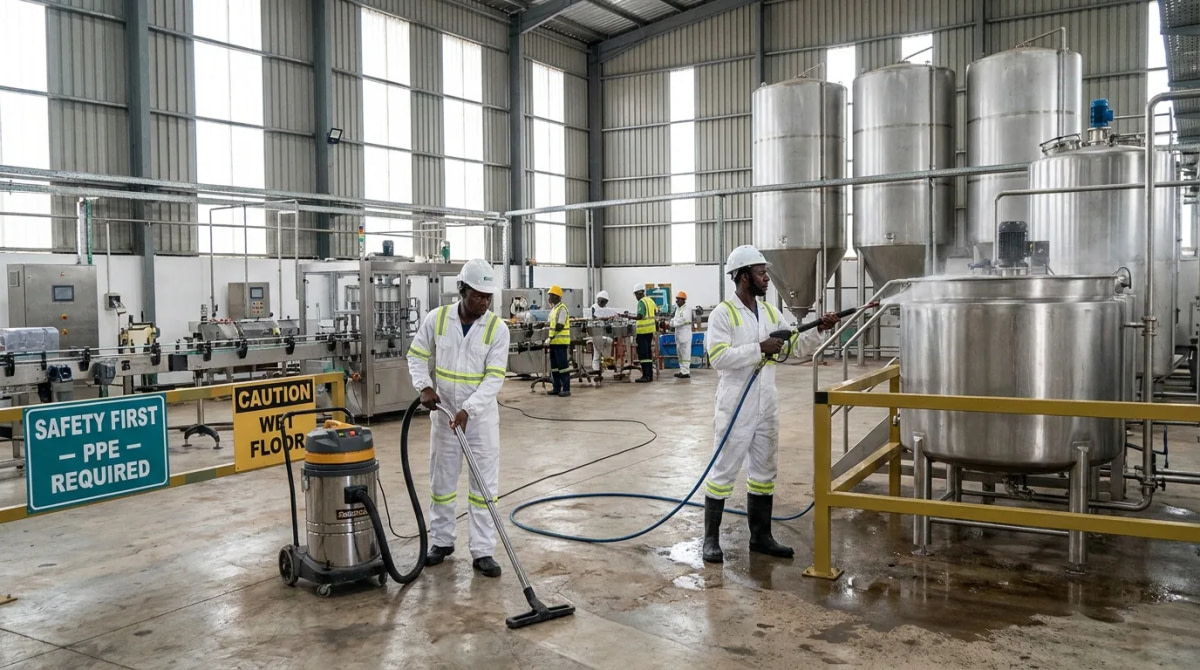
Industrial cleaning is not a single trade. It is an umbrella that bundles all the cleaning, decontamination and surface preparation activities performed inside a production environment, from a beverage plant in Lagos to an oil terminal in Tema or a pharmaceutical lab in Nairobi. The defining traits are the technical complexity of the assets to be cleaned (stainless steel tanks, multi-circuit piping, ATEX zones, cleanrooms) and the strict compliance framework around the operation.
A serious industrial cleaning company offers far more than a vacuum cleaner and a hose. Typical service catalogues include CIP and SIP support, manual disassembly cleaning, hydroblasting of heat exchangers, chemical degreasing of process equipment, sandblasting before painting, cleanroom decontamination, sludge removal from storage tanks and emergency response after a spill. Many of these specialised activities are detailed in dedicated articles linked further down.
Sectors served and why their requirements differ
Food and beverage processing
Food plants are governed by HACCP, ISO 22000 and local food safety authorities (NAFDAC in Nigeria, FDA in Ghana, KEBS in Kenya). Cleaning must remove organic residues, prevent cross-contamination, control allergens and pass swab or ATP tests. The full requirements are covered in our dedicated piece on industrial cleaning in the food industry .
Pharmaceutical and life sciences
Pharma sites add a layer of GMP and cleanroom standards (ISO 14644). Every cleaning protocol must be validated, every chemical traced, and every operator trained to gowning procedures. Our specialised guide on pharmaceutical cleaning services details GMP validation, MAC calculation and swab versus rinse testing.
Oil and gas, petrochemicals
Refineries, depots and chemical plants combine hazardous atmospheres, high-temperature equipment and large storage volumes. Hydroblasting, chemical descaling and confined-space entry are the daily routine. Cuves and confined spaces require their own protocols, covered in industrial tank cleaning services .
Manufacturing, automotive and electronics
These sectors mix mechanical cleaning of conveyors and presses with surface preparation before painting or coating. Dry ice blasting and abrasive methods are particularly common - see dry ice blasting versus abrasive cleaning for the comparison.
Power generation, water and infrastructure
Heat exchangers, boilers, cooling towers and turbines require high-pressure water cleaning to maintain thermal efficiency. The full method library is described in industrial hydroblasting services .
Whatever the sector, sourcing the right partner is a strategic step that should be matched to the specific risks, standards and tempo of your industry, with a clear preference for providers who can produce sectoral references and documented protocols on demand.
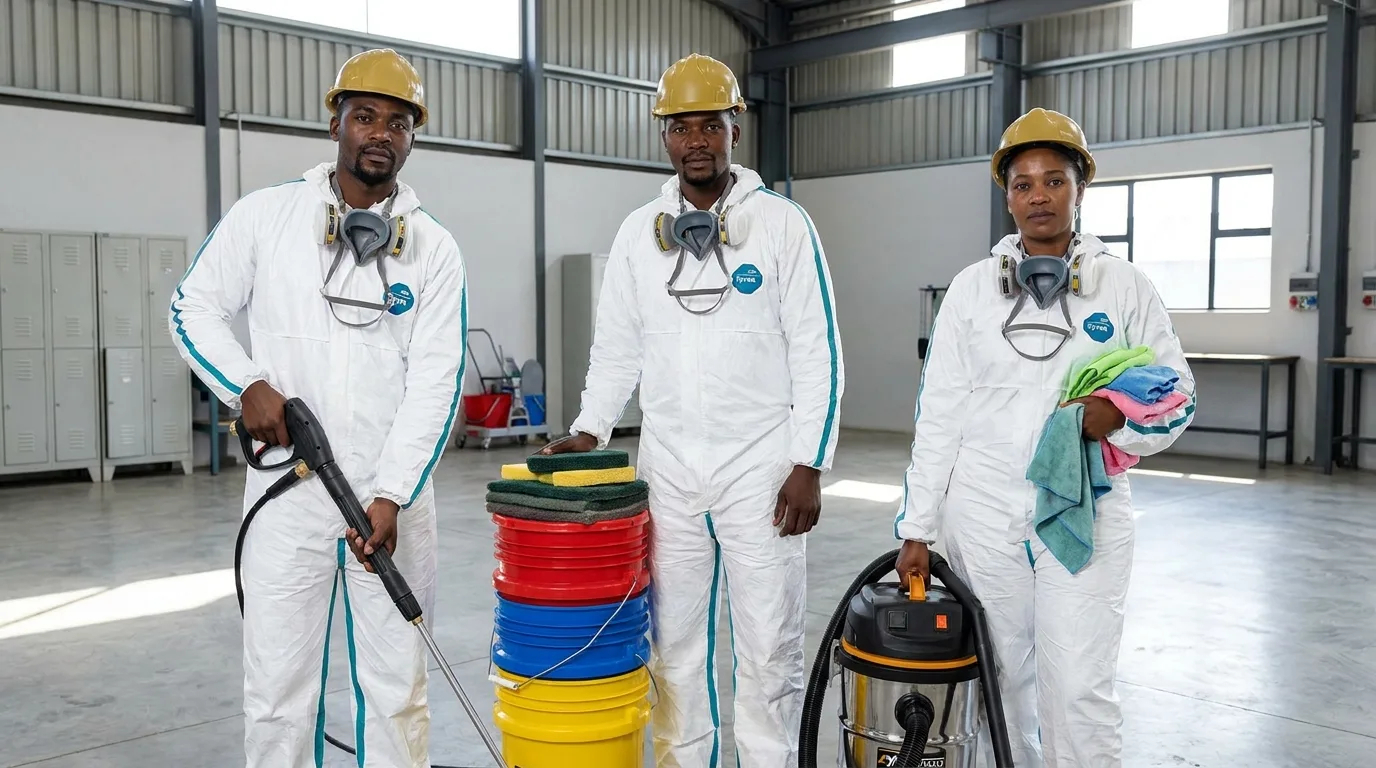
A professional industrial cleaning team operates with documented methods, calibrated equipment and certified PPE.
The five main families of industrial cleaning methods
Mechanical cleaning
Manual scrubbing, scraping, vacuuming, brushing and the use of small mechanical tools (rotary scrubbers, sweepers, polishers) remain the backbone of routine industrial cleaning. They are inexpensive, low-risk and suit floors, walls, exterior surfaces of machinery and non-critical equipment.
High-pressure water cleaning and hydroblasting
Water jets between 200 and 2,800 bar dislodge scale, polymer build-up and coatings from heat exchangers, reactors and pipelines. Ultra-high-pressure (UHP) is reserved for the toughest deposits and requires certified operators because of the kinetic energy involved.
Chemical cleaning
Acid, alkaline and solvent products dissolve organic, mineral or biological residues that physical methods cannot reach. CIP cleaning of process lines, passivation of stainless steel and degreasing of motor parts all fall under industrial chemical cleaning .
Dry ice blasting and abrasive blasting
These dry methods project pellets of solid CO2, garnet, soda or sand at high velocity to strip coatings, soot or grease without leaving secondary waste (in the case of dry ice) or with controlled abrasion. They are increasingly used for electrical cabinets, moulds, food-grade equipment and surface preparation before painting.
Biological and enzymatic cleaning
Enzyme-based products and bioremediation techniques target organic build-up (grease traps, drain systems, wastewater plants) with a much lower environmental footprint than aggressive chemicals. They form a key pillar of the move toward sustainable industrial cleaning .
Equipment and technologies
The single biggest jump in productivity over the past decade has come from better equipment: pump units delivering 200 to 2,800 bar of water, robotic tank cleaning heads, dry ice blasters using rice-pellet CO2, automated CIP skids, robotic floor scrubbers and digital traceability of every cleaning cycle. Connected sensors now record water flow, chemical concentration, temperature and operator presence, producing an audit trail that satisfies the most demanding QHSE auditors.
| Method family |
Best fit |
Typical equipment |
Limitations |
| Mechanical |
Floors, walls, low-risk areas |
Scrubbers, vacuums, manual tools |
Limited on hardened deposits |
| High-pressure water |
Heat exchangers, tanks, pipelines |
Hydroblaster, lance, rotating nozzle |
Generates wastewater |
| Chemical |
Process lines, descaling, passivation |
CIP skid, dosing pumps, drums |
Hazardous handling, effluent control |
| Dry ice or abrasive |
Moulds, electrical equipment, paints |
Blaster, hopper, compressor |
High capex, noise |
| Biological / enzymatic |
Drains, grease traps, wastewater |
Dosing system, biofilters |
Slower action time |
Standards and compliance you cannot ignore
Industrial cleaning is increasingly framed by a stack of standards. ISO 9001 sets the quality management baseline, ISO 14001 the environmental management requirements and ISO 45001 the occupational health and safety expectations. Sector-specific standards add another layer: HACCP and ISO 22000 in food, GMP and ISO 14644 in pharma, API 510 and 653 for pressure vessels, SSPC and NACE for surface preparation. National HSE regulations (NESREA in Nigeria, EPA in Ghana, NEMA in Kenya) complete the picture.
The practical implication is that a credible provider must produce documented procedures (SOPs), validated chemical concentrations, training records, MSDS for every product, permits to work for confined spaces and reports linking each cleaning cycle to its operator and timing.
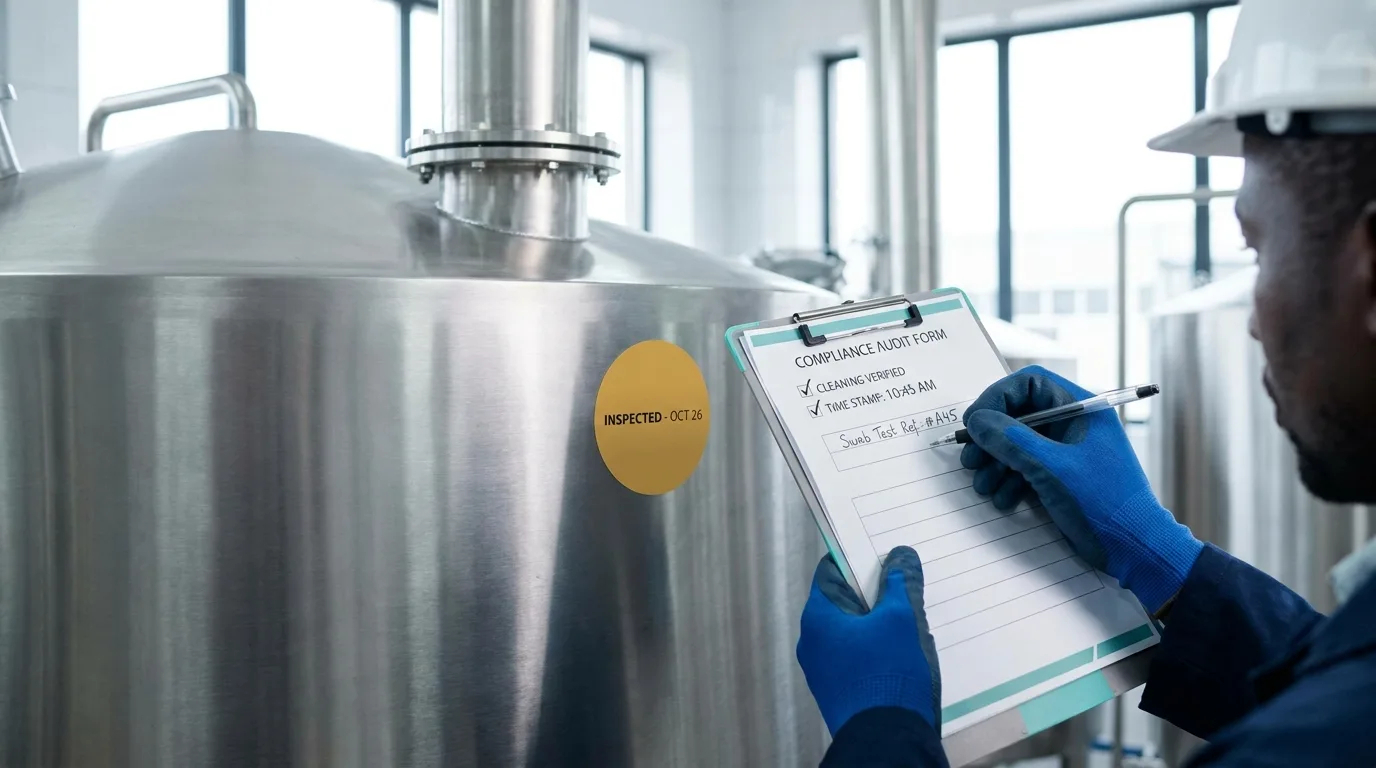
Compliance traceability is now expected by auditors in every regulated sector.
How to choose a qualified industrial cleaning provider
-
Certifications and HSE: ISO 9001/14001/45001 minimum, plus sector-specific certifications (HACCP, GMP, food handler, ATEX). Ask for the safety record and the LTIFR (Lost Time Injury Frequency Rate).
-
Sectoral experience: case studies in your industry, named references, willingness to put you in touch with existing clients.
-
Methodology and documentation: ability to produce a written cleaning protocol, validated chemical concentrations, sampling plans and post-mission reports.
-
Equipment fleet: own equipment versus rented, calibration certificates, age of the fleet, redundancy in case of breakdown.
-
Trained personnel: number of certified operators, internal training programs, language skills if you operate in a multinational environment.
-
Geographic coverage and emergency response: ability to mobilise crews within 24 to 72 hours across your sites.
-
Sustainability practices: green chemistry, water recycling, waste management. See sustainable industrial cleaning for the full ESG picture.
Pricing and contractual models
Industrial cleaning is sold through three main contract types. Time-and-materials contracts suit one-off interventions and emergencies. Fixed-price contracts work for recurring cleaning programmes with clear scope (daily plant cleaning, monthly tank cleaning). Performance-based contracts, increasingly common in food and pharma, link payment to measurable outcomes (swab test results, ATP scores, downtime targets).
Indicative pricing in Nigeria for 2026: routine production-floor cleaning runs at NGN 1,500 to 3,500 per square metre per month, a CIP intervention on a 10-tonne tank starts around NGN 800,000, and a full hydroblasting campaign on a heat exchanger bank can reach NGN 5 to 15 million depending on access and downtime constraints.
Sustainability and the future of industrial cleaning
Three trends are reshaping the trade across Africa. First, the demand for green chemistry: biodegradable detergents, enzyme-based products and reduced phosphate use. Second, water stewardship: closed-loop hydroblasting, water recycling units, dry methods replacing wet cleaning where possible. Third, digitalisation: connected dispensers, IoT traceability, AI-assisted scheduling that optimises the use of chemicals and crew time. Each of these themes is developed in sustainable industrial cleaning .
Frequently asked questions
What is the difference between industrial cleaning and commercial cleaning?
Commercial cleaning covers offices, retail and similar low-risk environments. Industrial cleaning addresses production environments with specialised equipment, hazardous substances, regulated standards and trained operators. The two trades use different tools, chemicals, certifications and pricing models.
Is industrial cleaning regulated in Africa?
Yes. National HSE bodies (NESREA in Nigeria, EPA in Ghana, NEMA in Kenya, DEFF in South Africa) enforce environmental and occupational rules, while sector regulators add their own (NAFDAC, KEBS, SABS, food safety authorities). International standards (ISO, HACCP, GMP) are widely adopted and required by global donors and clients.
How often should an industrial site be cleaned?
Frequency depends on the sector. Food and pharma lines are typically cleaned after every production batch. Heat exchangers in power and refinery applications are cleaned every 12 to 36 months. Tanks for hydrocarbons or chemicals follow a 3 to 5-year cycle. Routine floor and surface cleaning is daily or weekly.
Can an internal team handle industrial cleaning or is outsourcing required?
Routine cleaning is often done internally. Specialised operations (CIP, hydroblasting, confined-space cleaning, chemical descaling, GMP cleanrooms) are usually outsourced to certified providers because they require dedicated equipment, trained operators and traceable documentation. A mixed model is common: in-house teams handle daily cleaning and a contractor covers periodic or specialised interventions.
How long does a typical industrial cleaning contract last?
Routine cleaning contracts run 1 to 3 years, often renewable. Specialised one-shot interventions are scoped per project. Performance-based contracts in food and pharma tend to align with the audit cycle of the client's certifications, typically 1 to 2 years with built-in KPIs.