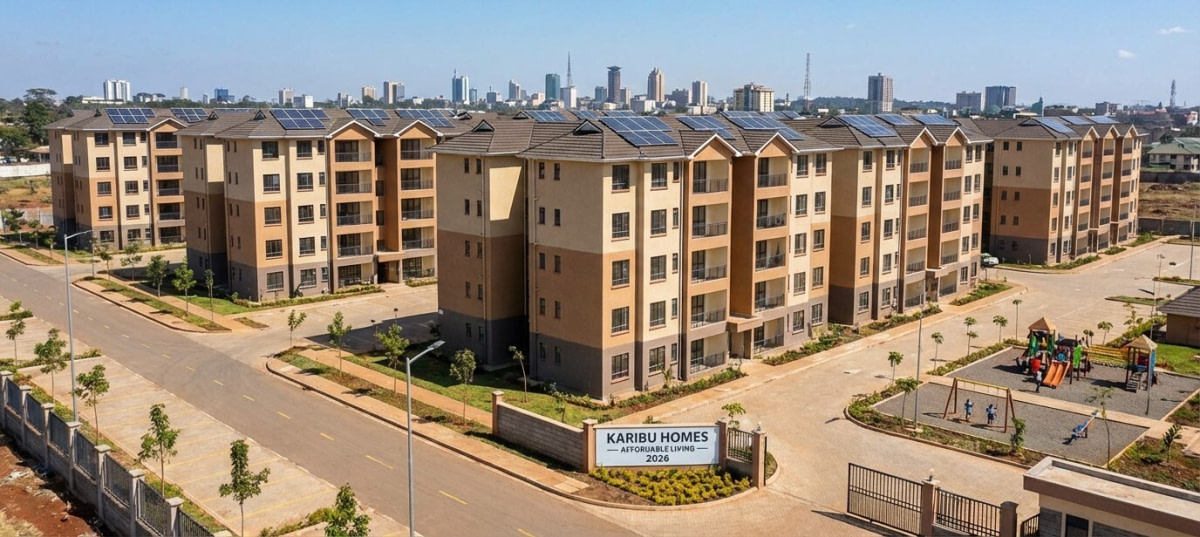
That is what makes this segment so important. The discussion is no longer about ambition alone. It is about cost, eligibility, financing, timing and trust. For anyone active in construction in Kenya, affordable housing is now one of the most important parts of the market to watch.
Demand is deep, but that does not automatically guarantee uptake
The strongest case for affordable housing in Kenya is easy to understand. The country still has a large housing shortfall, and demand for lower-cost housing remains strong. That part of the story has not changed. What is changing is the way the market is filtering that demand.
A large need for housing does not automatically mean every project will succeed. The real test is whether pricing, location and payment structure line up with what households can actually carry. A unit may sit within an official affordable bracket and still feel out of reach once deposit requirements, monthly repayments and transport costs are taken into account.
That gap between formal affordability and lived affordability is one of the biggest realities shaping the market in 2026.

Two construction professionals, a man and a woman, discuss plans on a tablet at an active affordable housing construction site, highlighting the crucial role of developers and modern technology.
For developers, margins are tighter than many people think
Affordable housing is often discussed as though lower selling prices are the only thing that matter. In reality, the business model behind these projects can be far more fragile than outsiders assume.
Developers in this segment are often balancing lower unit prices against rising input costs, infrastructure demands, finance costs and administrative requirements. That leaves far less room for waste, redesign, procurement errors or delivery delays. A high-end project may absorb some inefficiency. An affordable project usually cannot.
This is why housing developers in Kenya are paying more attention to cost control, standardisation, project phasing and tax treatment. In this part of the market, financial discipline is not just good management. It is often the difference between a viable scheme and one that stalls under pressure.
Regulation matters more here than in many other residential segments
Affordable housing in 2026 is not just a pricing story. It is also a regulated environment. The Affordable Housing Regulations, 2025 have given the framework more structure around allocation, applications, financing concepts and the wider process attached to access.
That matters for both sides of the market. For developers, it means project planning is tied more closely to compliance, process and institutional structure. For buyers, it means access is shaped not just by interest, but by rules, eligibility pathways and administrative procedures.
In other words, affordable housing in Kenya now sits inside a more defined system. That may improve clarity, but it also means that success depends on understanding the process, not just the product.
The levy continues to shape the market conversation
The Affordable Housing Levy remains one of the most important background forces in the sector. It has made the affordable housing agenda more visible, more political and more closely connected to public expectations around access and delivery.
That visibility cuts both ways. On one hand, it reinforces the importance of the sector. On the other, it increases pressure on the market to show real outcomes. Buyers want to see pathways to ownership that feel practical. Developers want more predictability around funding and programme direction. The broader public wants proof that the system is producing credible results.
In 2026, that makes affordable housing more than a construction segment. It is also a trust issue. The market is being judged not only on how many units are announced, but on how clearly the route from policy to actual occupancy is working.
Cost control is still one of the hardest parts of delivery
Even in a regulated and policy-supported environment, project costs remain one of the biggest pressure points. This is where many affordable housing discussions become more difficult.
Materials, infrastructure, tax treatment, site preparation, logistics and build efficiency all shape the final economics of delivery. Because target pricing is tighter, even relatively small cost movements can create serious pressure on viability. That is especially true when a project is already working with thin margins.
For developers, this means affordable housing cannot be delivered with loose assumptions. Budgeting has to be sharper. Procurement has to be more disciplined. Design decisions need to reflect cost reality much earlier. For the wider construction sector in Kenya, this is one of the reasons affordable housing has become such an important test of execution quality.
Buyers need to look beyond the advertised price
For many households, the first thing that stands out is the headline selling price. That is understandable, but it is rarely enough.
A home may look affordable at first glance and still become difficult to sustain once all the surrounding costs are considered. Deposit size, financing structure, commute time, transport expense, utilities and the quality of nearby infrastructure all shape whether a home is truly manageable in daily life.
This is one of the biggest things buyers need to understand in 2026. A lower sticker price does not automatically mean lower long-term pressure. In some cases, a cheaper home in the wrong location can feel more expensive month after month than a slightly higher-priced option in a more practical area.
That is why serious buyers should assess the full cost of living around a project, not just the purchase amount on paper.
Delivery credibility is becoming a major advantage
In a more cautious market, credibility matters more. Buyers are paying closer attention to whether a developer can actually deliver on time, maintain quality and keep terms reasonably stable throughout the process.
This is especially important in affordable housing, where trust plays a major role in demand. A buyer may be interested in a project, but hesitation appears quickly if timelines feel uncertain, execution looks weak or communication is not clear. In this segment, price alone is not enough to carry confidence.
For developers, this means reputation, transparency and realistic delivery planning have become real competitive advantages. In 2026, the market is likely to reward firms that can demonstrate not just ambition, but actual control over delivery.
Location still changes the meaning of affordability
One of the easiest mistakes in this segment is to treat all affordable housing as though price is the only meaningful variable. Location changes everything.
A well-priced unit in a poorly connected area may look attractive at launch, then prove less practical once transport, commuting time and access to jobs or services are factored in. Buyers feel this quickly. Developers do too, especially if take-up slows.
This is why location remains one of the most important filters in Kenya’s housing market. A project does not need to sit in the most expensive urban corridor to succeed, but it does need to make everyday life workable. Practical accessibility often matters more than the headline marketing language around affordability.
2026 will favour realism over hype
The affordable housing market in Kenya still carries major potential, but the tone is shifting. The projects most likely to perform well this year are not necessarily the loudest or the most ambitious on paper. They are more likely to be the ones built on realistic cost assumptions, disciplined execution, credible timelines and a clear understanding of buyer capacity.
For developers, that means aligning design, pricing and delivery from the start. For buyers, it means looking closely at the full ownership journey, not just the launch message. For the wider market, it means accepting that affordable housing works best when policy, funding, construction and household economics are all pulling in the same direction.
What developers and buyers should keep in mind this year
In 2026, affordable housing in Kenya is still one of the most important opportunities in the market, but it is no longer a space where broad optimism is enough. Developers need tighter cost control, stronger project discipline and more realistic planning. Buyers need to assess access conditions, repayment logic, livability and delivery credibility with more care.
That is what makes this segment so significant for construction in Kenya right now. It brings together nearly every pressure point in the market: cost, policy, financing, execution and real household demand. The projects that succeed will not be the ones that simply look affordable. They will be the ones that make affordability work in practice.