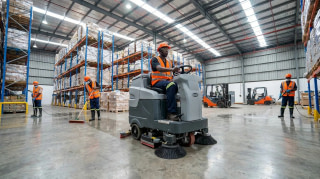
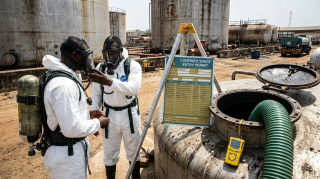
Industrial chemical cleaning uses formulated detergents, acids, alkalis and solvents to dissolve deposits that water and mechanical action alone cannot remove. From CIP loops in breweries to descaling boilers, decoking refinery furnaces and passivating new stainless steel, chemistry is the silent workhorse of African process plants. This guide explains the four chemistry families, the cleaning cycles, the safety constraints and the way modern operators combine chemicals with high-pressure water to optimise time, cost and effluent.
Key takeaways
- Four families of cleaning chemistry coexist: alkaline (organic and fat soils), acid (mineral scale and rust), solvent (heavy hydrocarbons and resins) and oxidising sanitizers (microbial control).
- CIP - Cleaning in Place - is the dominant deployment of chemical cleaning in food, dairy, brewing, beverage and pharma, with validated cycles of pre-rinse, caustic wash, rinse, acid wash, rinse and sanitization.
- Specialised chemical jobs include decoking refinery furnaces, descaling boilers, derouging stainless steel and passivating new tanks - each with its own cocktail and contact time.
- Chemical cleaning is most powerful when combined with mechanical action (hydroblasting, sponge balls) and is increasingly reformulated toward green chemistry to meet ESG and effluent constraints.
The role of chemistry in industrial cleaning
Chemistry comes into play whenever the deposit is chemically bonded to the substrate, when the geometry is too closed for mechanical action or when the operation must happen without disassembly. Inside the broader industrial cleaning services family, chemical cleaning sits at the heart of food and pharma plant routines, and at the high end of refinery and power plant maintenance.
A chemical cleaning operation is much more than spraying a detergent on a surface. It is a formulation question (right chemistry for the right soil), a process question (concentration, temperature, contact time, mechanical action - the so-called Sinner Circle), and a safety question (operator exposure, asset compatibility, effluent treatment).
The four families of cleaning chemistry
Alkaline cleaners
Caustic soda (NaOH), potassium hydroxide (KOH) and sodium metasilicate, formulated with chelating agents (EDTA, gluconate) and surfactants, attack organic soil: fats, proteins, carbohydrates, biofilms. They are the workhorse of food plant CIP, parts washing in metalworking and the first pass of any organic descaling operation. Typical concentrations: 1 to 3% caustic in food CIP, up to 10% for heavy industrial degreasing.
Acid cleaners
Hydrochloric (HCl), sulphuric (H2SO4), nitric (HNO3), phosphoric (H3PO4) and citric acid dissolve mineral deposits: limescale, milkstone, beerstone, iron oxides, rouge, carbonate scale. Stainless steel passivation also relies on dilute nitric or citric acid to restore the chromium oxide layer. Inhibited formulations limit attack on the base metal and must be matched to the substrate (carbon steel, stainless, aluminium, copper).
Solvent cleaners
Hydrocarbon solvents (kerosene, white spirit), glycol ethers, IPA, terpenes and chlorinated solvents (still used in some metalworking applications) dissolve heavy oils, greases, resins, ink, paint and polymer residues. The shift away from chlorinated solvents toward water-miscible and bio-based alternatives is one of the defining trends of the past decade.
Oxidising sanitizers
Sodium hypochlorite, hydrogen peroxide, peracetic acid and chlorine dioxide eliminate microbial load on already-cleaned surfaces. They are not detergents - they do not remove visible soil - but they close the food and pharma cleaning loop. The food-grade dosage and verification approach is covered in industrial cleaning in the food industry , the pharma approach in pharmaceutical cleaning services .
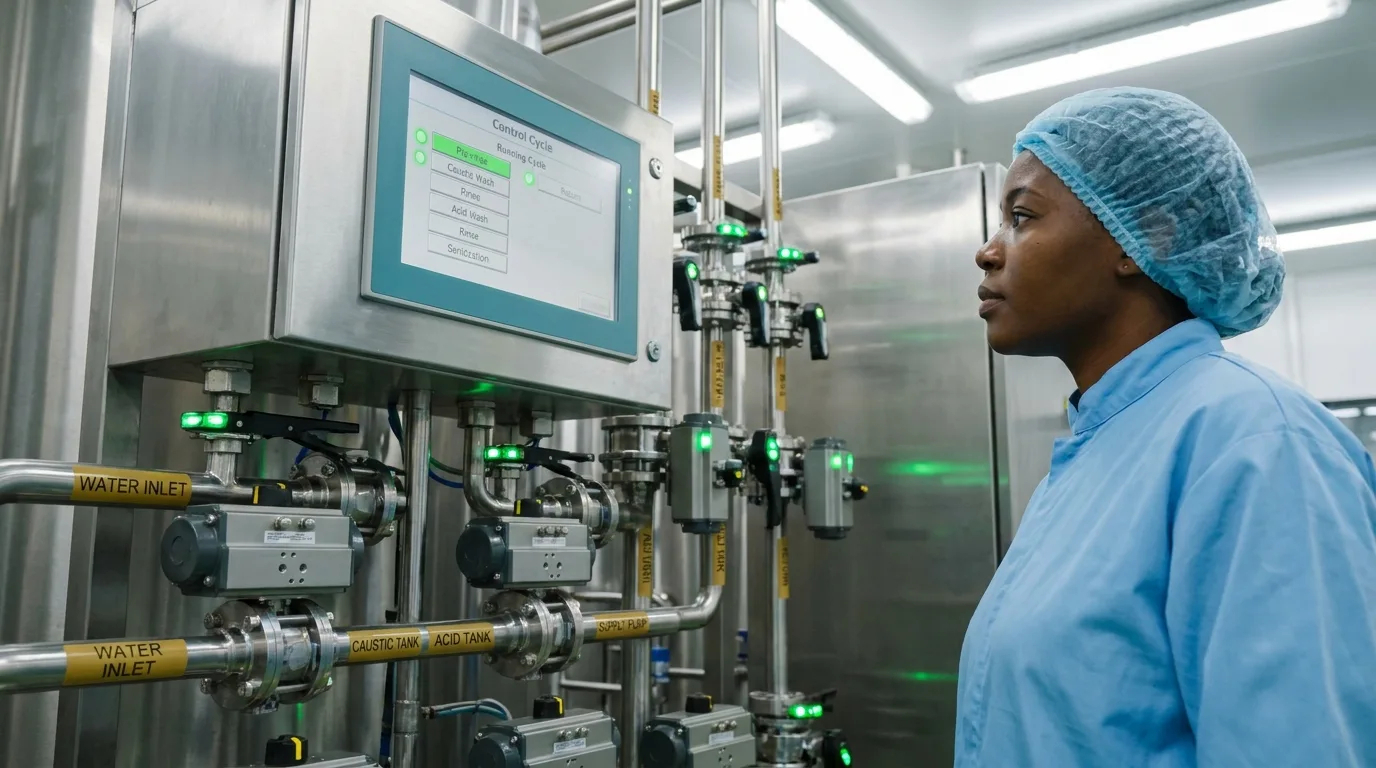
Automated CIP panels run validated chemical cycles with full traceability.
CIP - Cleaning in Place
CIP is the automated circulation of cleaning fluids through process equipment without disassembly. A CIP skid (tanks, pumps, valves, instruments, HMI) feeds the equipment with sequential cycles of detergent, rinse, acid, rinse and sanitizer at controlled flow, temperature and time. Modern CIP installations include conductivity probes (to control concentration), temperature sensors, flow meters, electronic batch records and recipe management.
A textbook CIP recipe for a dairy or brewery line:
-
Pre-rinse (10 min, 40°C, water) to flush bulk soil.
-
Caustic wash (20 min, 1.5 to 2% NaOH, 70 to 85°C) to dissolve organic soil.
-
Intermediate rinse (5 min, water) until conductivity matches feed water.
-
Acid wash (10 min, 0.5 to 1% nitric or phosphoric, 50 to 60°C) to dissolve mineral scale.
-
Final rinse (5 min, water) to neutral conductivity.
-
Sanitization (peracetic acid 0.15%, 15 min, ambient) immediately before production.
Specialised chemical operations
Decoking and descaling in refineries
Refinery furnaces, crackers and reactors accumulate coke (carbonaceous deposits) and mineral scale at high temperature. A typical descaling cocktail combines a chelated alkaline pre-wash, a strong acid descale (inhibited HCl or sulphamic acid) and a final neutralisation. Decoking often combines chemistry with industrial hydroblasting services for stubborn carbon deposits.
Boiler and heat exchanger cleaning
Power plant boilers, evaporators and shell-and-tube heat exchangers are descaled by closed-loop chemical circulation: inhibited HCl, EDTA or citric-ammonia, depending on the metallurgy. Pre-job analysis of the scale chemistry (XRD, XRF) determines the right formulation and avoids substrate damage.
Stainless steel passivation and derouging
New or repaired stainless steel develops a contaminated surface (free iron from welding, mill scale, carbon residues) that must be removed and replaced by a clean, passive chromium oxide layer. Pickling pastes (HF-HNO3) or dilute nitric/citric circulation deliver this passivation. Existing equipment showing brown rouge requires a derouging pass before re-passivation.
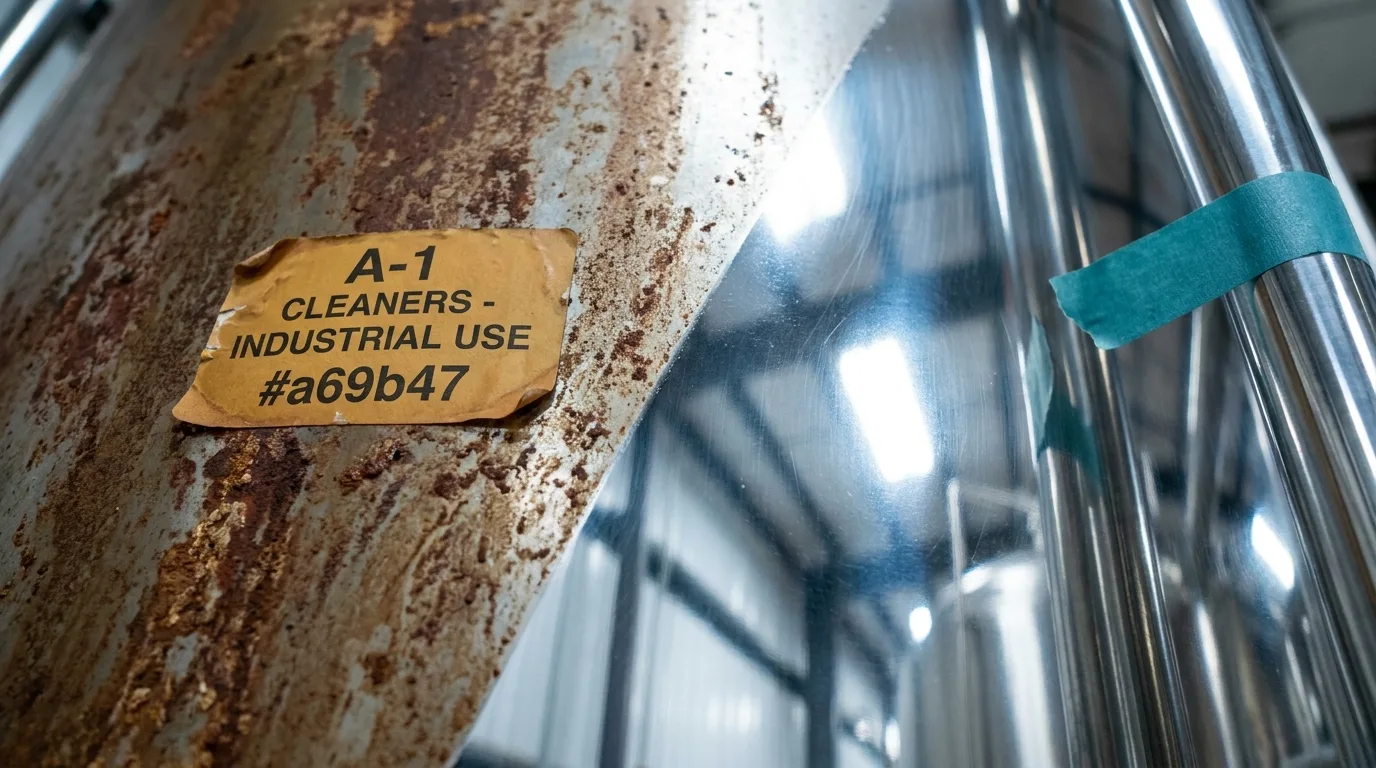
Passivation cleaning restores the chromium oxide layer and the corrosion resistance of stainless steel.
Automotive plants, metalworking shops and aerospace MROs degrease parts in spray cabinets, immersion tanks or vapour degreasers, using alkaline or solvent baths. Modern installations rely on water-based degreasers with ultrasonic agitation, which deliver excellent results without VOC emissions.
HSE and waste management
Industrial chemical cleaning involves hazardous substances, hot fluids and pressurised circuits. The minimum safety stack includes:
-
MSDS and chemical risk assessment for every product.
-
Acid-resistant PPE: splash goggles, face shield, gloves matched to the chemical, rubber boots, full suits for concentrated work.
-
Emergency showers and eyewash within 10 seconds of any chemical handling point.
-
Spill containment: bunds under storage and dosing skids, neutralisation kits at point of use.
-
Effluent treatment: neutralisation, oil-water separation, biological polishing if needed. Compliance with NESREA, EPA, NEMA or DEFF discharge standards is non-negotiable.
-
Operator training in chemical handling, with refresher every 12 months.
Combining chemistry with mechanical action
The Sinner Circle reminds us that cleaning power = chemistry x temperature x contact time x mechanical action. Most efficient real-world cleaning jobs reduce contact time and chemical concentration by adding mechanical action: scrubbing brushes, sponge balls in tubes, sweep flow in tanks or industrial hydroblasting in series with a chemical soak. This combination cuts effluent volume and operator exposure while delivering faster results.
Sustainability and green chemistry
The drift toward green chemistry is now structural: phosphate-free formulations, citrate-based chelators replacing EDTA, enzymatic boosters, low-temperature surfactants, water reclamation and reduced caustic strength. Plants that invest in this shift report 15 to 30% reductions in chemical spend and substantial easing of effluent permits. The full ESG picture is in sustainable industrial cleaning .
Frequently asked questions
How do I select the right chemistry for my plant?
Start with a soil analysis (XRD, XRF, infrared, microscopy) and a substrate inventory. Match the chemistry to the soil (alkaline for organic, acid for mineral, solvent for heavy hydrocarbon) and to the substrate compatibility (stainless 316L, carbon steel, aluminium, copper, brass). A bench test on a coupon before scaling up is standard practice.
What concentration should I use for caustic CIP?
Typical food CIP runs at 1.5 to 2.5% NaOH at 75 to 80°C. Pharma is usually lower (0.5 to 1%) to limit residue burden. Heavy industrial degreasing can go up to 5 to 10% at elevated temperature. The validated concentration is set during commissioning and verified by conductivity probes.
Are chlorinated solvents still allowed for industrial cleaning?
Trichloroethylene and perchloroethylene are phased out or strictly restricted in most jurisdictions. Modern substitutes include water-based alkaline degreasers, modified alcohols, terpene-based solvents and HFE/HFC fluids for vapour degreasing. Always check national regulations and customer specifications.
How do I dispose of chemical cleaning effluent?
Neutralise to pH 6 to 9 with controlled dosing, separate oils and solids, then route to your wastewater treatment plant or a licensed waste contractor. Concentrated spent baths usually qualify as hazardous waste and require manifested disposal. Discharge permits define the maximum allowed concentrations per parameter.
Where does chemical cleaning fit in a wider cleaning strategy?
Chemistry is one of five method families. Combined with mechanical action and hot water, it covers 70 to 80% of routine industrial cleaning. The complete map and the selection logic are detailed in our industrial cleaning services pillar guide .