Key takeaways
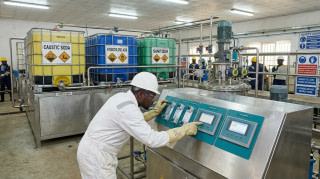
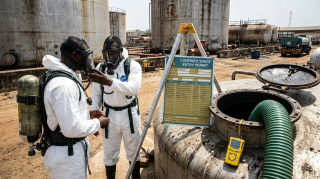
- Sustainable industrial cleaning rests on four pillars: green chemistry, water stewardship, energy and carbon footprint reduction, and waste minimisation.
- The biggest wins come from closed-loop water recycling, biodegradable detergents, dry methods (dry ice, CO2) and reformulated CIP cycles - each method-specific lever connects to a satellite article in this cluster.
- ESG standards (ISO 14001, GRI, SASB, CDP, SBTi) and global supply-chain audits (Sedex, EcoVadis) now translate cleaning practices into measurable scores that influence procurement decisions.
- The business case combines lower operating cost (water, chemicals, effluent treatment), reduced regulatory exposure, improved brand value and broader access to development finance.
Why sustainability is now central to industrial cleaning
Until very recently, industrial cleaning was a cost line buried in maintenance budgets, with no scrutiny on its environmental footprint. Three trends have changed the picture. First, water scarcity in many African cities (Cape Town, Nairobi, Accra) has turned water bills into a meaningful lever. Second, multinationals operating across Africa have aligned their plants on global ESG targets, cascading these expectations to local suppliers and contractors. Third, financiers (BAD, IFC, FMO, BII) now condition project financing on ESG performance, and audit cleaning practices as part of facility due diligence.
Sustainable cleaning is no longer a "nice to have" add-on to the broader industrial cleaning services catalogue. It is the lens through which procurement, HSE and operations now look at every contract.
The four pillars of sustainable industrial cleaning
Green chemistry
Replace aggressive chemicals with biodegradable, low-toxicity, phosphate-free, low-VOC alternatives. Enzymes, plant-based surfactants, citrate chelators and oxygen-based bleaches are the core ingredients of modern green formulations. They cut effluent toxicity, ease operator handling and lower the regulatory burden. The chemistry families and their substitution paths are detailed in industrial chemical cleaning .
Water stewardship
Reduce water draw, recycle process water and treat effluent locally. Closed-loop hydroblasting, CIP water recovery, low-flow nozzles and dry cleaning methods are the levers. Plants in Lagos, Accra and Nairobi report 30 to 70% reductions in fresh water consumption after a structured water audit.
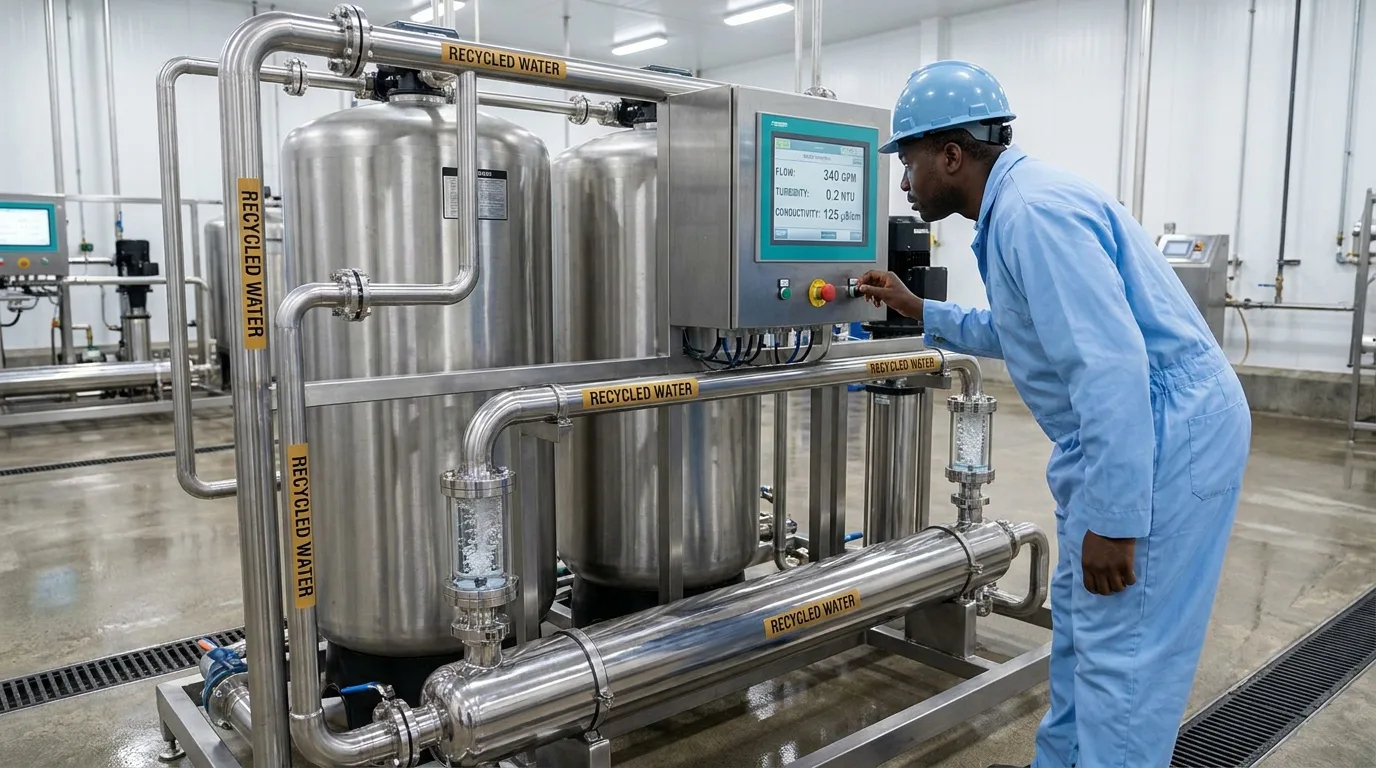
Water recycling skids close the loop on CIP and hydroblasting effluent, drastically lowering fresh water draw.
Cleaning is more energy-intensive than it looks: hot water for CIP, electric drive of hydroblasters, compressed air for dry ice and abrasive blasting, transport of consumables. Reducing CIP temperatures, switching to energy-efficient pumps, optimising compressor air supply and substituting imported chemicals with local production all cut the carbon footprint of a cleaning programme by 10 to 30%.
Waste minimisation and circularity
Single-use wipes, spent media, used containers and sludge are the visible waste of industrial cleaning. Reusable microfiber, recyclable garnet, returnable IBC tanks, on-site sludge dewatering and circular partnerships with chemical suppliers shrink the waste-to-landfill ratio while easing manifest-driven costs.
Green chemistry in practice
Reformulating cleaning chemistry has accelerated in the past five years. Modern green formulations typically combine plant-based surfactants (from coconut, palm kernel, sugar), non-NTA/EDTA chelators (citrate, gluconate, IDS, MGDA), enzyme boosters (proteases, lipases, amylases), oxygen-based bleaches (peracetic acid, hydrogen peroxide) and pH adjusters with reduced caustic load. The result: comparable cleaning performance with phosphate-free, low-COD, fully biodegradable effluent. Procurement teams should ask for Sedex SMETA, EcoVadis or Cradle to Cradle certifications on supplied chemicals.
Water recycling and closed loops
The single biggest lever for water-intensive operations is to close the loop. Common configurations include:
-
CIP final rinse reuse: capture the last rinse of one cycle as the pre-rinse of the next, sometimes via dedicated holding tanks. Typical saving: 20 to 35% of CIP water. Implementation in food and beverage is detailed in industrial cleaning in the food industry .
-
Closed-loop hydroblasting: collect spent water, filter solids, separate oil, recycle to the pump skid. Typical saving: 60 to 85% of fresh water on long jobs. See industrial hydroblasting services .
-
Greywater for non-critical uses: treated rinse water reused for floor washing, vehicle washing, garden irrigation.
-
Final effluent polishing: biological treatment, reverse osmosis or constructed wetlands to bring the discharge below permit thresholds.
Dry methods as a sustainability lever
Wherever the geometry and the substrate allow, dry cleaning methods beat wet ones on water and effluent. Dry ice blasting uses captured industrial CO2 (no net emissions, no secondary waste), while soda blasting and walnut shell blasting offer biodegradable abrasive options. Combined with HEPA-equipped extraction, these methods virtually eliminate the wastewater stream.
Sector-specific sustainability priorities
Food and beverage
Food plants typically focus on CIP water reuse, replacement of chlorinated sanitizers with peracetic acid, low-temperature alkaline detergents and allergen-friendly enzyme cleaners. See industrial cleaning in the food industry for the sector-specific deep dive.
Pharmaceutical
Pharma plants combine WFI recycling (where regulatory authorities allow), low-IPA detergents, single-use validation reduction and pre-saturated wipes sourced locally. The boundaries are detailed in pharmaceutical cleaning services .
Oil and gas, refineries
Tank cleaning operations and refinery campaigns drive most of the cleaning footprint. Closed-loop hydroblasting, oil recovery from sludge, bioremediation of contaminated soil and full waste manifest traceability are the priorities. The technical framework sits in industrial tank cleaning services .
Manufacturing, mining and power
Substituting silica sand with recyclable garnet, switching to dry ice on electrical equipment, switching to closed-loop UHP cleaning on heat exchangers and recycling spent abrasive on long campaigns deliver the biggest measurable improvements.
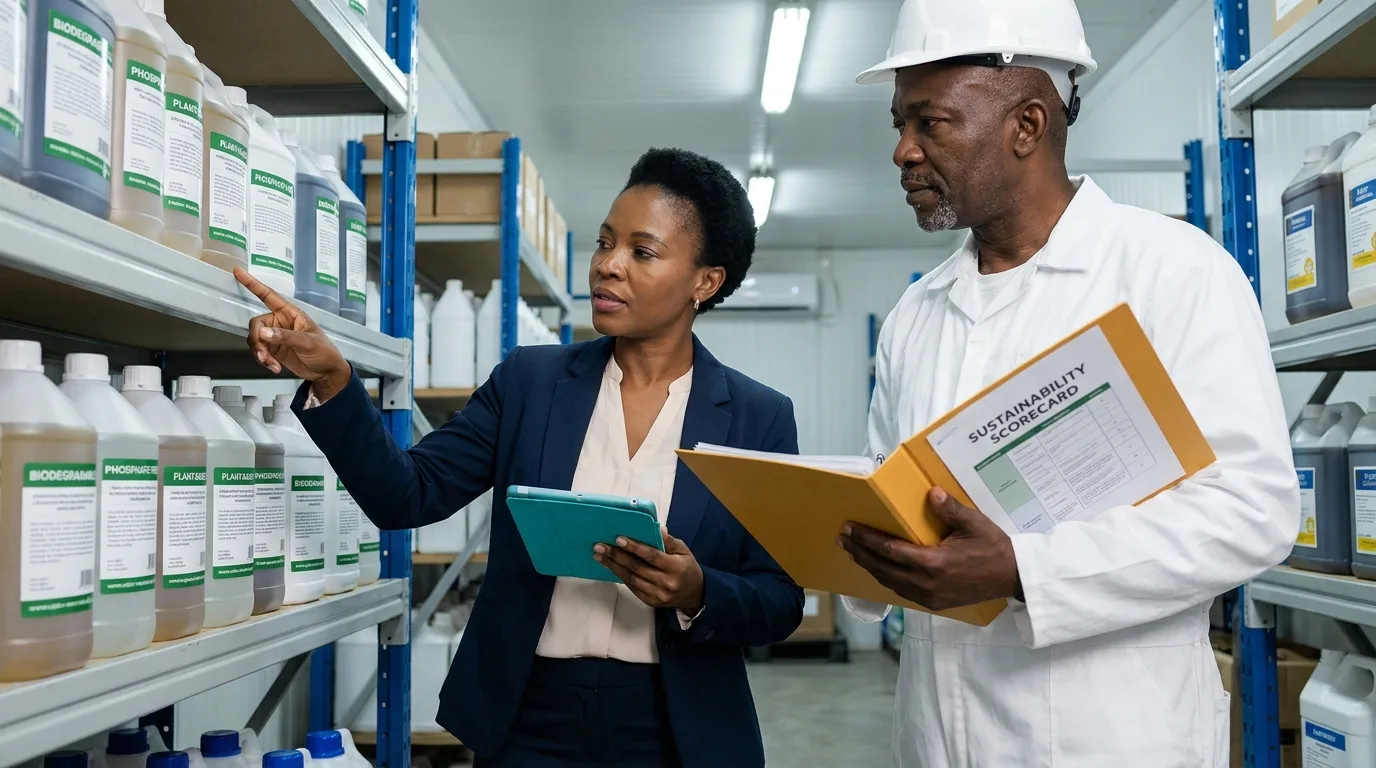
ESG audits increasingly translate cleaning practices into scoring grids used by buyers and financiers.
ESG standards and reporting frameworks
Sustainability claims must rest on recognised frameworks. The most common in African industry are:
-
ISO 14001: environmental management system, the baseline expectation for any serious supplier.
-
ISO 45001: occupational health and safety, complementary to environmental management.
-
GRI Standards: Global Reporting Initiative, the dominant general-purpose sustainability reporting framework.
-
SASB: industry-specific disclosures, particularly relevant for listed companies.
-
CDP: Carbon Disclosure Project, widely used by global buyers to score their supply chain.
-
SBTi: Science Based Targets initiative, validates carbon reduction trajectories.
-
Sedex SMETA, EcoVadis: supply chain audit platforms used by multinationals to vet suppliers.
Building the business case
Investing in sustainable cleaning is not philanthropy: it pays back. Typical 24-month returns observed on African industrial sites include 15 to 30% reduction in chemical spend, 30 to 70% reduction in water and effluent costs, 5 to 15% reduction in energy use linked to cleaning operations, lower HSE incidents and lower insurance premiums. Strategic benefits include improved access to international clients (whose sustainability scorecards now have weight), better access to development finance (BAD, IFC, FMO criteria) and stronger employer brand for the next generation of African industrial talent.
Practical roadmap to a sustainable cleaning programme
-
Baseline audit: measure current water, chemical, energy and waste flows linked to cleaning operations.
-
Set quantitative targets: aligned with ISO 14001, GRI or SBTi commitments. Avoid generic "improve" statements.
-
Substitute chemistry: switch to certified green formulations on the highest-volume cycles first.
-
Close water loops: install recycling on CIP, hydroblasting and floor washing where feasible.
-
Optimise dry methods: deploy dry ice, soda or walnut shell blasting wherever substitution is technically valid.
-
Engage suppliers: require Sedex/EcoVadis scores and product certifications from cleaning contractors.
-
Measure, report, repeat: monthly tracking, annual disclosure, third-party verification.
Frequently asked questions
Are green cleaning chemicals as effective as conventional ones?
On most routine cleaning duties, yes. Green formulations match conventional performance for 80 to 90% of soils, sometimes outperforming on biofilm and protein soils thanks to enzyme additions. The remaining 10 to 20% of duties (very heavy descaling, decoking, hardened polymer) may still require conventional chemistry under controlled conditions.
How much water can a food plant realistically save through CIP recycling?
Pilot programmes in dairies, breweries and beverage plants in Africa report savings of 20 to 50% on CIP water once final rinse capture, intermediate rinse reuse and conductivity-controlled cycle endpoints are implemented together.
What ESG certifications should I ask from a cleaning contractor?
Minimum ISO 14001 and ISO 45001. Highly desirable: EcoVadis Gold or above, Sedex SMETA, Cradle to Cradle on supplied chemicals. For multinational clients, alignment with the client's specific scorecard (Unilever, Diageo, Coca-Cola, Nestle) is often required.
Does sustainable cleaning cost more upfront?
Initial capex for water recycling skids, dry ice equipment and reformulated chemistry can be 10 to 30% higher than conventional setups. Payback typically lands within 12 to 30 months thanks to lower water, chemical and effluent costs, plus regulatory and reputational benefits.
Where does sustainable cleaning fit in my overall cleaning strategy?
Sustainability cuts across every method and every sector. It is the lens through which the full panorama of industrial cleaning services should now be reviewed - from chemistry choice to method selection, from contractor procurement to internal training.