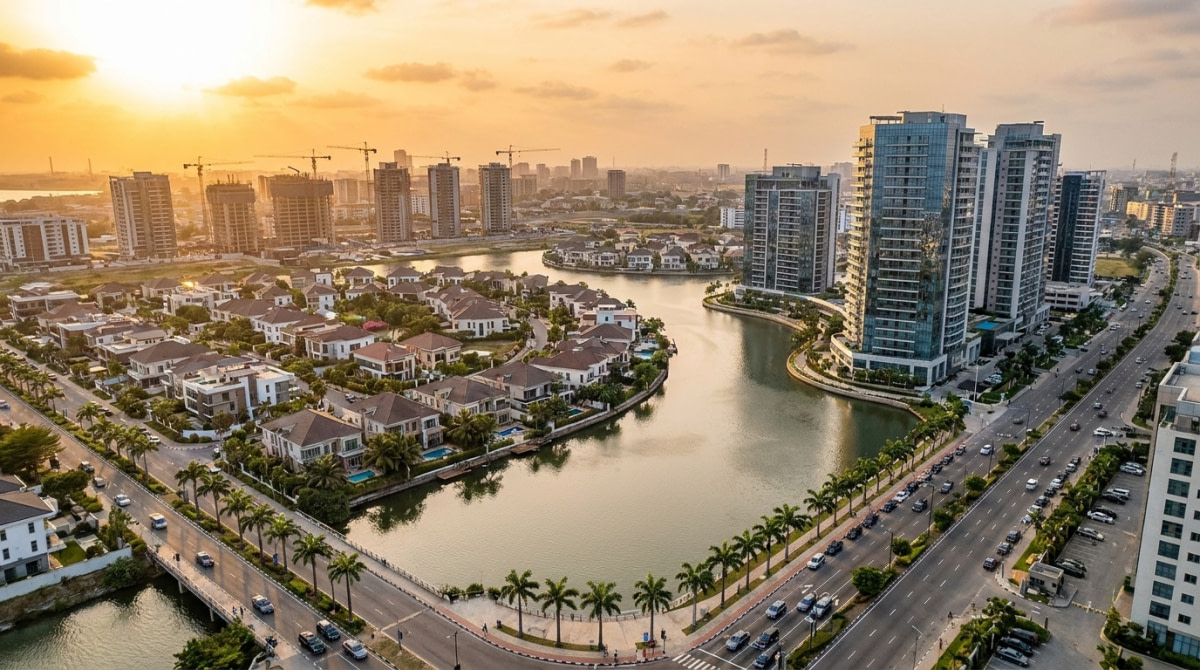
Lagos is Africa's most dynamic property market, but "best" depends entirely on your goal. The address that preserves wealth on Banana Island is the wrong buy for rental income, and the Ibeju-Lekki plot that could double in value pays no rent for years. This guide maps the best areas to buy property in Lagos across three clusters, the prime islands, the high-growth Lekki-Epe corridor and the value-rich mainland, with indicative 2025-2026 prices, realistic yields and the risks to check before you commit. Treat every figure as a range, not a quote: Lagos prices move with the naira and vary street by street.
Key takeaways
- The core decision is yield versus prestige: prime island stock (Ikoyi, VI, Banana Island) typically nets below 5%, while mid-market mainland (Yaba, Maryland, Gbagada) runs roughly 7-9% gross.
- The Lekki-Epe corridor (Ibeju-Lekki, Epe) is a capital-growth play driven by the Dangote Refinery, Lekki Deep Sea Port and Free Trade Zone, best for patient 5-10 year investors.
- The mainland offers markedly better value and space than the island, traded against longer commutes over the Third Mainland Bridge.
- All prices are indicative and FX-sensitive; much prime stock is dollar-priced, so naira gains partly reflect currency depreciation.
- Whatever the area, confirm the land is free of government acquisition and holds a clean title before you pay.
How to think about where to buy property in Lagos
Before comparing neighbourhoods, decide whether you are buying to live, to earn rent, or to grow capital. That single choice reshapes the map. Prime island addresses deliver prestige, stability and capital preservation but weak income, because sale prices have outrun achievable rents. Mid-market mainland nodes deliver the strongest cashflow. The outer Lekki-Epe corridor pays no rent today but targets appreciation. The best investors blend a cashflow asset with a growth asset rather than chasing one number.
One caution runs through every price in this guide: Lagos figures are volatile and range-based. Prime stock is frequently priced in US dollars, so naira numbers track the exchange rate, and within any district the location, finish, waterfront status and title can swing values many times over. Use these ranges to orient yourself, then verify against current live listings.
Prime island areas: prestige and capital preservation
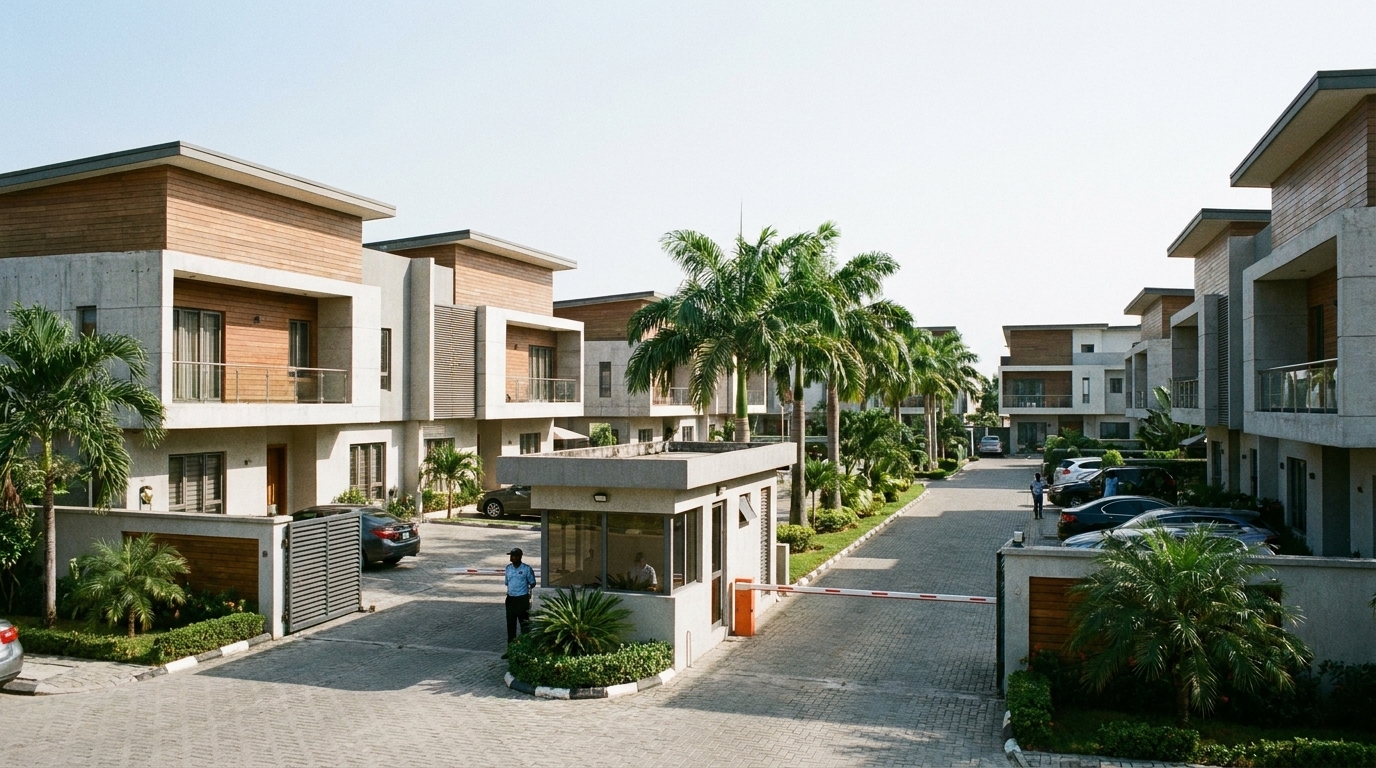
Prime island estates offer prestige and stability, but income yields are low and entry costs are the highest in Nigeria.
These are Lagos's most expensive and prestigious addresses, best for affluent living and long-term wealth preservation rather than rental returns.
| Area |
Best for |
Indicative signal (2025-2026) |
Watch-outs |
| Ikoyi (Old Ikoyi, Parkview, Osborne) |
Affluent families, executives, diplomats, capital preservation |
Luxury 3-bed flats around N850m; ultra-prime land near N1.8m/sqm; net yields ~3-5% |
Very high entry cost and service charges, scarce land, low yields, waterfront flood pockets |
| Banana Island |
Ultra-high-net-worth living, trophy assets |
Nigeria's priciest address; land ~N3m/sqm; mansions often USD-priced; yields below 5% |
Highest entry cost, thin illiquid resale, low income yield, full dollar exposure |
| Victoria Island (VI) |
Professionals wanting walk-to-work convenience, commercial and short-let demand |
Prime land ~N2m-N2.7m/sqm; luxury property ~N450m-N1.2bn; net yields ~3.4-4.8% |
Heavy traffic, one of the most flood-prone areas, high running costs |
| Lekki Phase 1 |
HNW families, executives, expats, investors wanting appreciation plus better income than Ikoyi/VI |
4-bed terrace ~N350m; 5-bed detached ~N650m-N1.5bn; land ~N950,000/sqm; best prime yields, gross ~6-10% |
Bad peak traffic on a limited-exit peninsula, high service charges, drainage risk |
Growth corridors: the Lekki-Epe investment axis
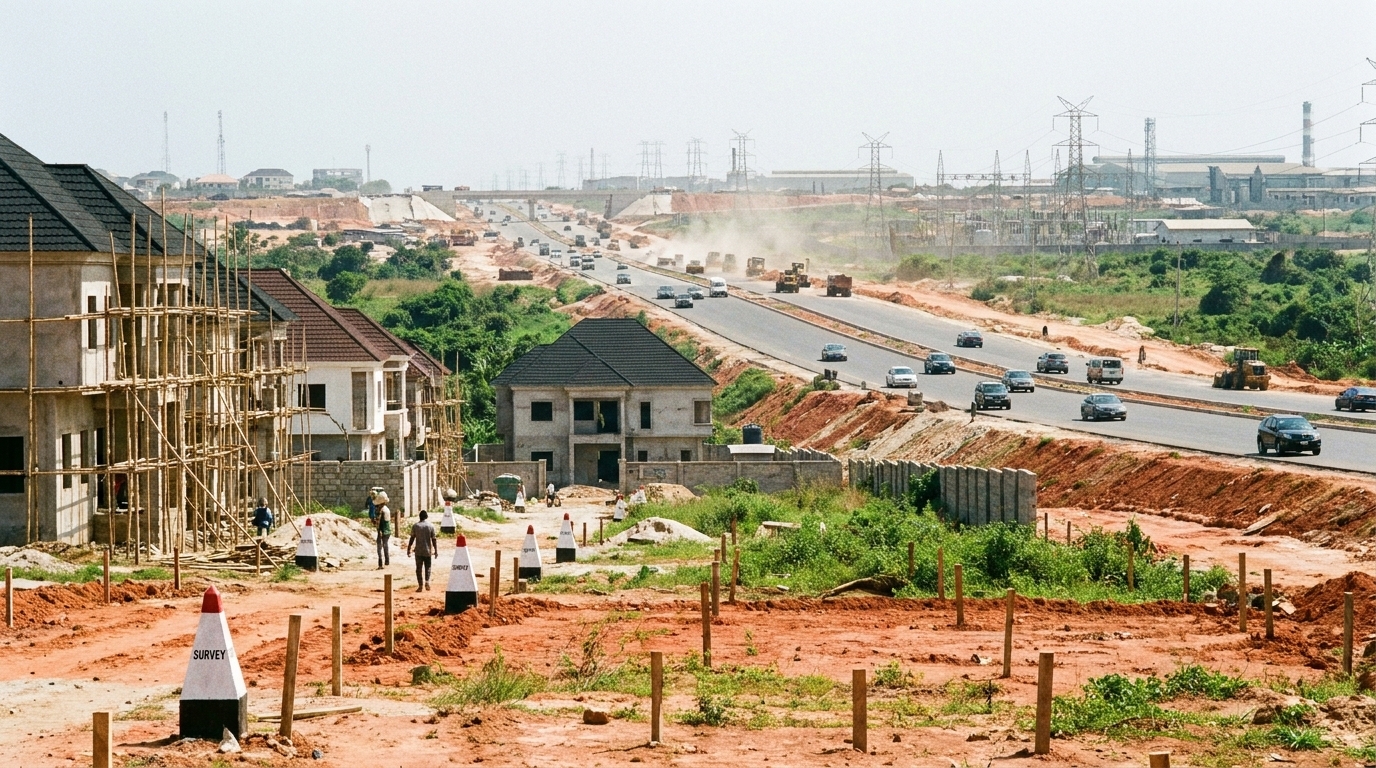
The Lekki-Epe corridor is where Lagos land appreciates fastest, but title and acquisition risk are highest here too.
East of Lekki, the corridor is the engine of Lagos land appreciation, powered by some of the largest infrastructure projects in Africa. It suits patient capital-growth and land-banking investors more than anyone chasing immediate rent.
-
Dangote Refinery: at full 650,000 barrels-per-day capacity since February 2026, the single largest anchor of land demand in Ibeju-Lekki, with expansion planned toward 1.4 million bpd.
-
Lekki Deep Sea Port: operational since April 2023 and scaling toward its 1.2 million TEU capacity, driving logistics, manufacturing and warehousing demand.
-
Lekki Free Trade Zone: the tax-incentivised hub concentrating the refinery, port and tenants, with land nearest the zone commanding the top prices.
-
Proposed Lekki International Airport: a roughly N171.64bn project targeted around 2027, a forward catalyst that carries real timeline risk as it is still pre-construction.
-
Roads and rail: the Lekki-Epe Expressway upgrade and the Lagos-Calabar Coastal Highway are driving 25-40% appreciation spikes near their alignments, reinforced by the Blue, Green and Red rail lines.
| Area |
Best for |
Indicative signal (2025-2026) |
Watch-outs |
| Ibeju-Lekki |
Capital-growth and land-banking, 5-10 year horizon |
Per ~500-600sqm plot: excision land N8m-N25m, dry land with C of O N15m-N60m; reported up ~100-150% since 2020 |
Government acquisition is the top title risk; Omo Onile levies, flooding, multi-year timelines. Buy only titled land after a charting search |
| Ajah / Sangotedo / Abraham Adesanya |
End-user living and rental in a more developed, amenity-rich corridor |
Ajah plots ~N20m-N60m; premium developments ~N250,000-N300,000/sqm; yields ~6-8%+ |
Chronic flooding on parts of the axis (notably Addo Road), title checks still essential |
| Awoyaya |
Mid-tier investors and residents wanting expressway frontage |
Average listed land ~N33m; pre-launch plots from ~N5m-N8m; mid-tier N8m-N20m band |
Averages inflated by larger plots, transitional infrastructure, standard title and drainage checks |
| Epe |
Patient frontier investors wanting the cheapest entry on the axis |
Per ~500sqm plot: developing areas N1.5m-N4m; expressway-adjacent N4m-N7.5m; ~35% year-on-year growth reported |
Longest, most speculative horizon; verify state-scheme claims. Real catalysts include the Imota Industrial Park |
Mainland areas: value, space and stronger yields
The mainland trades island prestige for markedly better affordability, more space and higher rental yields, at the cost of longer, traffic-dependent commutes over the Third Mainland Bridge. These are the strongest areas for family living and rental cashflow.
| Area |
Best for |
Indicative signal (2025-2026) |
Watch-outs |
| Ikeja GRA |
Affluent families and executives wanting the mainland's premier address near the airport |
New 3-bed flats ~N450m, up to ~N600m with C of O; island-level pricing |
Weak value for entry buyers, commercial encroachment and noise on main roads |
| Magodo GRA (Phases 1 & 2) |
Established upper-middle-class families near Ikeja and the mainland |
Phase 2 houses average ~N550m-N650m; land averages ~N500m/plot; house rents ~N10m/yr |
High entry prices for a mainland area, premium land costs that price out first-timers |
| Omole (Phase 1 & 2) / Isheri North GRA |
Families wanting quiet, secure gated estates; Isheri North is the affordable GRA entry |
Omole Phase 1 houses ~N615m, Phase 2 ~N450m; Isheri North GRA ~N190m (N70m-N350m) |
Ongoing construction and real riverine flood exposure in the low-lying Isheri belt; verify plot-by-plot |
| Gbagada |
Families and professionals wanting central island access without island rent |
Flat rents ~N1.5m-N4m/yr; newer gated 2-beds N2.5m-N6.5m; yields ~5-7% |
Third Mainland Bridge congestion at peak, seasonal flooding in low-lying belts |
| Yaba / Surulere / Maryland / Ogudu |
Yaba for young professionals, students and short-lets; Surulere/Maryland for first-timers and mid-market families; Ogudu GRA for premium-but-affordable living |
Yaba short-lets ~N90,000/day; Surulere 2-bed sale ~N115m; Maryland houses ~N300m-N525m; mid-market yields ~7-9% |
High density and traffic, older housing stock, fewer formal gated-estate options |
What each budget buys in Lagos
As a rough orientation across the Lagos property market locations above:
-
Under ~N50m (entry): mostly land in emerging corridors rather than built homes, for example Ibeju-Lekki or Epe plots (from ~N2.5m untitled to ~N25m titled), Ketu and mainland-fringe options, and small flats. Prioritise verified title over headline cheapness.
-
~N50m-N120m (mid-market): mainland flats and family homes, Ibeju-Lekki and Awoyaya houses, Ajah and Sangotedo plots. The best cashflow yields (roughly 7-9%) sit here in Yaba, Surulere, Maryland and Gbagada.
-
~N120m-N600m (upper established): Lekki Phase 1 terraces and apartments, Ikeja GRA, Magodo GRA, Omole and Ogudu GRA homes, and entry-level Ikoyi or VI apartments.
-
~N600m and above (prime/luxury): trophy stock, Ikoyi and VI luxury apartments, Lekki Phase 1 detached duplexes, and Banana Island residences, often USD-priced, with sub-5% yields.
How to choose the right area for you
-
Decide living versus investment first. Prime island for prestige and capital preservation, mid-market mainland for cashflow, the Lekki-Epe corridor for patient growth.
-
Match the strategy to the yield reality. Prime island nets below 5%, mainland runs 7-9%, outer-corridor land pays no rent but targets appreciation over a 5-10 year hold. Blending both is the sound approach.
-
Weigh the commute. The mainland offers space and value but 45-75+ minute peak commutes to VI, while Ikeja, Omole and Isheri sit close to the CBD and airport.
-
Inspect for flooding. Much of prime Lagos sits on reclaimed lagoon land only metres above sea level, so check elevation, drainage and flood history plot-by-plot, ideally in the rainy season.
-
Budget the full cost. Add roughly 8-15% of value for perfection, Governor's Consent and registration, plus agency and legal fees, so the headline price is not the final cost.
-
For off-plan, vet the developer. Deposits are usually not held in escrow in Nigeria, so weigh developer-default and delivery-delay risk and favour a proven developer with a 2+ year horizon.
Verify the title before you buy anywhere
No Lagos location is a good buy on a bad title. The decisive check is confirming the land is free from government acquisition through a Charting Information Certificate at the Land Registry. Committed (acquired) land can never be legally bought, and acquired-but-uncommitted land can be regularised only by paying the government again. Insist on a Certificate of Occupancy or Governor's Consent, or land backed by a valid, gazetted excision, and treat any "excision in progress" claim as high-risk.
For the full method, see our step-by-step guide to property title verification in Nigeria , and learn to spot the traps in buying property in Nigeria without getting scammed .
Frequently asked questions
Where should I buy in Lagos for rental income versus prestige?
For income, mid-market mainland areas such as Yaba, Maryland and Gbagada deliver the strongest gross yields (roughly 7-9%) with better downturn resilience. For prestige and capital preservation, prime island addresses (Ikoyi, Victoria Island, Banana Island, Lekki Phase 1) are the choice, but they typically net below 5% because sale prices have outrun achievable rents. All figures are indicative and move with the naira.
Is the Lekki-Epe corridor a good investment?
It is a capital-growth and land-banking play, not an immediate-income one. Appreciation is infrastructure-led by the Dangote Refinery, Lekki Deep Sea Port, Free Trade Zone, coastal highway and proposed airport, with land reportedly up roughly 100-150% since 2020. It suits patient investors with a 5-10 year horizon who buy only titled land and accept that some catalysts, notably the airport, are still years out.
What is the single most important check before buying land in Lagos?
Confirm the land is free from government acquisition by obtaining a Charting Information Certificate at the Lagos State Land Registry. Committed land can never be legally bought or regularised, and acquired-but-uncommitted land forces you to pay the government again. Insist on a C of O or Governor's Consent, or land backed by a valid gazetted excision, and treat "excision in progress" claims as high-risk.
Why are Lagos property prices quoted so inconsistently?
Prices are genuinely volatile and range-based. Prime stock is frequently priced or traded in US dollars, so naira figures track the exchange rate, and headline growth numbers partly reflect currency depreciation rather than real appreciation. Within any district, location, finish, waterfront status and title can swing values by many multiples, so treat every figure as indicative and verify against current live listings.
How bad is flood risk, and can I avoid it?
Much of prime Lagos (Lekki, VI, Ikoyi, Ajah) sits on reclaimed lagoon land only a few metres above sea level, so flooding is partly geographic (tidal lock, subsidence, sea-level rise) and cannot be fully engineered away by drainage. Official 2026 outlooks forecast above-normal rainfall. Inspect elevation, drainage and flood history plot-by-plot, ideally during the rainy season, and treat some exposure as inherent to the terrain.
What are the total costs beyond the purchase price?
Budget roughly 8-15% of value for perfection, Governor's Consent and registration, on top of agency and legal fees, so a stated price is not the final cost. For off-plan purchases, note that deposits are usually not held in escrow in Nigeria, which adds developer-default and delivery-delay risk, so vet the developer and title and favour a 2+ year horizon.