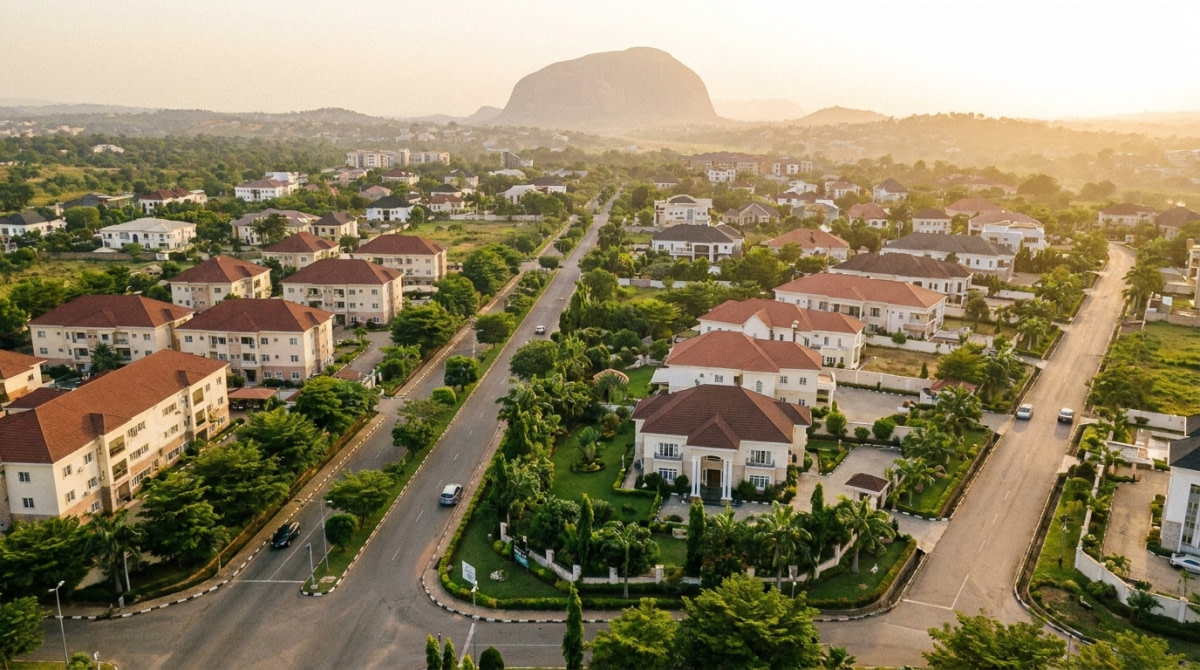
Abuja is Nigeria's most orderly and prestige-driven property market, and the right district depends almost entirely on your budget and your lifestyle. A Maitama mansion and a Lugbe starter plot are both "good buys", but for completely different people and goals. This 2026 guide maps the best areas to buy property in Abuja across three clusters, prime, mid-market family and affordable-growth, with indicative prices, realistic yields, the lifestyle each offers and the title checks the FCT specifically demands. Treat every figure as a range, not a quote: Abuja prices are volatile and move with the naira.
Key takeaways
- There is no freehold in Abuja: all FCT land is administered by the Minister, and title runs allocation letter, then Right of Occupancy, then the strongest tier, the Certificate of Occupancy.
- Prime districts (Maitama, Asokoro, Wuse II, Jabi) are for prestige and capital preservation, with compressed yields of roughly 2-3.5%.
- Mid-market family estates (Gwarinpa, Life Camp, Jahi) offer the best balance of value, space and rental cash-flow (around 4-5%).
- The affordable-growth belt (Lugbe, Kubwa, Kuje) suits first-time buyers and land bankers, trading a longer commute for a low entry price.
- Whatever the budget, verify the title at AGIS before any money moves. If the seller resists an independent search, walk away.
How to think about where to buy property in Abuja
Two facts shape every Abuja purchase. First, the FCT is unusual: all land is owned by the Federal Government and administered by the FCT Minister, so you never buy freehold, you hold a Right of Occupancy or, ideally, a Certificate of Occupancy. AGIS, the Abuja Geographic Information Systems, is the only official land registry. Second, the market is largely cash-based, because mortgage rates run roughly 18-27.5%, transaction costs add about 10-15%, and rent is usually paid one to two years in advance.
After that, the decision is yield versus prestige. Prime districts deliver status, security and stable value but weak income, with yields compressed to around 2-3.5%. Mid-tier and suburban corridors deliver better cash-flow near 4-5%. All prices below are indicative 2026 ranges, and Abuja has no clean published sales database, so treat them as orientation and verify against current listings before committing.
Prime districts: prestige and capital preservation
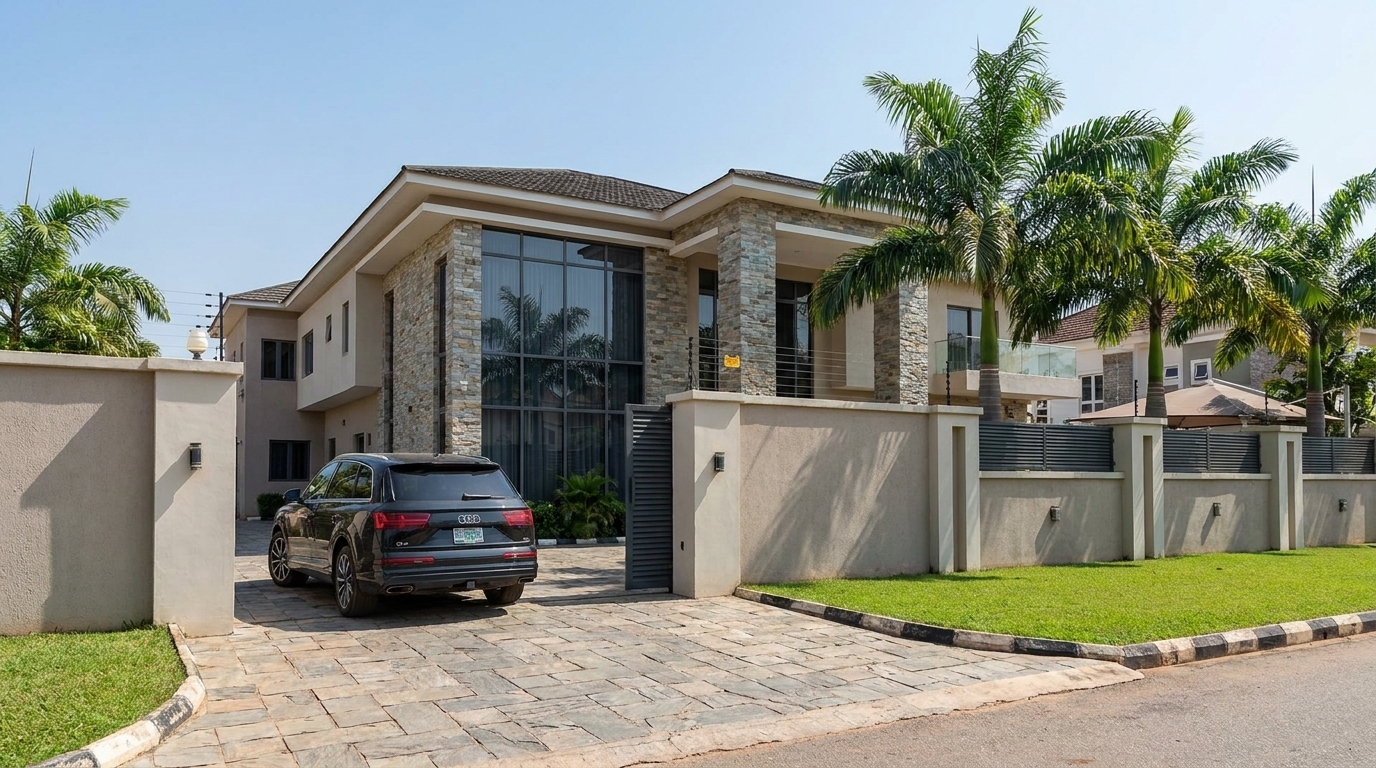
Abuja's prime districts sell prestige, security and stable value more than rental income.
These are the capital's most prestigious and expensive addresses, best for affluent living and long-term wealth preservation rather than yield.
| Area |
Best for |
Indicative signal (2026) |
Watch-outs |
| Maitama (incl. Extension) |
Top officials, diplomats, embassies, multinational CEOs, old-money families |
5-bed house averages ~N1.2bn (N750m-N3.5bn); core land ~N1.2m-N1.6m/sqm; Extension a cheaper frontier (~N500k/sqm) |
Highest entry cost, scarce land, wide price dispersion, among the most likely to be 10-20% overvalued |
| Asokoro |
Senior officials, senators, judges, diplomats wanting the quietest, most secure Phase 1 enclave |
5-bed detached ~N600m-N2.5bn (Main mansions up to ~N5bn); 3-bed apartment ~N280m-N900m |
Extremely expensive, limited stock, some older housing; prestige not income |
| Wuse II |
Affluent professionals and expats wanting the CBD, nightlife and offices on the doorstep; strong short-let |
3-bed apartment ~N420m-N600m; 4-bed terrace ~N550m; flat rent ~N10m/yr; yield ~2-3% |
Congestion, noise, commercial encroachment; low yield signals possible overvaluation |
| Guzape |
Investors wanting new-build prestige near the centre at a lower entry than Maitama, with growth upside |
Finished 4-bed terraces ~N330m-N450m (entry duplexes from ~N128m); estate land ~N250m per 500sqm; high growth |
Hilly, rocky sites raise build cost; verify C of O carefully; treat low duplex figures as an entry floor |
| Katampe Extension |
Mid-to-upper professionals and land bankers wanting the cheapest genuine entry to a prestige-adjacent hillside district |
Land averages ~N77m (plots ~N15m-N27m); finished homes ~N550m up to N2.1bn; ~18-25% growth cited |
Hilly terrain and patchy infrastructure; higher title/documentation risk, so AGIS diligence is essential |
| Jabi |
Affluent families and expats wanting modern lakeside housing and amenities at gentler prices than Phase 1 |
3-bed apartment ~N100m-N150m; 4-bed terrace from ~N370m; flat rent ~N6m/yr; yield ~2-3% |
Traffic around the mall; quality varies by estate; low yields despite high prices |
Mid-market family districts: value, space and yield
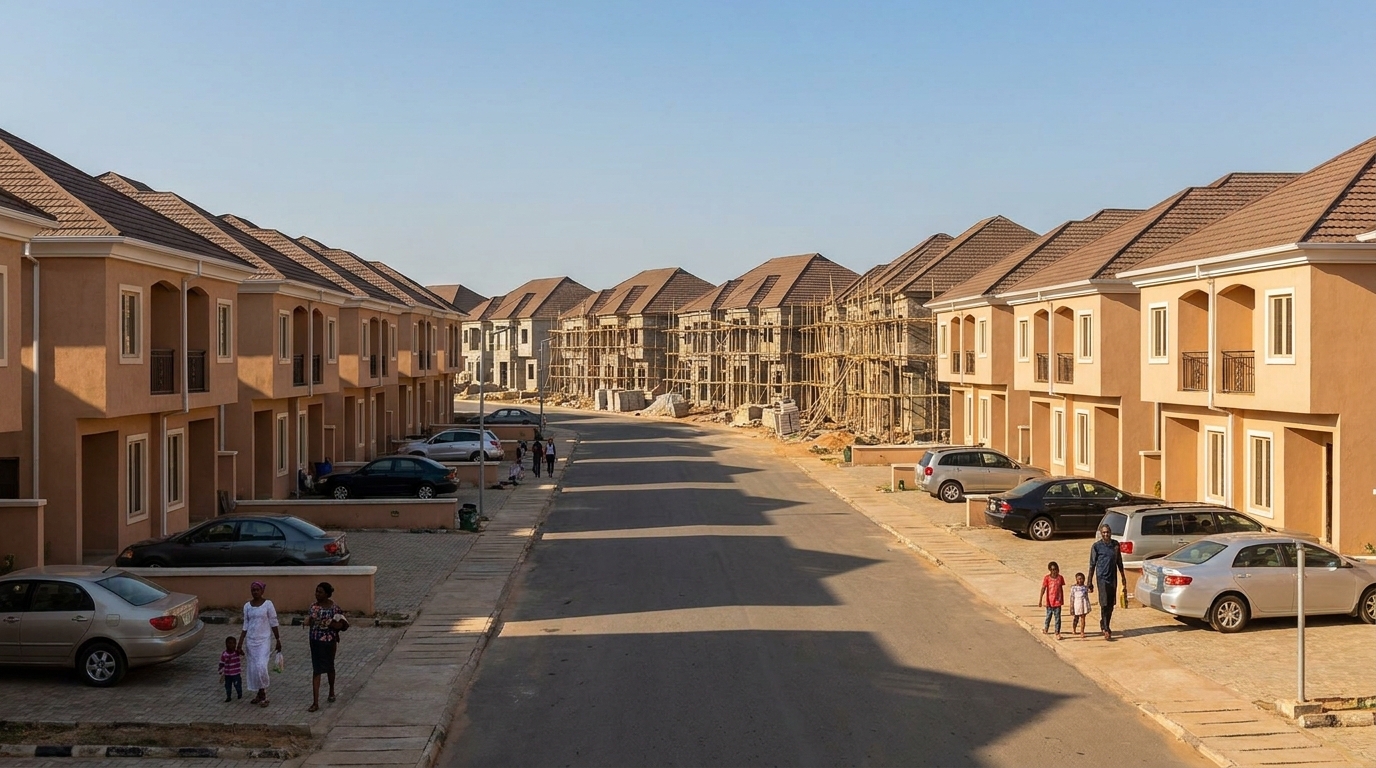
Abuja's family estates offer the best balance of space, livability and rental cash-flow.
These districts trade prime prestige for markedly better value, family livability and stronger rental yields. They are the sweet spot for most owner-occupiers and income investors.
| Area |
Best for |
Indicative signal (2026) |
Watch-outs |
| Gwarinpa |
Middle-class families and rental investors wanting value and space; Nigeria's largest single estate |
Houses average ~N270m (N35m-N900m); detached duplexes ~N400m-N450m; among the city's most consistent yields (~4-5%) |
Very large and dense, variable infrastructure by zone, internal traffic |
| Life Camp |
Professionals and upper-mid families wanting a well-managed, airport-convenient gated location |
Apartments average ~N90m (N15m-N300m); house rent averages ~N7.75m/yr; ~30 min to the airport |
Quality and management vary estate to estate; some pockets still developing |
| Jahi |
Young families and mid-range investors wanting modern stock; one of Abuja's clearest gentrification plays |
4-bed duplex ~N210m-N520m; 3-4 bed rent ~N7m-N15m/yr; ~20-30% growth cited; ~15-20 min to the Central Area |
Active construction and dust; prices rising fast; upper-mid in absolute terms, not cheap |
| Utako |
Yield-focused landlords wanting a very central, mixed commercial-residential district near the CBD |
Houses average ~N680m-N750m (flats from ~N35m); house rent ~N6m/yr; ~10 min from the CBD |
Busier, noisier and more commercial; high entry for standalone houses; traffic |
| Gaduwa |
Upper-mid and stable-income families wanting a developing, mostly residential Phase 2 district with quick CBD access |
Finished 4-bed duplex ~N150m-N350m; 3-bed flats rent ~N4m-N6m/yr; ~10-15 min to the CBD |
Still developing with patchy infrastructure; verify current prices, older guides understate them |
Affordable-growth belt and satellites: entry price and land banking
On the outer corridors, prices drop sharply and land banking becomes the game. These areas suit first-time buyers, commuters and patient investors who accept a longer commute and developing infrastructure in exchange for a low entry point.
| Area |
Best for |
Indicative signal (2026) |
Watch-outs |
| Lugbe (Airport Road) |
First-time buyers, commuters and rental investors wanting a lower entry with airport and CBD access |
Land averages ~N31m (emerging plots from ~N3m); 2-bed apartments ~N28m-N77m; driven by new roads and City Walk Abuja |
Mature parts are largely priced in; verify title on cheaper emerging plots |
| Kubwa |
Budget and first-time buyers and long-term land bankers; the FCT's largest affordable satellite |
Houses average ~N100m (from ~N10m); 4-bed duplexes ~N130m; estate plots ~N32m-N48m; ~8-12% gains cited |
Longer commute to central Abuja; densely built-up, so land-banking upside is more modest; verify cheap plots |
| Kuje / Kyami / Gwagwalada |
Patient land bankers and developers chasing maximum upside near the airport and Centenary City |
Kuje R of O plots from ~N3m; Kyami land ~N25m (entry ~N5m-N10m); Gwagwalada plots ~N8m |
Distance and commute; developing infrastructure; FCDA-approved title vs informal allocation is the key safety line |
What is driving Abuja values in 2026
-
Transport: the Abuja Light Rail (Phase 1, resumed May 2024) with a line to the airport, and Idu as the interchange with the Abuja-Kaduna railway, are the strongest appreciation catalysts in developing districts, alongside about 150km of new FCT roads.
-
Megaprojects: Centenary City near Kuje and the airport, and City Walk Abuja on the Lugbe axis, are lifting the southwest corridor.
-
Overflow demand: as tenants are priced out of the prime core, transition corridors such as Gwarinpa, Jahi, Life Camp, Lokogoma, Galadimawa, Lugbe and Katampe Extension capture the strongest forward growth.
-
Gentrification: low-density Phase 2 districts (Jahi, Mabushi, Kado, Katampe Extension) are converting into mid-rise apartments and terraces.
-
Title regularisation: the FCT's drive to convert Area Council customary land into bankable statutory titles rewards buyers who insist on clean, AGIS-verified documents.
What each budget buys in Abuja
-
Around N25-50m: mostly a plot or the cheapest uncompleted home in the outer belt, Lugbe emerging plots (from ~N3m), Karsana, Kubwa and Lokogoma outskirts, or genuine R of O land in Kuje, Kyami and Gwagwalada. Rarely a finished house.
-
Around N60-150m: mid-range and entry family homes, older flats in Kubwa or Lugbe at the low end, rising to apartments and smaller duplexes in Life Camp, Gwarinpa and Jabi.
-
Around N150-400m: premium and upper-mid stock, finished duplexes in Gwarinpa, Jahi and Gaduwa, entry into Katampe Extension and Guzape, and mid-range apartments in Wuse II.
-
N600m-N1.2bn and above: trophy prime, a single Maitama plot, 5-bed detached homes in Maitama, Asokoro mansions and larger detached duplexes in Guzape. Capital preservation, not income.
How to choose the right area for you
-
Decide yield versus prestige first. Maitama, Asokoro, Wuse II and Jabi for prestige and preservation (accepting ~2-3.5% yields), Gwarinpa and the suburban corridors for cash-flow (~4-5%).
-
Weigh lifestyle and commute honestly. Central hubs like Wuse II, Jabi and Utako trade green space for nightlife and CBD access, while satellites like Kubwa, Kuje and Gwagwalada trade a long commute for a low entry price.
-
Match the title to your goal. Insist on a C of O for resale, mortgage or development, treat an allocation letter as no ownership, and treat a transfer without the Minister's Consent as high-risk.
-
Confirm Master Plan conformity. Non-approved or wrongly-zoned land risks demolition, revocation and total loss, so check the land is FCDA-approved for its use.
-
Budget the full cost. Add roughly 10-15% transaction costs, expect one to two years of rent upfront if renting, and remember the market is cash-based. Negotiate, homes typically close 5-12% below asking.
-
Check jurisdiction on the fringe. Karu, New Nyanya and Mararaba fall under Nasarawa State, not the FCT, so their titling runs through Nasarawa, not AGIS.
-
For off-plan, protect yourself. Use escrow-backed payments, verify the developer's CAC registration and track record, get an independent AGIS title check and engage a property lawyer before signing.
Verify the title before you buy anywhere
No Abuja district is a good buy on a bad title. The decisive check is an independent AGIS search before any money changes hands, confirming the true registered owner, revealing encumbrances and government acquisition, and exposing duplicate or forged allocations. Forgery is a live problem: in February 2026 the FCT Minister nullified 485 land documents for forgery, so never rely on paperwork a seller simply hands you. If a seller resists independent verification, treat it as a red flag and walk away.
For the full method, see our step-by-step guide to property title verification in Nigeria , and learn to spot the traps in buying property in Nigeria without getting scammed .
Frequently asked questions
What is the single most important check before buying property in Abuja?
An independent AGIS (Abuja Geographic Information Systems) search, done before any money changes hands. AGIS is the only official custodian of FCT land records, and the search confirms the true registered owner, uncovers encumbrances and government acquisition, and exposes duplicate or forged allocations. The fee is nominal, around N10,000 for residential. If a seller resists independent verification, treat it as a red flag and walk away.
What is the difference between an allocation letter, R of O and C of O?
An allocation letter is only a preliminary step and confers no ownership. A Right of Occupancy (R of O) is a provisional leasehold tenure, up to 99 years for residential use, that is subject to further processing and can be revoked or converted. A Certificate of Occupancy (C of O) is the strongest, government-backed title signed by the FCT Minister, and the practical prerequisite for resale, building permits, mortgage collateral and clean registration. There is no private freehold in the FCT, and a transfer also needs the Minister's Consent.
Which Abuja areas are best for prestige versus rental income?
For prestige, security and capital preservation, look at Maitama, Asokoro, Wuse II and Jabi, but accept yields compressed to roughly 2-3.5%. For better rental cash-flow, mid-tier and suburban corridors like Gwarinpa (around 4-5%) work better. Central lifestyle hubs such as Wuse II, Jabi and Utako have the deepest, most liquid rental and short-let markets even though their yields are low.
Where should a first-time or budget buyer look in 2026?
The affordable-growth belt: Lugbe on the Airport Road corridor for immediate rental income, and Kubwa for the largest affordable satellite market. Patient land bankers can look at Kuje (genuine R of O plots from around N3m), Kyami and Gwagwalada. The trade-off is a longer commute and developing infrastructure, so verify title and prefer FCDA-approved R of O or C of O plots.
Are the prices in this guide reliable?
Treat every naira figure as an indicative 2026 range only. Nigerian prices are volatile and move with the exchange rate and inflation, and Abuja has no clean published sales database, so all figures are approximate snapshots. Some older area guides also lag the market, quoting Jahi duplexes far below current levels, for example. Always re-check current listings and negotiate, since homes typically close 5-12% below asking.
Is off-plan or a completed property safer in Abuja right now?
Completed property removes construction and delivery risk and is generally safer, though resale can be subdued around the February 2027 general elections. Off-plan is cheaper with flexible payment but is the higher-risk path in 2026 due to contract loopholes and delivery failures, with regulators sealing at least one Abuja development in 2026 after a developer took full payment without delivering. If you go off-plan, use escrow, verify CAC registration, get an independent AGIS title check and engage a property lawyer.