Buying off-plan, before a home is built, is one of the most popular ways to enter the Nigerian property market, and one of the easiest ways to lose money. The discounts and flexible payment plans are real, but so is the risk: developers who take full payment and never deliver, defective land titles, and one-sided contracts that punish the buyer for a late instalment while letting the developer stall for years. Nigeria has no single law protecting off-plan buyers, so your protection is the homework you do before you pay. This guide walks through exactly what to check on the developer, the title, the contract and your payments before committing to an off-plan property in Nigeria.
Key takeaways
- Off-plan means paying for a home before it is built, so developer non-delivery is the single biggest risk, ahead of delays and title fraud.
- Nigeria has no comprehensive off-plan law, so a well-drafted contract, escrow and milestone payments are your only real protection.
- Vet the developer hard: a CAC search proves the company exists, not that it is honest or owns the land. Visit delivered projects.
- Verify the development's root title, not just your unit, and make sure you receive a registered Deed of Assignment with Governor's Consent on completion.
- Never pay more than about 50% before roofing stage, pay into escrow, and tie each release to verified construction progress.
What off-plan means, and why it is both popular and risky
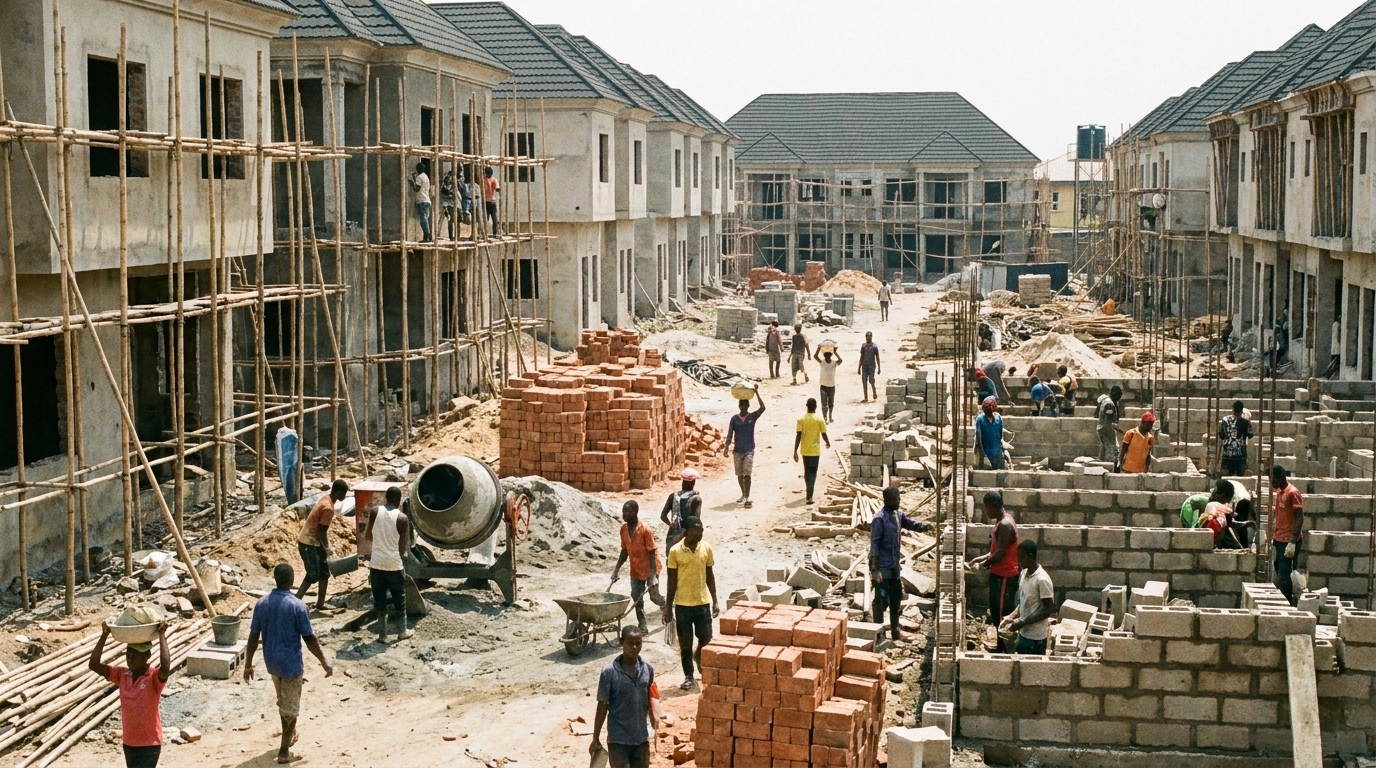
Off-plan means your money finances the build, so the developer's ability to actually complete is everything.
Off-plan property in Nigeria means buying a home or unit before construction is finished, often before ground-breaking, based on architectural drawings, 3D renders, a show unit and the developer's estate plan. Your payments help finance the build, which is why developers offer discounts and staged payment plans in return for you taking on completion risk.
Demand is huge because Nigeria's housing deficit runs to roughly 15 million units and off-plan is the most affordable way in. But the risk is just as real: the Nigerian Institution of Quantity Surveyors puts over N9 trillion in abandoned and stalled construction projects, and in 2026 the Federal Competition and Consumer Protection Commission (FCCPC) sealed several Abuja developments, including Paradise Estate, over homes never delivered despite full payment. Off-plan can be a smart buy, but only after disciplined checks.
The benefits, and the risks, of buying off-plan
The upside is why people buy off-plan in the first place:
-
Discounted entry price, typically 10-40% below completed market value, clustering nearer 10-30%.
-
Potential appreciation between launch and completion as the project de-risks, though this is a best-case, not a guarantee.
-
Flexible staged payments, a deposit at signing then instalments over roughly 12-36 months instead of one lump sum.
-
Wider choice and customisation of unit, position and finishes when you buy early.
The downside is what this guide exists to prevent:
-
Developer default, insolvency or abandonment, the worst case, where the project is never finished and you are left with a receipt and years of litigation.
-
Construction delays, common even with reputable developers, as an 18-month project slips to 30 months on funding gaps and material-cost inflation.
-
Defective land title, where the estate land is under government acquisition, in litigation, not excised, or not actually owned by the developer, a flaw that contaminates every unit.
-
Sub-standard quality and mid-project price reviews, enabled by "specification may vary" clauses that let developers downgrade materials without compensation.
-
Asymmetric penalties, where a slight buyer delay triggers a 5-10% charge or forfeiture, while developer delay carries no penalty behind vague force majeure wording.
-
Weak defect cover, with some contracts excluding warranties entirely or capping them at 30 days.
Check 1: vet the developer before you pay
A developer's delivery history is the strongest predictor of whether your home gets built. Do not rely on renders or a slick sales office.
-
Confirm the company at the CAC via the official public search, noting the RC number and status. This proves the company legally exists, not that it is honest, solvent or owns the land.
-
Check the directors and beneficial owners and cross-check them against the people you are dealing with, to expose shell companies set up only to collect deposits.
-
Verify regulator and body registration: in Lagos, developers must be registered with LASRERA (legally mandatory since 2022). REDAN membership is a useful credibility signal, but it is a trade association, not a licensing regulator.
-
Visit delivered estates: demand a portfolio of previously completed projects with real addresses and physically inspect build quality and completion rate.
-
Assess financial capacity and confirm real, active construction is progressing on the actual site, since underfunding is a leading cause of stalled projects.
-
Call past buyers for references. A developer who welcomes independent verification is a good sign; one who rushes or resists your checks is a red flag.
Check 2: verify the title on the whole development
Off-plan title risk is special: because you are buying a slice of a larger estate, any defect in the developer's underlying land flows down to your unit under the rule that no one can give what they do not have. Your own lawyer, not the developer's, should verify the development's root title.
-
Search the development's root title (the estate C of O or Governor's Consent) independently at the state Land Registry, or AGIS in Abuja, not just your unit paperwork.
-
Confirm the land is free of government acquisition by having a registered surveyor chart the coordinates at the Surveyor-General's office, checking against acquisition zones and setbacks.
-
For former community land, confirm it has been formally excised and published in the state Gazette, and that your plot falls within the gazetted boundaries.
-
Run a litigation search at the High Court to ensure the land is not tied up in a dispute you would inherit.
-
Confirm the path to a perfected title: on completion you should receive a registered Deed of Assignment in your own name with Governor's Consent, never a receipt or allocation letter as "proof" of ownership.
For the full method behind these searches, see our detailed guide to property title verification in Nigeria .
Check 3: what your contract must contain

With no dedicated off-plan law, the contract your lawyer negotiates is your main protection.
Because the off-plan framework is fragmented, the contract is where you win or lose. Insist on a written agreement reviewed by your own lawyer before signing, and make sure it does the following:
-
Identify everything precisely: the parties, the exact unit or plot with size, boundaries and an attached plan, the price and a defined payment schedule.
-
Fix and cap the specification: materials, dimensions and finishing, and delete open-ended "specification may vary" clauses that let the developer downgrade the build.
-
Set a firm completion date with a developer delay penalty (liquidated damages credited to you), and define force majeure narrowly so it cannot be stretched endlessly.
-
Balance the default terms so a minor buyer delay cannot trigger automatic forfeiture while the developer faces nothing.
-
Include a refund-with-interest clause for abandonment, plus exit, reassignment and bilateral termination rights.
-
Define a snagging and defects-liability period before final payment, rather than accepting a 30-day cap or a full warranty exclusion.
-
Cap all post-completion charges (infrastructure, service and connection fees) at signing.
Check 4: protect your money
How you pay decides how exposed you are. Nigeria has no mandatory escrow law for off-plan, so you must build these safeguards in yourself:
-
Use escrow or a lawyer's client account instead of paying the developer directly, so funds release only when conditions are met.
-
Tie payments to milestones, a deposit at signing then releases at verified stages (foundation, roofing, finishing), never a lump sum.
-
Cap your exposure: as a rule, never pay more than about 50% before the structure reaches roofing stage.
-
Pay by traceable bank transfer to the verified corporate account, never cash, and keep every receipt and document.
A safe off-plan buying sequence
-
Verify the developer: CAC search, directors, LASRERA/REDAN status and regulator registration.
-
Assess the track record: visit completed estates and speak to past buyers.
-
Engage your own lawyer and surveyor before paying anything.
-
Verify the root title: independent Land Registry or AGIS search, charting for acquisition, excision and gazette for family land, and a litigation search.
-
Confirm active construction on the real site, and building-plan approval in the FCT.
-
Negotiate and have your lawyer review the contract, fixing specs, completion date, penalties, refund and warranty terms.
-
Structure payment as a modest deposit plus milestone-linked releases into escrow, capped below 50% before roofing.
-
Pay traceably and keep the paper trail, collecting receipts for every payment.
-
Monitor to completion and ensure you receive a registered Deed of Assignment with Governor's Consent perfected.
Red flags that should stop the deal
- No verifiable completed projects and no visitable addresses, a "ghost developer" with no real track record.
- Pressure to pay immediately or "pay now or lose the plot" urgency tactics.
- Prices far below comparable properties, often paired with a fake emergency-sale story.
- No genuine physical office, or details that do not match CAC records.
- A demand for 70-80% of the price before roofing, or resistance to milestone-linked escrow.
- The developer discourages or delays your independent lawyer, surveyor or registry checks.
- Reliance on an allocation letter or receipt with no clear path to a registered title.
- A pitch built on rumoured infrastructure rather than confirmed approvals and visible construction.
These patterns overlap with wider property fraud, so it is worth reading buying property in Nigeria without getting scammed alongside this guide.
Frequently asked questions
What exactly does "off-plan" mean in Nigeria?
It means buying a home or unit before construction is finished, often before ground-breaking, based on architectural drawings, 3D renders, a show unit and the developer's estate plan. Your payments help finance the build, which is why developers offer discounts and staged payment plans in exchange for you taking on completion risk.
How much do I pay upfront and how are instalments structured?
Typically a 10-30% deposit at signing, with 20-30% common and securing better terms, and the balance in instalments over roughly 12-36 months. For off-plan specifically, insist those instalments are tied to verifiable construction milestones, and as a safeguard never pay more than about 50% before the structure reaches roofing stage.
What is the single biggest risk with off-plan in Nigeria?
Developer non-delivery, through insolvency, abandonment or simply never completing, which can leave you with a paid receipt and years of litigation. Delay is the most frequent problem and defective or fraudulent title is an equally serious parallel risk. The FCCPC sealed several Abuja developers in 2026 over homes never delivered despite full payment, so this is a real, documented danger.
Should I trust an allocation letter or a receipt as proof I own the unit?
No. A receipt only proves you paid money, and an allocation letter is a provisional commitment, not title, both vulnerable to revocation and double allocation. On completion you should receive a registered Deed of Assignment in your own name with Governor's Consent perfected. Acceptable title is a C of O, Governor's Consent or a registered Deed of Assignment.
How do I protect my money if the developer might not deliver?
Pay into escrow or a lawyer's client account rather than directly to the developer, tie each release to an independently verified construction milestone, and insist the contract includes a firm completion date with a developer delay penalty plus a refund-with-interest clause for abandonment. Nigeria has no mandatory escrow law for off-plan, so you must negotiate these protections into the contract yourself.
Is REDAN membership or CAC registration enough to know a developer is safe?
No. A CAC search only proves the company legally exists, and REDAN is a trade association, not a statutory licensing regulator, so neither proves clean land title or reliable delivery. Use them as supporting signals alongside an independent title search, a physical visit to completed projects, and a lawyer's review of the developer's root title and the contract before you pay.