Few jobs in the industrial world carry the same risk profile as cleaning a hydrocarbon storage tank, a chemical reactor or any other confined space. Atmospheres can be flammable, oxygen-deficient or toxic. Industrial tank cleaning services therefore combine specialised equipment, validated procedures, certified crews and a strict regulatory envelope. This guide walks through the cleaning sequence, the entry permit framework, the methods used and the rescue plan that turns a high-risk operation into a controlled one.
Key takeaways
- Industrial tank cleaning is governed by confined space entry rules: gas testing, ventilation, permits, standby attendant and a documented rescue plan are mandatory before any operator enters.
- A complete sequence covers seven steps: isolation, decommissioning, gas freeing, sludge removal, wet or chemical cleaning, inspection, recommissioning. Skipping any step is the leading cause of accidents.
- Method mix typically combines hydroblasting, chemical degassing, vacuum trucks and increasingly robotic crawlers, with the goal of reducing the time operators spend inside the tank.
- Sludge generated during cleaning is a regulated waste stream that must be characterised, transported and treated through licensed contractors, with full traceability.
Why tank cleaning is a different beast
Inside the broader catalogue of industrial cleaning services , tank cleaning sits at the top of the risk pyramid. It combines the most hostile environments (hydrocarbons, chemicals, biological residues), the most restrictive geometry (confined spaces with single openings, manhole diameter as small as 600 mm), and the toughest deposits (oxidised sludge, polymerised residues, sulphate scale). A single procedure shortcut can end in fire, explosion or fatality - making this trade one where compliance and HSE discipline are not optional.
Types of tanks and their challenges
Hydrocarbon storage tanks
Crude oil, gasoline, diesel, jet fuel and lubricant storage tanks accumulate sludge (bottom sediment and water - BS&W) and develop explosive atmospheres when vapour-air mixtures fall in the flammability range. Cleaning is required for inspection (API 653), repair, change of service or decommissioning. African depots in Lagos, Tema, Mombasa, Dar es Salaam and Durban handle these operations every year.
Chemical reactors and process tanks
Reactors, mixers, neutralisation tanks and chemical storage vessels combine corrosion, residual chemistry and the risk of toxic vapours. Cleaning chemistry, residue compatibility and decontamination of seals are central to the operation. Many of these jobs rely on industrial chemical cleaning techniques for degassing and neutralisation.
Water, effluent and process water tanks
Process water tanks, wastewater equalisation tanks, cooling tower basins and clarifiers accumulate biological sludge, biofilm and mineral scale. Cleaning is required to maintain capacity, prevent legionella in cooling systems and meet effluent quality. Confined space rules still apply because of the oxygen-deficient atmospheres typical of stagnant water.
Silos and bulk solid storage
Cement, flour, sugar, fertiliser, alumina and grain silos require periodic cleaning to remove built-up coating and lump formations. Dust explosion risk, ergonomic constraints and rope access requirements make these operations specialised work.
Confined space entry: the non-negotiable framework
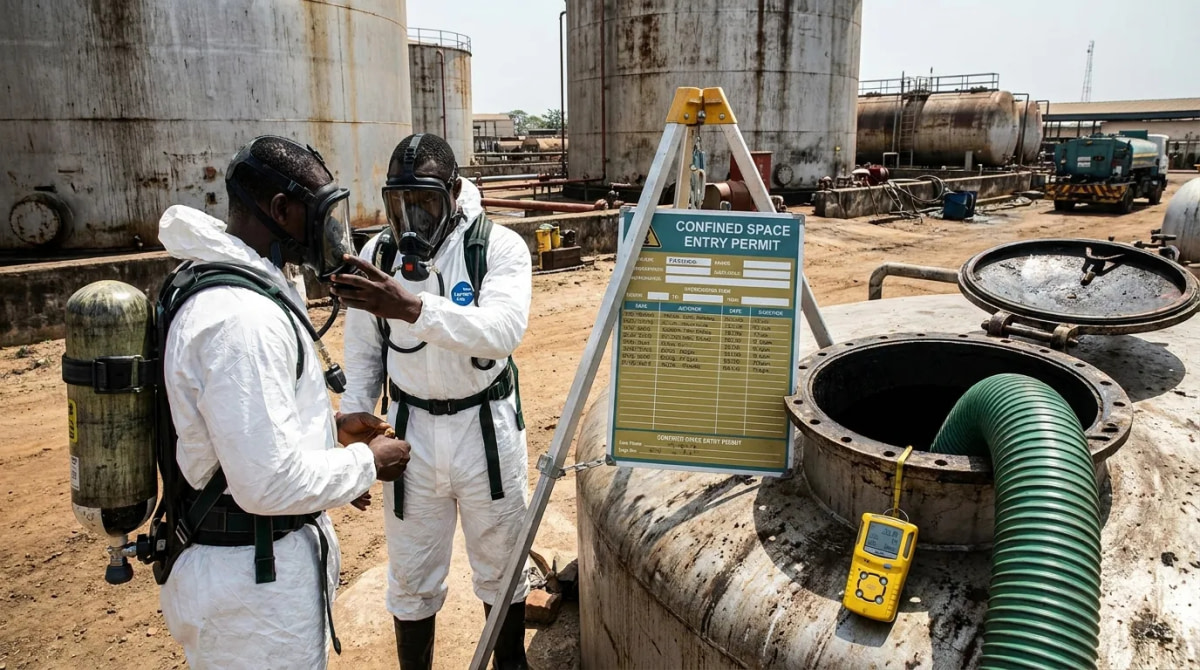
Any space that is large enough to enter, has limited means of entry/exit and is not designed for continuous human occupancy qualifies as a confined space. National regulations (OSHA 1910.146 inspired in Nigeria, Ghana, Kenya and South Africa) impose:
-
A written permit to work signed before each entry, with validity not exceeding a shift.
-
Atmospheric testing for oxygen (19.5 to 23.5% range), flammable gas (under 10% LEL) and toxic gases (H2S, CO, benzene) before and during entry.
-
Mechanical ventilation continuously supplying fresh air during the operation.
-
A standby attendant outside the tank, in continuous communication with the entrants, with no other duties.
-
A documented rescue plan with on-site retrieval equipment (tripod, winch, harness) and a trained rescue team able to respond within minutes.
-
Training and certification of entrants, attendants and supervisors, with periodic refreshers.
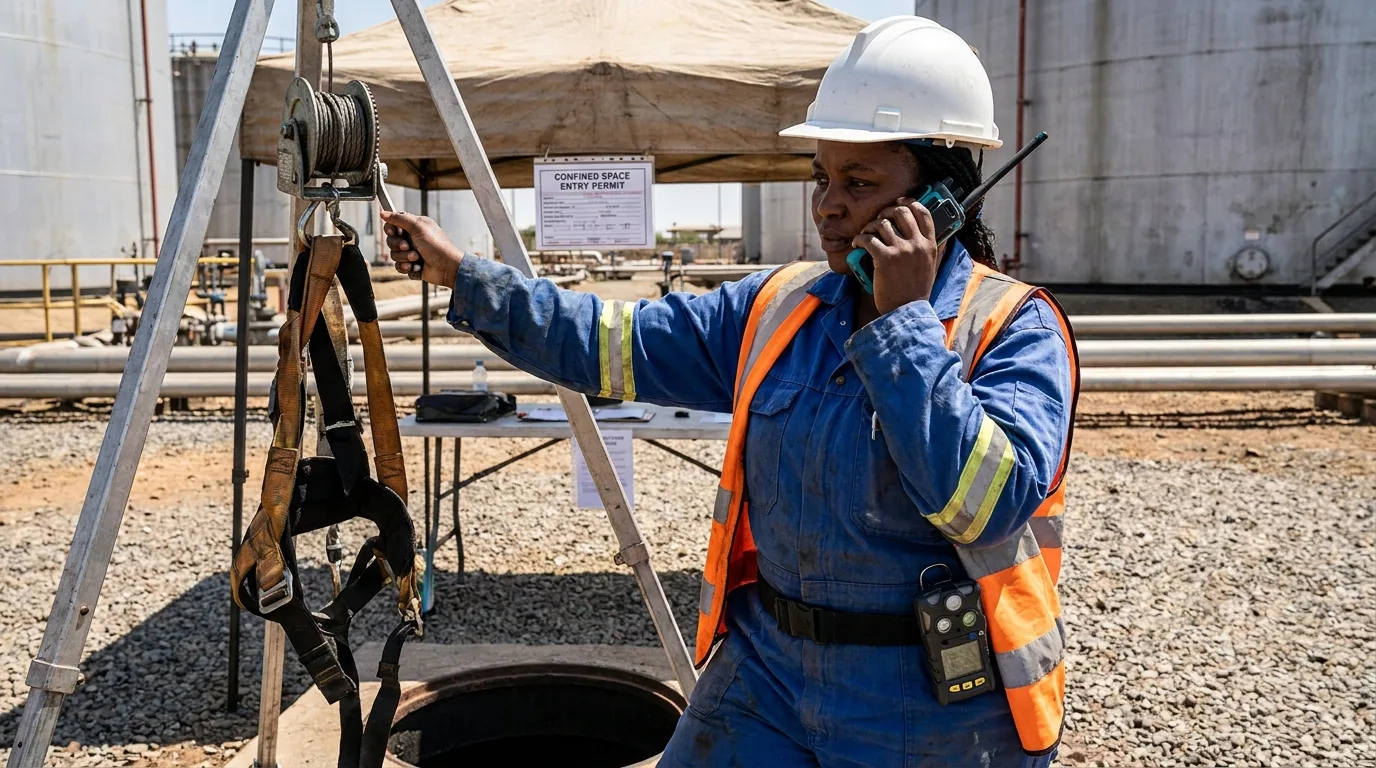
The standby attendant is the single most important safety role during any confined space cleaning operation.
The seven-step tank cleaning sequence
-
Isolation and decommissioning: blank all incoming and outgoing lines, drain residual product, isolate electrical supply to mixers and heaters. Apply lockout-tagout.
-
Atmospheric stabilisation and gas freeing: purge with inert gas (nitrogen) where flammable atmospheres are present, then ventilate to bring the atmosphere within entry limits. Continuous monitoring with multi-gas detectors throughout.
-
Bulk sludge removal: vacuum trucks suction free-flowing sludge, then mechanical or hydraulic mobilisation moves heavier sediment toward the manhole. Robotic crawlers operate from outside when geometry allows.
-
Wet or chemical cleaning: hydroblasting at 700 to 2,000 bar dislodges adhered residues. Chemical circulation (caustic, solvent, surfactant) is used for polymerised or wax deposits.
-
Final manual cleaning: detail work in corners, around heating coils, around sample valves, performed by entrants with strict time limits.
-
Inspection: visual inspection, NDT (UT, MFL, eddy current) per API 653 or relevant code, signed integrity report.
-
Recommissioning: hydrostatic test if required, removal of blanks, atmosphere verification, return to service with traceability documentation.
Cleaning methods deployed inside tanks
Vacuum trucks and bulk transfer
Vacuum trucks (also called air-mover trucks, super-suckers or hydrovacs) generate negative pressure of 0.6 to 0.9 bar, sucking sludge through hoses up to 200 mm in diameter. They are the backbone of bulk sludge removal in depots and refineries.
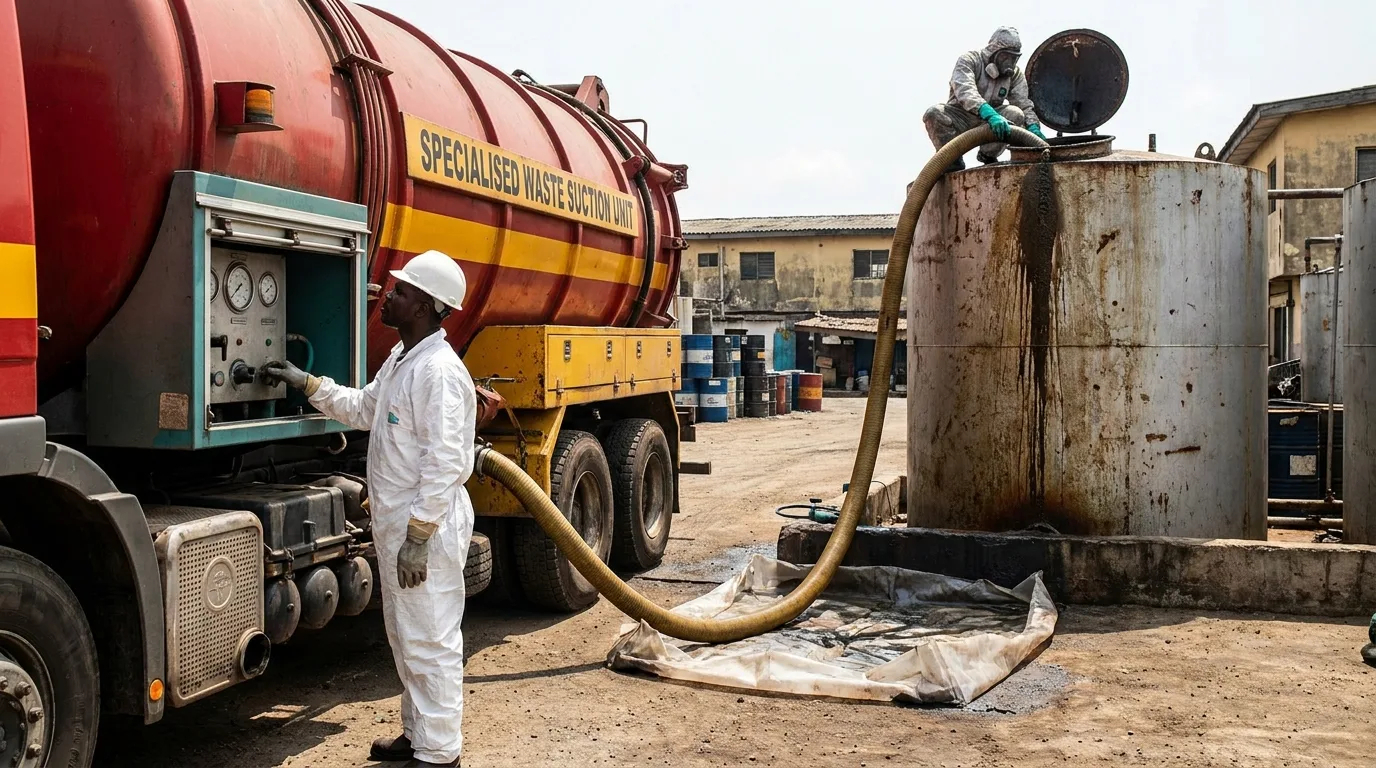
Vacuum trucks remove the bulk of free-flowing sludge before manual or chemical cleaning steps.
High-pressure water cleaning
Once bulk sludge is removed, hydroblasting between 700 and 2,000 bar removes adhered residues from walls, floor and roof internals. Robotic lance heads can scour the inside of large storage tanks without operator entry. The method library is described in industrial hydroblasting services .
Chemical cleaning and degassing
Heavy crude residues, polymerised resins and pyrophoric iron sulphide require chemical mobilisation: surfactant degassing chemistries dissolve and emulsify the deposit, allowing it to be pumped out. Inhibited acid or alkaline circulations handle scale. The chemistry library is covered in industrial chemical cleaning .
Robotic and remote operations
ROV-style tank cleaning robots (Re-Gen, Oreco, Scanjet) operate inside the tank while the crew stays outside. They project water jets, sweep arms or magnetic crawlers and reduce confined-space exposure to a minimum. The capex is high but the safety dividend on large fleets justifies it.
Sludge management and waste disposal
Sludge generated during cleaning is a regulated waste stream. In Nigeria, NESREA classifies oil tank bottoms as hazardous waste. In Ghana, the EPA imposes traceability from source to disposal. In Kenya, NEMA enforces a similar framework. In South Africa, the National Environmental Management Waste Act applies. Practically, every tank cleaning project must include:
-
Waste characterisation: laboratory analysis of the sludge to determine hazardous nature, treatment route and disposal cost.
-
Licensed transport: authorised hazardous waste hauliers, manifested loads, chain-of-custody documentation.
-
Treatment route: centrifugation for oil recovery, bioremediation for organic content, thermal treatment for residual sludge, secure landfill for inert fraction.
-
Final certificate of disposal: issued by the licensed treatment facility and kept in the project file.
Typical applications across African industry
The most common settings for tank cleaning operations in 2026 are oil depots and refineries (gasoline, diesel, jet fuel, crude tanks), beverage and food plants (CIP-supplemented manual cleaning of storage tanks), agro-industry (vegetable oil, palm oil, sugar storage), mining (process water and tailings tanks), chemical plants (reactors, neutralisation tanks) and power generation (boiler feedwater, condensate tanks).
Choosing a tank cleaning contractor
-
Proven HSE record: documented LTIFR, incident statistics, certifications (ISO 45001, OHSAS).
-
Confined space training for entrants, attendants and supervisors, with current certificates.
-
Owned equipment: vacuum trucks, hydroblasters, multi-gas monitors, retrieval equipment, ATEX-rated lights and tools.
-
Waste management capability: in-house or partnered, with full traceability.
-
Sector experience: depots, refineries, food or chemicals, depending on your facility.
-
Emergency response: capacity to mobilise within 24 to 72 hours for spills, decontamination, post-incident cleanup.
Frequently asked questions
How long does it take to clean a typical storage tank?
A 5,000 m3 fuel storage tank typically requires 5 to 15 days of cleaning depending on the sludge volume, the tank internals (heating coils, mixers, baffles) and the inspection scope. Larger crude storage tanks can take 4 to 8 weeks.
Can a tank be cleaned without removing the product?
Yes, in some cases. Closed-loop cleaning solutions (Oreco BLABO, COUGAR ROV) clean while keeping the tank in service or partially filled, eliminating man-entry and reducing downtime. They are economically justified for very large or frequently cleaned tanks.
What is gas freeing and why is it the most critical step?
Gas freeing is the process of removing flammable, toxic or oxygen-deficient atmospheres before entry. It typically combines purging (nitrogen, water displacement) and ventilation, with continuous gas monitoring. Inadequate gas freeing is the leading cause of fatalities in tank cleaning operations worldwide.
What documentation should a tank cleaning contractor provide?
Expected deliverables include the entry permits, gas readings log, equipment calibration certificates, daily HSE reports, the rescue plan, the waste manifest, the integrity inspection report and the final cleaning certificate. All should be archived for at least 10 years.
Where does tank cleaning fit in a wider industrial cleaning programme?
Tank cleaning is one of the highest-risk specialised operations covered by the broader industrial cleaning services discipline. It typically combines methods (hydroblasting, chemical degassing, vacuum trucks) and demands the strictest HSE controls of any cleaning intervention.