Oil stains, grease build-up and forklift marks are the daily reality of a manufacturing plant floor. Beyond looks, a dirty floor is a safety hazard and a slow killer of expensive coatings. Industrial floor cleaning and degreasing tackle the problem at its root, restoring grip, protecting the slab and keeping the plant safe. Here is how it works and how to keep your floors in top condition.
Key takeaways
- Factory floors face oil, grease and forklift traffic that ordinary mopping cannot handle.
- The process: sweep, apply a heavy-duty degreaser, scrub with an auto-scrubber, then rinse and dry.
- Modern degreasers emulsify oil, are low-foam and safe for epoxy and polyaspartic coatings.
- Sealing or coating the floor makes it more durable, safer and easier to maintain.
- A layered schedule - daily, weekly and periodic deep cleans - keeps floors in top condition.
Why factory floors need more than mopping
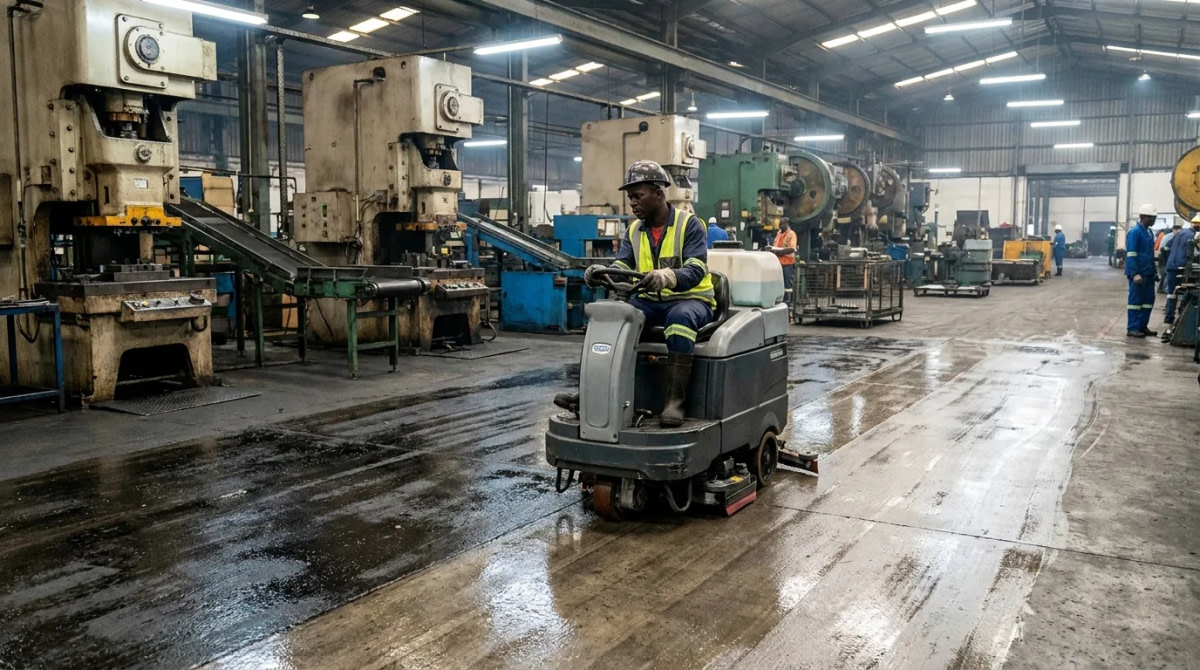
In a manufacturing plant, the floor takes constant abuse: machine oil and grease, coolant, forklift tyre marks, dust and process spills. Left to build up, these create slip hazards, damage floor coatings and make the whole site look neglected. A mop and bucket simply cannot lift embedded grease from porous concrete.
This is where specialised industrial cleaning comes in. Proper floor cleaning and degreasing protect worker safety, extend the life of the slab and keep the plant compliant. It is one of the most visible parts of the broader discipline covered in our complete guide to industrial cleaning .
The industrial floor cleaning and degreasing process
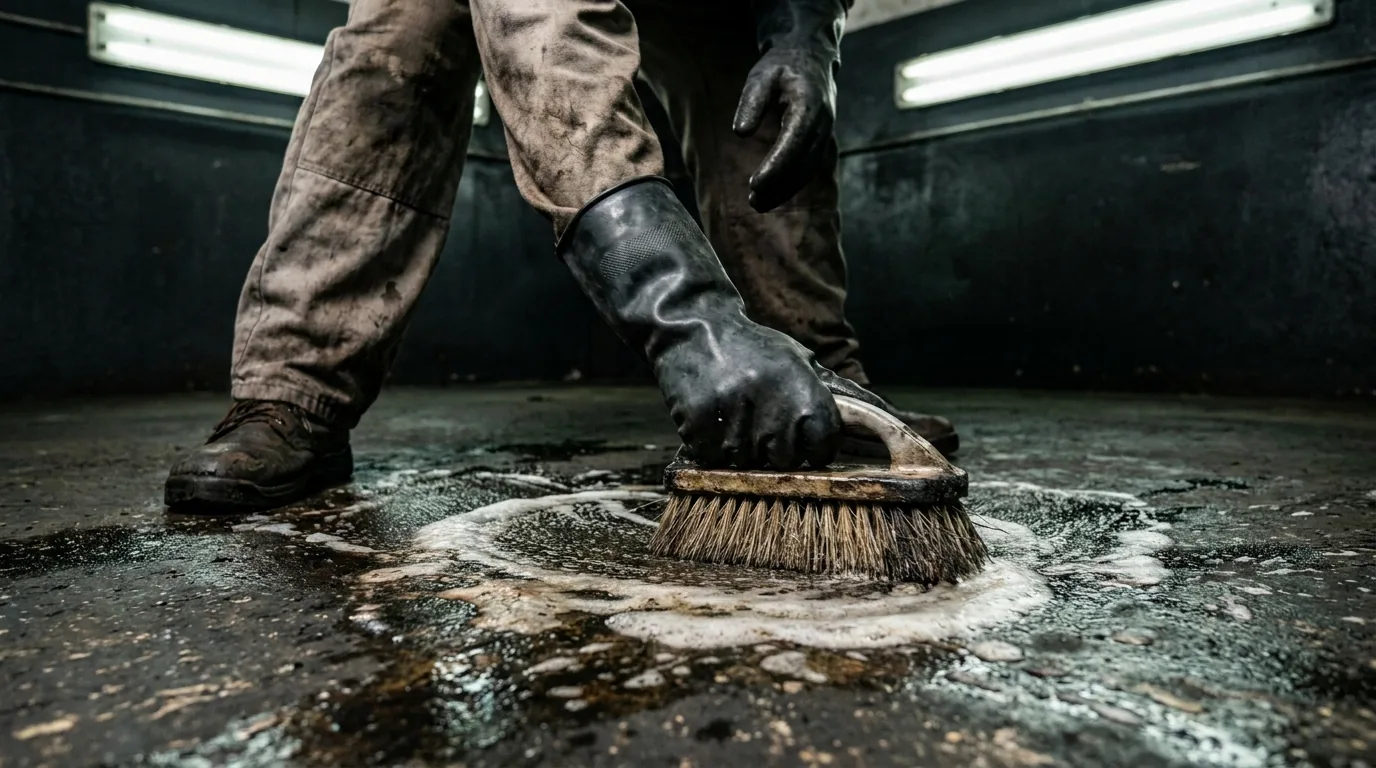
A heavy-duty degreaser emulsifies oil so it can be lifted from porous concrete.
Effective floor degreasing follows a clear sequence:
-
Sweep and remove debris: clear loose dirt, swarf and packaging first.
-
Apply a heavy-duty degreaser: the product breaks down and emulsifies oil and grease so they can be lifted.
-
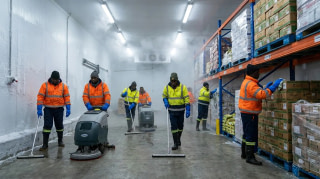
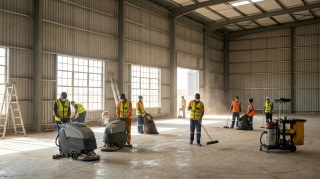
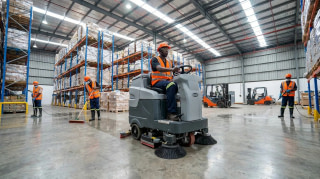
Agitate and scrub: a ride-on or walk-behind auto-scrubber with the right pads loosens and collects the grime.
-
Rinse and recover: dirty solution is vacuumed up, not pushed around, leaving a clean, dry surface.
For very heavy build-up or large surfaces, high-pressure and hydroblasting methods can be combined with degreasing for a deeper result.
Heavy-duty degreasers and methods
The product matters as much as the machine. Quality industrial degreasers share several features:
-
Emulsification: they lift and suspend oil particles so they rinse away instead of smearing.
-
Low-foam formulas: essential to protect auto-scrubber components from damage.
-
Coating-safe: compatible with epoxy, polyaspartic and urethane floor coatings without etching or dulling them.
-
Biodegradable and microbial options: micro-organisms that digest oil, grease and diesel, for a greener clean.
Choosing the correct cleaning products for your floor type and coating avoids costly damage. This logic mirrors the broader range of services manufacturers should expect from a professional cleaning company.
Protecting and maintaining the floor
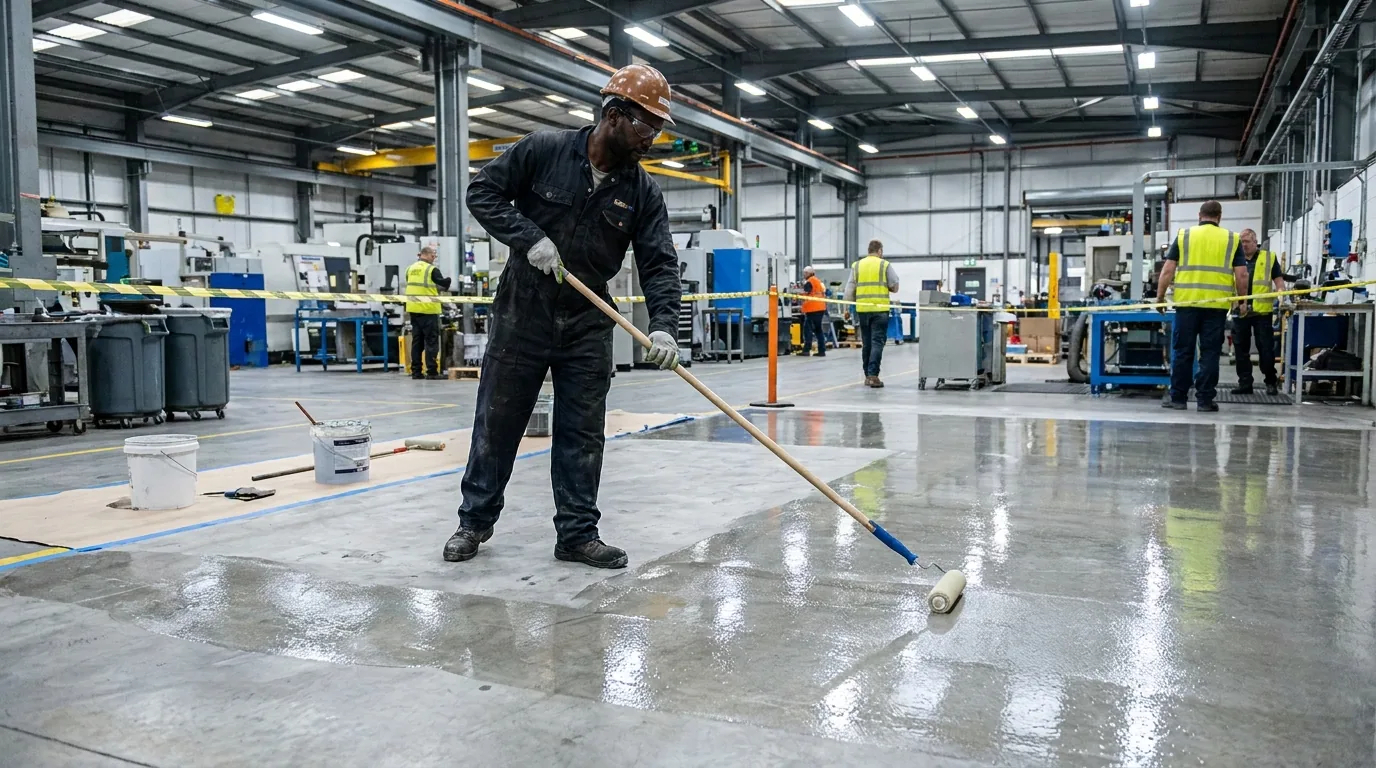
Sealing or coating a clean concrete floor makes it more durable and easier to maintain.
Cleaning is only half the job. Once a slab is clean, protecting it pays off:
-
Sealers: heavy-duty clear sealers shield porous concrete from oil, stains, chemicals and wear.
-
Coatings: epoxy or polyaspartic systems create a tough, non-porous surface that resists forklift traffic and spills.
-
Routine maintenance: soft nylon brushes or white pads on an auto-scrubber preserve coated floors while removing daily soil.
A protected floor is easier and cheaper to keep clean, and lasts far longer. The same approach applies to storage sites, as we explain for warehouse and distribution center floors .
Building a floor maintenance schedule
Consistency beats occasional heavy scrubbing. A layered plan keeps floors safe year-round:
| Frequency |
Action |
Goal |
| Daily |
Sweep and spot-clean spills |
Prevent slips and stains |
| Weekly |
Auto-scrub high-traffic zones |
Remove built-up grime |
| Monthly |
Full degreasing scrub |
Deep clean the whole floor |
| Yearly |
Re-seal or re-coat as needed |
Protect and extend floor life |
A specialised provider helps tailor this schedule to your process, traffic and floor type, rather than applying a generic routine.
Frequently asked questions
How do you remove oil and grease from a concrete factory floor?
Sweep the floor, apply a heavy-duty degreaser that emulsifies the oil, scrub with an auto-scrubber and the right pads, then recover the dirty solution. For deep or large contamination, combine degreasing with high-pressure cleaning.
Will degreasers damage my floor coating?
Quality industrial degreasers are formulated to be compatible with epoxy, polyaspartic and urethane coatings, lifting soil without etching or dulling the finish. Always match the product to your floor type.
Is it worth sealing or coating an industrial floor?
Usually yes. Sealing or coating makes concrete resistant to oil, chemicals and forklift traffic, easier to clean and longer-lasting, which lowers maintenance costs over time.
How often should a manufacturing plant floor be degreased?
High-traffic zones benefit from weekly auto-scrubbing, with a full degreasing scrub monthly and re-sealing or re-coating yearly. The exact rhythm depends on the process and contaminants.
Can floor cleaning be done without stopping production?
Yes. Providers schedule work zone by zone, at night or on weekends, and use fast-drying methods so the plant keeps operating with minimal disruption.