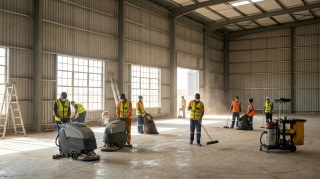
Warehouses and distribution centers never stop moving, and that constant flow of pallets, forklifts and people takes a toll on the building. Dust on racking, scuffed and stained floors, debris at the loading dock: left unchecked, they threaten safety, compliance and the goods themselves. Professional industrial cleaning keeps these high-traffic facilities safe, efficient and audit-ready. Here is what it covers and how to choose the right provider across Africa.
Key takeaways
- Warehouse cleaning protects worker safety, stored goods and regulatory compliance.
- Core services: floor scrubbing, high-level racking dusting, loading-dock and washroom cleaning, waste removal.
- Specialised machines - ride-on scrubber-dryers, sweepers, high-level vacuums - do the heavy lifting.
- A good provider works around your operations, with trained, insured teams.
- Combining daily upkeep with periodic deep cleans gives the best results.
Why warehouses and distribution centers need specialised cleaning
A warehouse is not an office. Vast floor areas, heavy forklift traffic, towering racking and round-the-clock operations create cleaning challenges that ordinary janitorial work cannot handle. Dust builds up on high shelves, floors take a constant beating, and spills or debris quickly turn into hazards.
The stakes are real: slip-and-trip accidents, damaged or contaminated stock, blocked fire exits, failed audits. In food, pharmaceutical or export logistics, hygiene standards are non-negotiable. Specialised industrial cleaning keeps the facility safe, compliant and productive. For the bigger picture, see our complete guide to industrial cleaning .
Core cleaning services for warehouses and distribution centers
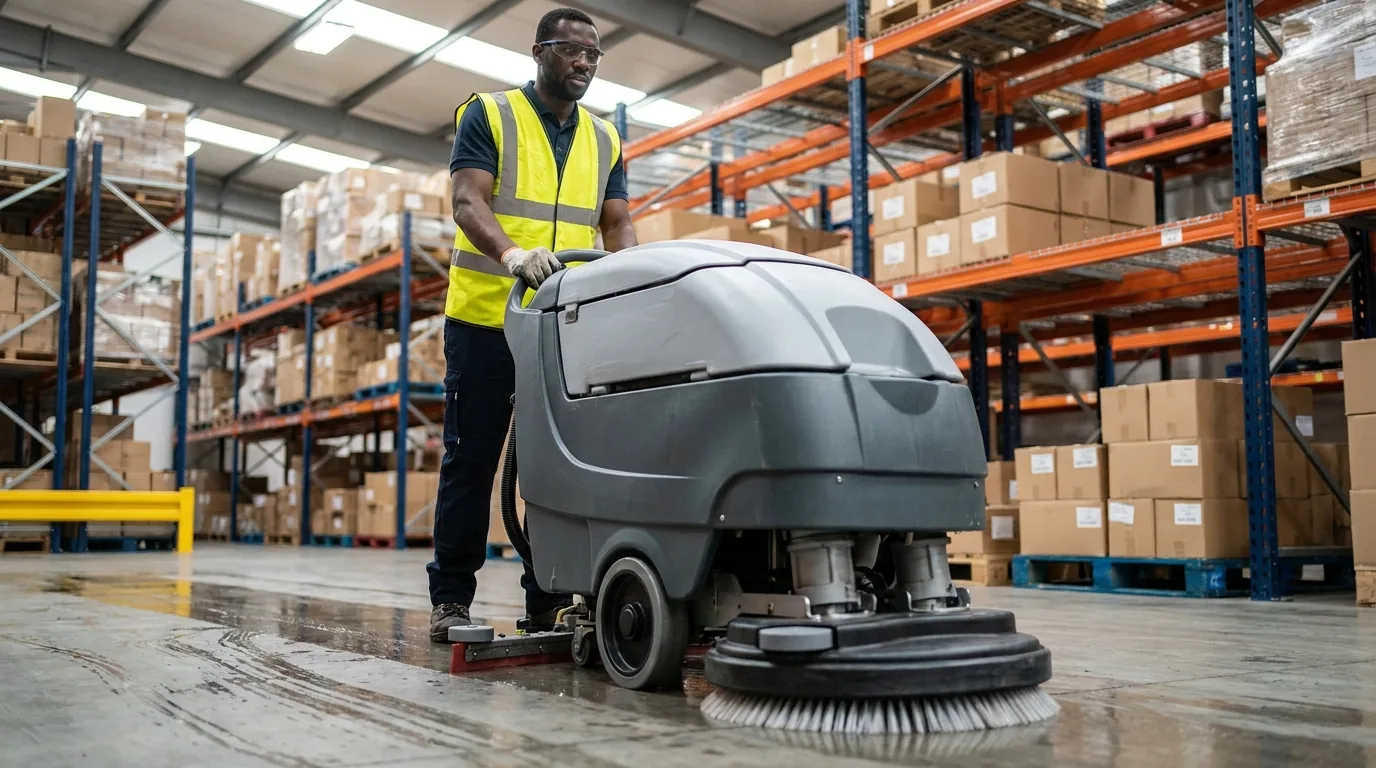
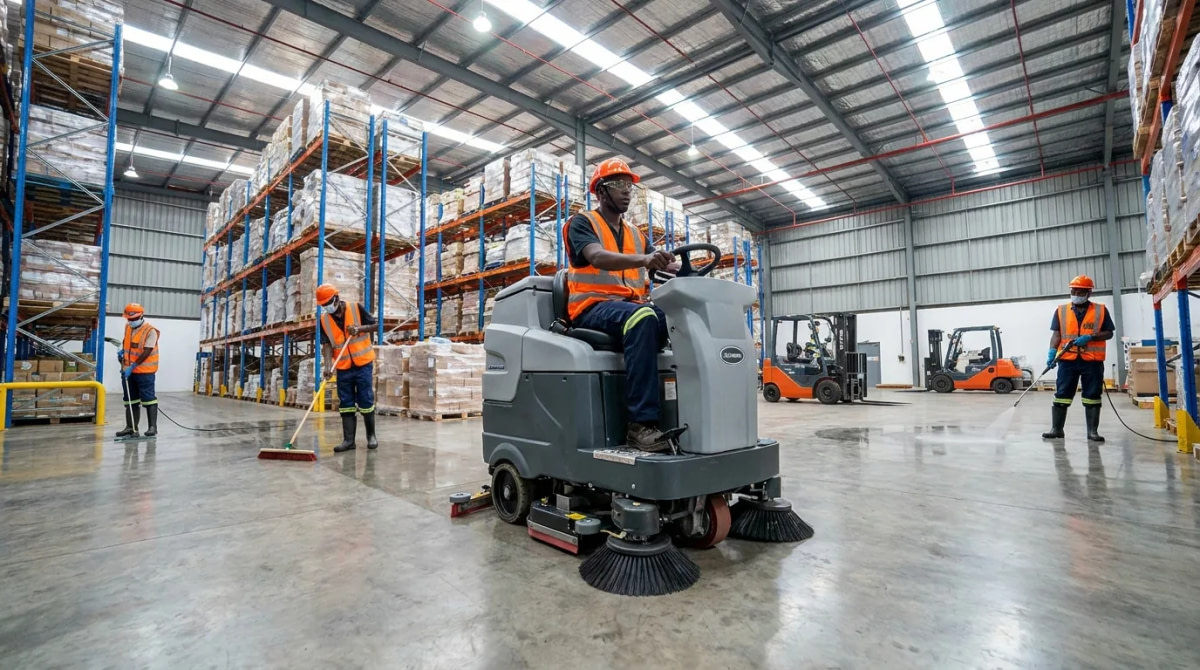
Ride-on and walk-behind scrubber-dryers keep large warehouse floors safe and slip-free.
A professional warehouse cleaning programme typically covers:
-
Floor scrubbing and sweeping: removing dust, tyre marks and spills from large concrete floors to keep them safe and slip-free.
-
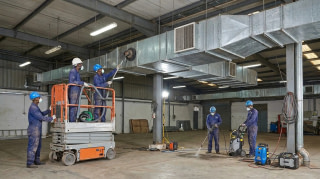
High-level cleaning: dusting and vacuuming racking, beams, pipes and lighting that ordinary cleaning never reaches.
-
Loading-dock and yard cleaning: the dirtiest, highest-traffic zones, where debris and spills concentrate.
-
Washrooms and break areas: hygiene for staff and visitors.
-
Waste and debris removal: shrink-wrap, broken pallets, packaging and general waste.
-
Spill response: fast clean-up of oil, chemicals or product spills to prevent accidents.
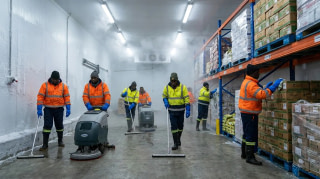
In facilities that store food or sensitive goods, cleaning must follow strict hygiene rules - the same logic we cover for cleaning in the food industry (HACCP) .
Equipment and methods
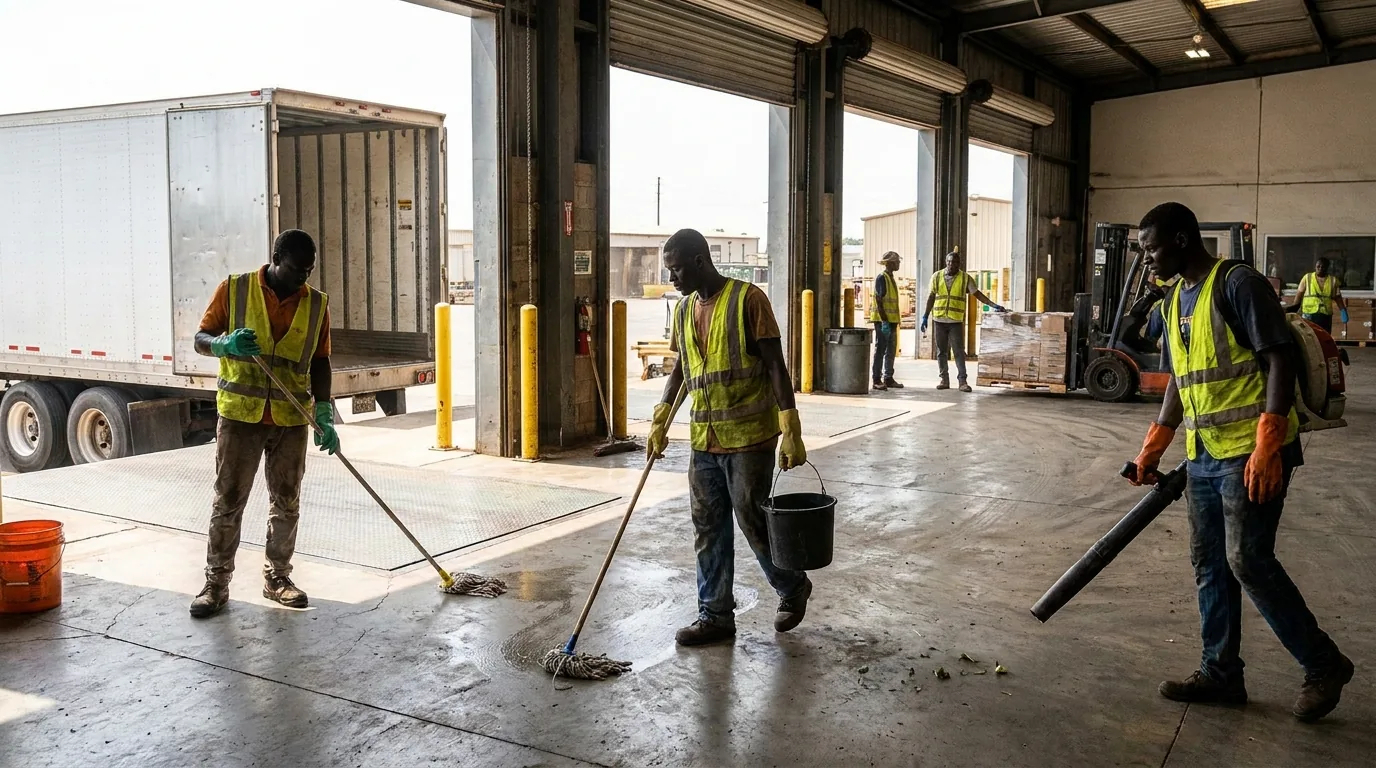
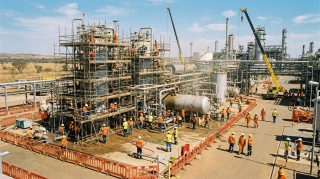
Loading docks and yards are high-traffic zones that need regular, dedicated cleaning.
Industrial warehouse cleaning relies on purpose-built equipment rather than mops and buckets:
-
Ride-on and walk-behind scrubber-dryers: wash and dry large floor areas in a single pass.
-
Industrial sweepers: collect dust and debris fast over big surfaces.
-
High-level vacuum systems: safely remove dust from racking and overhead structures.
-
Pressure washing: for docks, yards and stubborn grime. For heavy build-up, high-pressure and hydroblasting methods go further.
-
Floor treatment: sealing and polishing concrete to make it more durable and easier to maintain.
Increasingly, providers also adopt greener methods such as water recycling and safer chemistry, in line with sustainable industrial cleaning and ESG expectations.
How to choose a cleaning provider
Not all contractors are equal. Before signing a contract, weigh these points:
| Criterion |
Why it matters |
What to look for |
| Experience |
Warehouses have specific needs |
References in logistics and industry |
| Safety and insurance |
Protects your site and staff |
Trained teams, PPE, liability cover |
| Scheduling |
Operations must not stop |
Night, weekend or shift-based cleaning |
| Equipment |
Determines speed and quality |
Modern scrubbers, sweepers, vacuums |
Across hubs like Lagos, Accra, Nairobi and Johannesburg, you can compare specialised warehousing and handling and cleaning firms in the directory before requesting quotes.
How often should a warehouse be cleaned?
Frequency depends on activity, but a layered approach works best:
-
Daily: floors, walkways, docks, washrooms and waste in high-traffic zones.
-
Weekly or monthly: deeper floor scrubbing and mid-level cleaning.
-
Periodic deep cleans: high-level dusting, racking and full floor treatment a few times a year.
A clear schedule agreed with your provider keeps the facility consistently safe and inspection-ready, instead of reacting only when problems appear.
Frequently asked questions
What does industrial warehouse cleaning include?
It typically covers floor scrubbing and sweeping, high-level dusting of racking and structures, loading-dock and yard cleaning, washrooms, waste removal and spill response. The exact scope is tailored to the facility and the goods stored.
How often should a distribution center be cleaned?
High-traffic zones such as floors, docks and washrooms usually need daily attention, with deeper floor scrubbing weekly or monthly and full deep cleans a few times a year. Activity levels and stored products determine the right rhythm.
Can cleaning be done without stopping operations?
Yes. Experienced providers schedule work at night, on weekends or around shifts, and clean zone by zone so the warehouse keeps running while cleaning takes place.
Why use a specialised provider instead of in-house staff?
Warehouses need industrial machines (scrubber-dryers, high-level vacuums) and trained, insured teams that follow safety protocols. A specialised contractor delivers better results, faster and more safely than general staff.
Is warehouse floor treatment worth it?
Often, yes. Sealing and polishing concrete makes floors more resistant to forklift traffic and spills, easier to clean and longer-lasting, which lowers maintenance costs over time.
Sources