It is the debate at the heart of almost every first investment conversation in Nigeria: put your savings into a plot of land that quietly appreciates, or into an apartment that pays rent every month? Both build wealth, but they behave very differently in terms of cost, income, risk and effort. Here is an honest comparison to help you browse real estate opportunities in Nigeria with a clear head - and pick the option that actually fits your situation.
Key takeaways
- Land offers a lower entry price and strong long-term appreciation, but produces no income while you hold it.
- An apartment starts paying rent from day one and is easier to finance with a mortgage, but costs more upfront and demands ongoing maintenance.
- Title verification is non-negotiable in both cases - most losses come from bad paperwork, not bad markets.
- Your budget, time horizon and need for income should decide, not the sales pitch.
- Many successful Nigerian investors sequence the two: land first for growth, then rental property for cash flow.
The case for buying land
Land is the classic entry point into Nigerian real estate, and for good reasons. A plot in a developing area costs a fraction of the price of a finished apartment, which makes it the most accessible way to get into the market. In fast-growing corridors around Lagos, Abuja or Port Harcourt, well-located plots have multiplied in value within a few years as roads, estates and businesses arrive.
Holding costs are minimal: no tenants, no repairs, no service charge. Land is also flexible - you can build a family home later, develop rental units, resell to a developer or simply hold it as a store of value against inflation.
The weaknesses are just as real. Land generates no income while you wait, so your capital is locked in. It is the asset class most exposed to fraud: fake titles, family land sold without consent, plots under government acquisition and "omonile" disputes. And reselling can take time - land is far less liquid than a rented flat in a sought-after district. Before paying for any plot, follow our guide on how to verify property title before buying real estate in Nigeria .
The case for buying an apartment
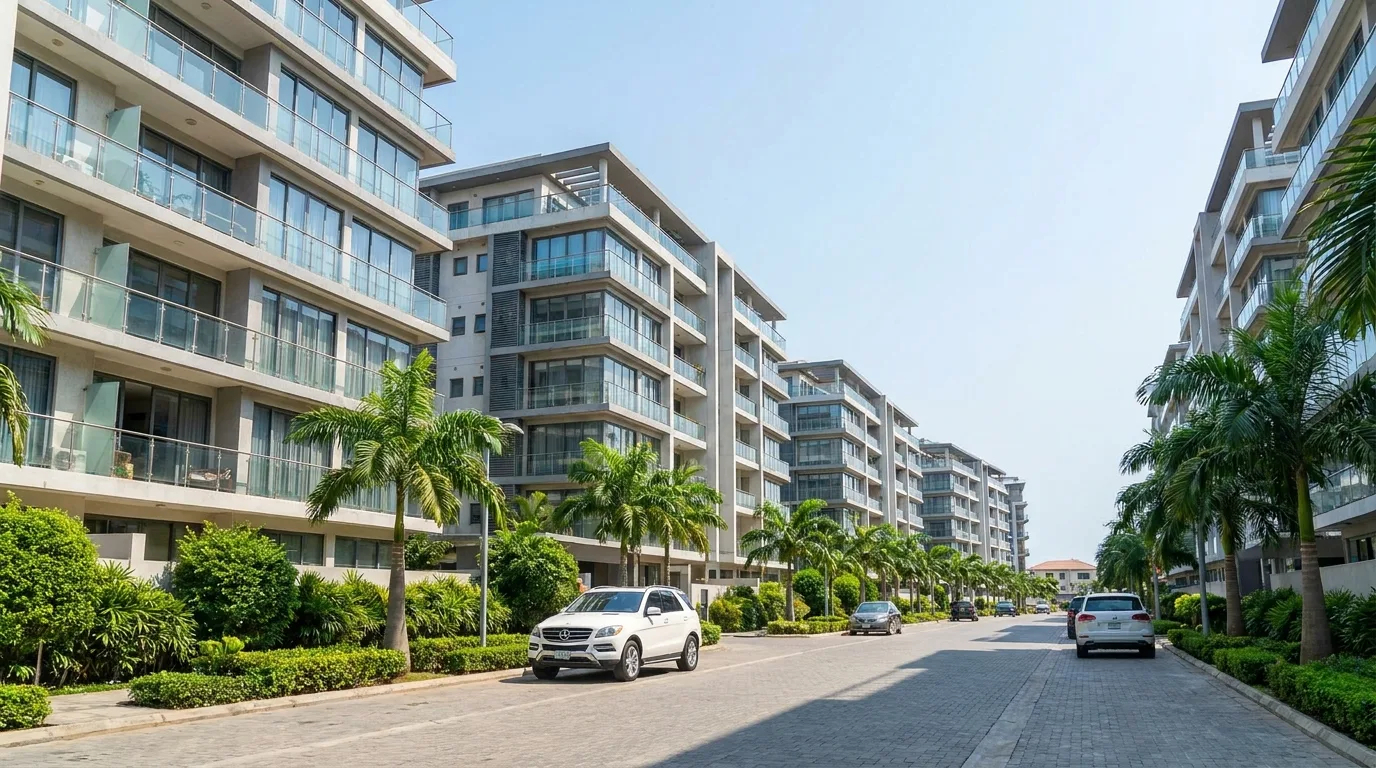
In high-demand districts, apartments combine rental income with steady appreciation.
An apartment is a working asset: it starts producing rent from the day a tenant moves in. In high-demand areas of Lagos and Abuja, residential yields are attractive, and the rise of short-let and serviced apartments has pushed returns even higher for well-managed units. Rental income also adjusts over time, offering some protection against inflation.
Financing is another advantage: banks are far more willing to mortgage a finished apartment than a bare plot, and developers offer payment plans on new builds. If you need credit to invest, our overview of mortgage and home loan options in Nigeria explains what lenders expect.
The trade-offs: a much higher entry price, ongoing costs (maintenance, service charges, agent fees, periods without a tenant) and the physical ageing of the building itself. Buying off-plan can lower the ticket, but it introduces delivery risk - check our guide on what to verify before paying for off-plan property in Nigeria before committing.
Land vs apartment: the side-by-side comparison
| Criterion |
Land |
Apartment |
| Entry cost |
Low to moderate |
High |
| Income while holding |
None |
Rent from day one |
| Appreciation potential |
High in growth corridors |
Steady in prime districts |
| Running costs |
Minimal |
Maintenance, service charge, vacancies |
| Liquidity |
Low to moderate |
Moderate to high in demand areas |
| Financing |
Hard to mortgage |
Mortgage and payment plans available |
| Main risk |
Title fraud, disputes, slow resale |
Vacancy, maintenance, delivery risk off-plan |
Read the table through the lens of your own situation: the "best" investment is simply the one whose strengths match your goals and whose risks you can absorb.
How to decide: match the investment to your profile

Budget, time horizon and need for income - not the sales pitch - should drive the decision.
There is no universal winner, but there are clear profiles:
-
Limited capital, long horizon: land in a documented, fast-developing corridor gives your money room to grow while you build savings.
-
Stronger capital, need for income: an apartment in a high-demand district compounds wealth faster through rent plus appreciation.
-
Diaspora or busy professionals: apartments managed by a professional agency provide income with less day-to-day involvement; raw land demands more vigilance against encroachment.
-
Builders and developers at heart: land you later develop captures both the appreciation of the plot and the value you add.
Location weighs as much as asset type: a mediocre asset in a great location often beats a great asset in a dead one. Compare districts before choosing - our guide to the best areas to buy property in Lagos is a good starting point.
Finally, whichever side you lean towards, buy through registered real estate professionals and insist on full due diligence. Many seasoned investors end up doing both in sequence: an affordable plot first, then a rental apartment once income becomes the priority - diversification is the quiet winner of this debate.
Frequently asked questions
Is land a good investment in Nigeria?
Yes, when the title is clean and the location sits in a genuine growth corridor. Land offers low entry cost, minimal holding expenses and strong appreciation potential. Its main drawbacks are the absence of income and higher exposure to title fraud, which full due diligence can control.
Which is more profitable, land or an apartment?
Over long periods, well-located land often shows the highest percentage appreciation, while apartments deliver steadier total returns through rent plus moderate appreciation. Profitability depends mostly on location, purchase price and how long you can hold the asset.
What are the biggest risks when buying land in Nigeria?
Fake or incomplete titles, family land sold without proper consent, plots under government acquisition and community disputes. All of them are managed the same way: an independent search at the state land registry, a confirmed survey plan and a registered deed before any payment.
Can I get a mortgage to buy an apartment in Nigeria?
Yes. Several Nigerian banks and mortgage institutions finance finished apartments, and developers frequently offer structured payment plans on new projects. Bare land, by contrast, is difficult to mortgage, which is why it is usually bought with cash savings.
Can I invest in both land and an apartment?
That is exactly what many experienced investors do. A common path is to buy affordable land early for long-term growth, then add a rental apartment when capital and the need for income grow. The two assets balance each other: growth on one side, cash flow on the other.