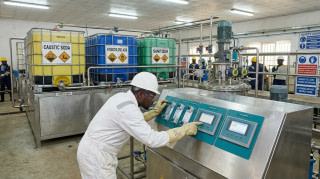
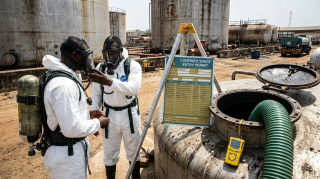
Cold keeps food safe, but it also makes cleaning far harder. In refrigerated warehouses and cold rooms, ordinary cleaners stop working, condensation feeds mould, and Listeria quietly thrives on any surface that is not properly sanitised. Cold storage cleaning is a specialised discipline with its own chemistry, equipment and food-safety rules. Here is what it involves and how to get it right.
Key takeaways
- Cold storage cleaning is a specialised job, not standard warehouse janitorial work.
- It needs low-temperature chemistry, cold-rated equipment and food-safety documentation.
- Listeria and mould thrive in cold, damp conditions, so hygiene is critical.
- Dry ice blasting can clean cold rooms even while they stay in operation.
- HACCP and food-safety compliance make regular, documented cleaning essential.
Why cold storage cleaning is a specialised job
Food warehouses, cold rooms and refrigerated distribution centres keep products safe by staying cold, but that same cold makes cleaning far harder than in an ambient warehouse. Standard cleaning chemistry loses effectiveness below about 45 degrees Fahrenheit, equipment must tolerate freezing conditions, and crews cannot work long shifts without cold-stress breaks.
This is why cold storage cleaning is a distinct branch of industrial cleaning , with its own chemistry, equipment and protocols. It builds on general warehouse cleaning but adds strict food-safety demands.
The challenges of cleaning in the cold
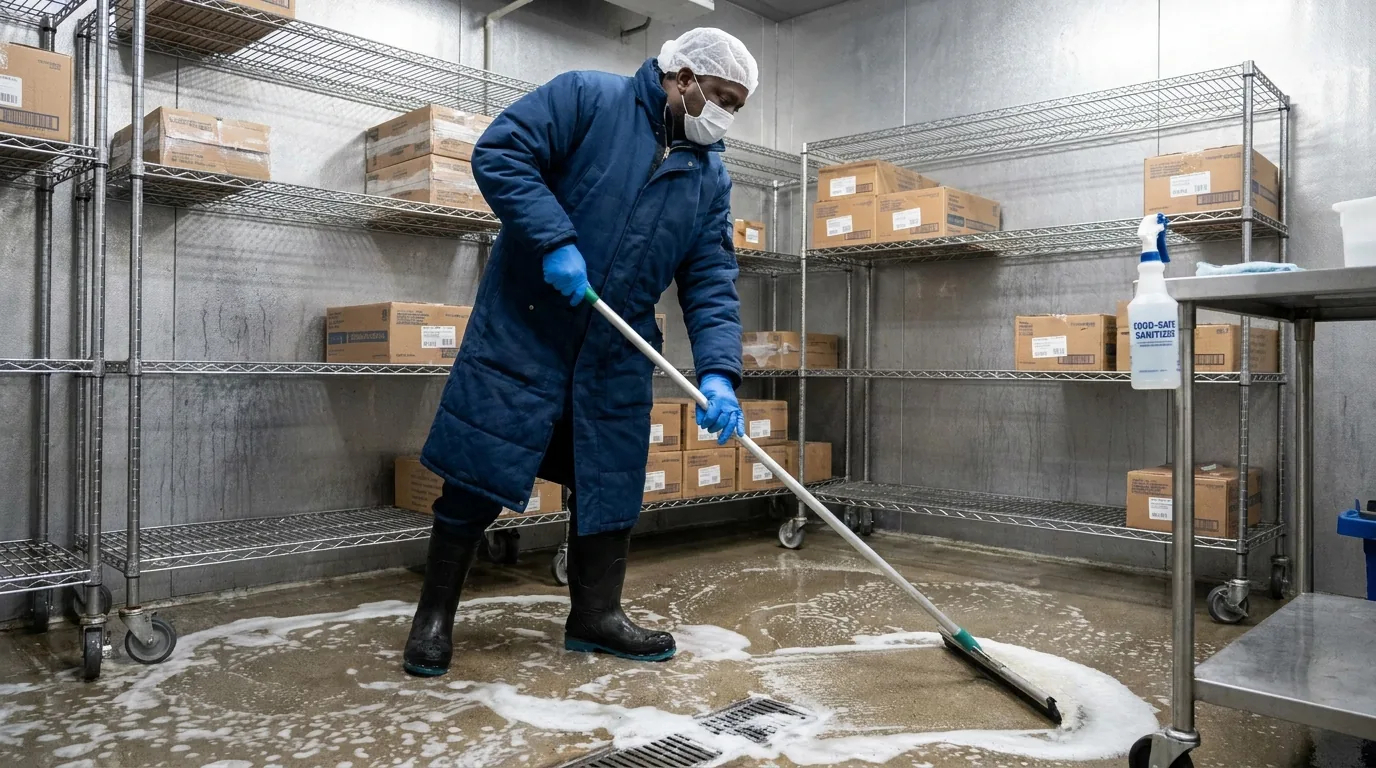
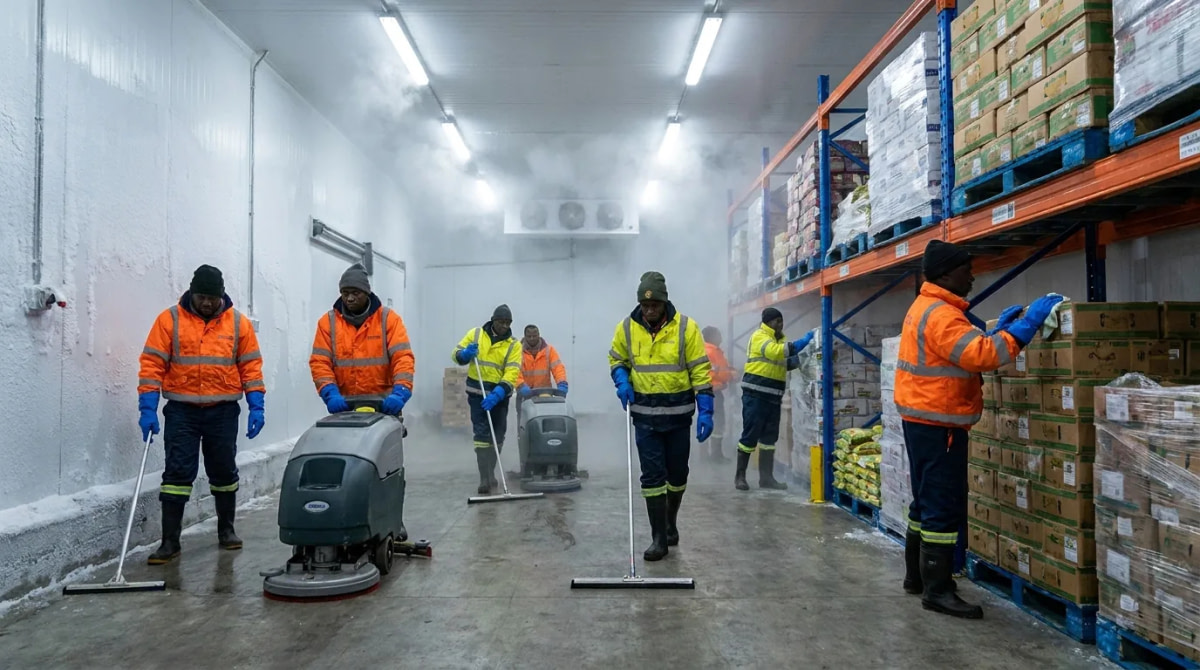
Cold-rated, food-safe chemistry is essential: standard cleaners lose effectiveness below 45°F.
Three factors make cold cleaning uniquely demanding:
-
Low-temperature chemistry: cleaners and sanitizers must stay in solution and remain effective at the room's operating temperature, with a stable pH.
-
Cold-rated equipment: machines and tools must work reliably in freezing conditions.
-
Crew management: rotation schedules protect workers from cold stress.
-
Moisture and condensation: cold rooms are prone to condensation, which feeds mould if surfaces are not properly cleaned and dried.
Ignore any of these and cleaning is not just ineffective, it can spread contamination instead of removing it.
What needs cleaning, and how
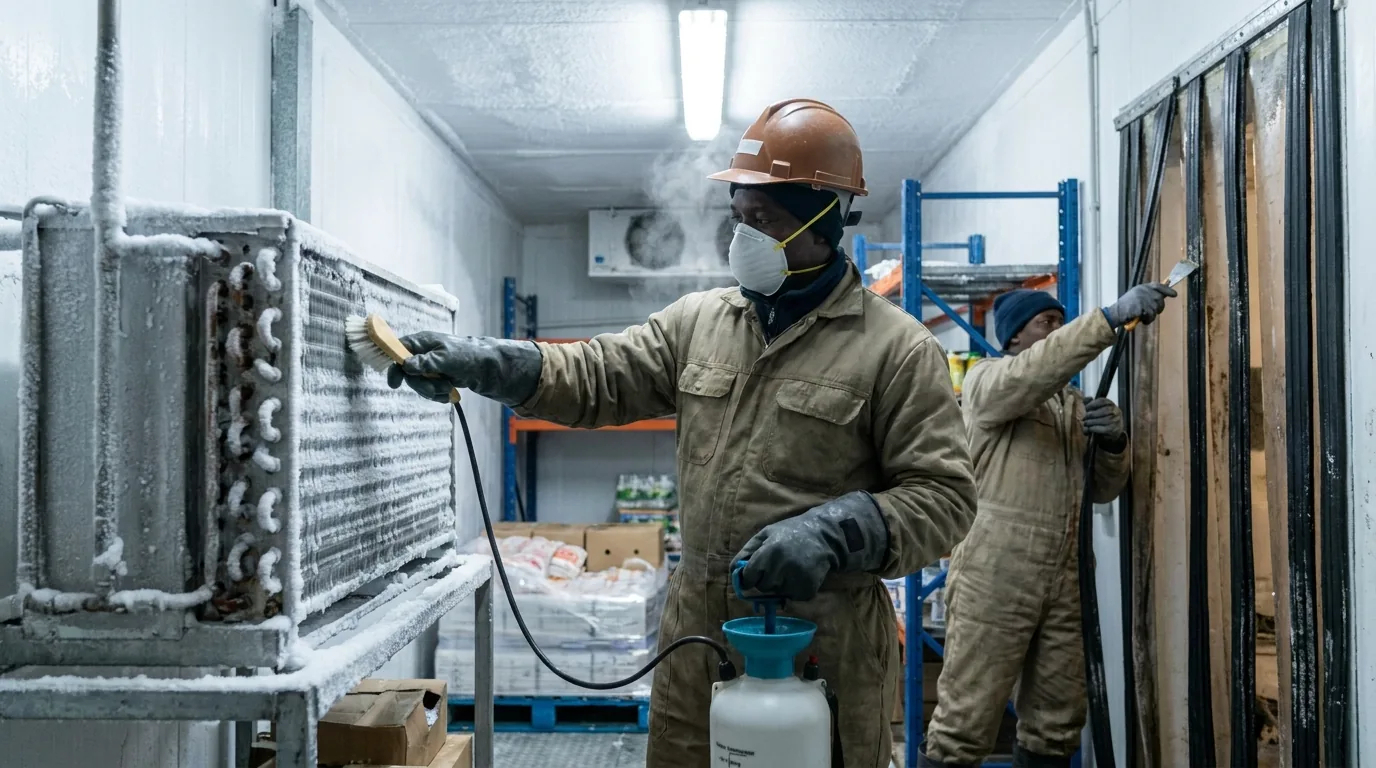
Evaporators, door seals and drains are hotspots for ice, grime and bacteria.
A thorough cold storage clean covers every surface and system:
-
Floors, walls and racking: sanitised with cold-safe, food-grade products.
-
Door seals and strip curtains: common spots for grime and bacteria.
-
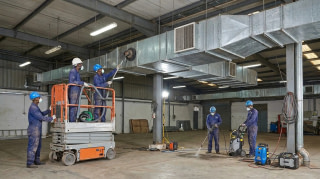
Evaporators, coils and drains: cleaned to prevent ice build-up and mould, linking to broader HVAC and ventilation cleaning .
-
Drainage systems: kept clear to avoid standing water.
For rooms that cannot be shut down, dry ice blasting is ideal: it cleans effectively at low temperatures and leaves no secondary residue, with loosened dirt collected by wet/dry vacuums.
Food safety and compliance
In a food facility, cleaning is a food-safety control, not housekeeping. Cold storage is especially sensitive because Listeria thrives in cold conditions and can persist on poorly cleaned surfaces.
-
HACCP-aligned procedures: cleaning built into the food-safety plan, as in our guide to cleaning in the food industry (HACCP) .
-
Recognised standards: protocols aligned with FSMA, SQF or BRC requirements.
-
Documented results: checklists, sanitising records and daily waste removal.
-
Targeted pathogen control: extra vigilance against Listeria and mould.
Documentation is not paperwork for its own sake: it is the evidence auditors and customers require.
Choosing a provider and setting a schedule
Cold storage cleaning should only go to specialists. Look for a provider that offers:
| Requirement |
Why it matters |
| Cold-rated chemistry and gear |
Effective cleaning at low temperature |
| Food-safety expertise |
HACCP, FSMA, SQF or BRC alignment |
| Pathogen control |
Reliable Listeria and mould management |
| Trained, rotated crews |
Safe, consistent work in the cold |
| Documentation |
Audit-ready records of every clean |
Frequency depends on the product and throughput, but high-risk food areas need regular, scheduled cleaning rather than occasional deep cleans. A specialist can set the right programme after assessing your facility.
Frequently asked questions
Why can't standard cleaners be used in cold storage?
Most cleaning chemistry loses effectiveness and may not stay in solution below about 45 degrees Fahrenheit. Cold storage needs low-temperature, food-safe formulas that remain active and stable at the room's operating temperature.
How is Listeria controlled in cold storage?
Listeria thrives in cold, damp conditions, so surfaces must be thoroughly cleaned and sanitised with effective low-temperature products, moisture controlled, and results documented, following HACCP-aligned procedures.
Can a cold room be cleaned without shutting it down?
Often yes. Dry ice blasting works at low temperatures and leaves no secondary residue, allowing cleaning during operation. Loosened dirt is then collected with wet/dry vacuums.
What standards apply to food warehouse cleaning?
Cleaning should align with HACCP and recognised schemes such as FSMA, SQF or BRC, with documented procedures and records to satisfy auditors and customers.
How often should cold storage be cleaned?
It depends on the product and throughput, but high-risk food areas require regular, scheduled cleaning. A specialist provider sets the frequency after assessing the facility and its risks.