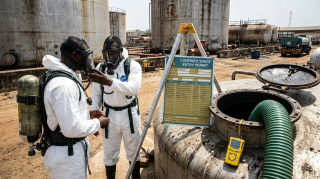
Refineries, tank farms and petrochemical plants run on assets that fill with sludge, scale and toxic residues. Cleaning them is some of the most hazardous work in industry, governed by strict safety and environmental rules. Done right, it protects people, keeps equipment running and avoids costly shutdowns. Here are the methods, the risks and the compliance essentials for industrial cleaning in oil and gas.
Key takeaways
- Oil and gas cleaning removes sludge, scale and hazardous residues from tanks, pipes and equipment.
- Core methods: hydroblasting, vacuum and sludge removal, chemical cleaning, degassing, and robotic cleaning.
- The main risks are confined spaces, toxic gases, oxygen deficiency and flammable atmospheres.
- Compliance relies on permits, gas testing, PPE, trained crews and certified waste disposal.
- Only specialised, certified contractors should handle this high-risk work.
Why oil and gas facilities demand specialised cleaning
Refineries, tank farms, petrochemical plants and pipelines accumulate sludge, scale, hydrocarbons and toxic residues that ordinary cleaning cannot touch. Left untreated, these deposits reduce capacity, corrode equipment, distort readings and create fire and health hazards. Cleaning here is a safety-critical operation, not a cosmetic one.
Specialised industrial cleaning keeps assets running, protects workers and ensures regulatory compliance. It sits at the high-risk end of the discipline covered in our complete guide to industrial cleaning , where methods, risks and standards all converge.
Common cleaning methods in oil and gas
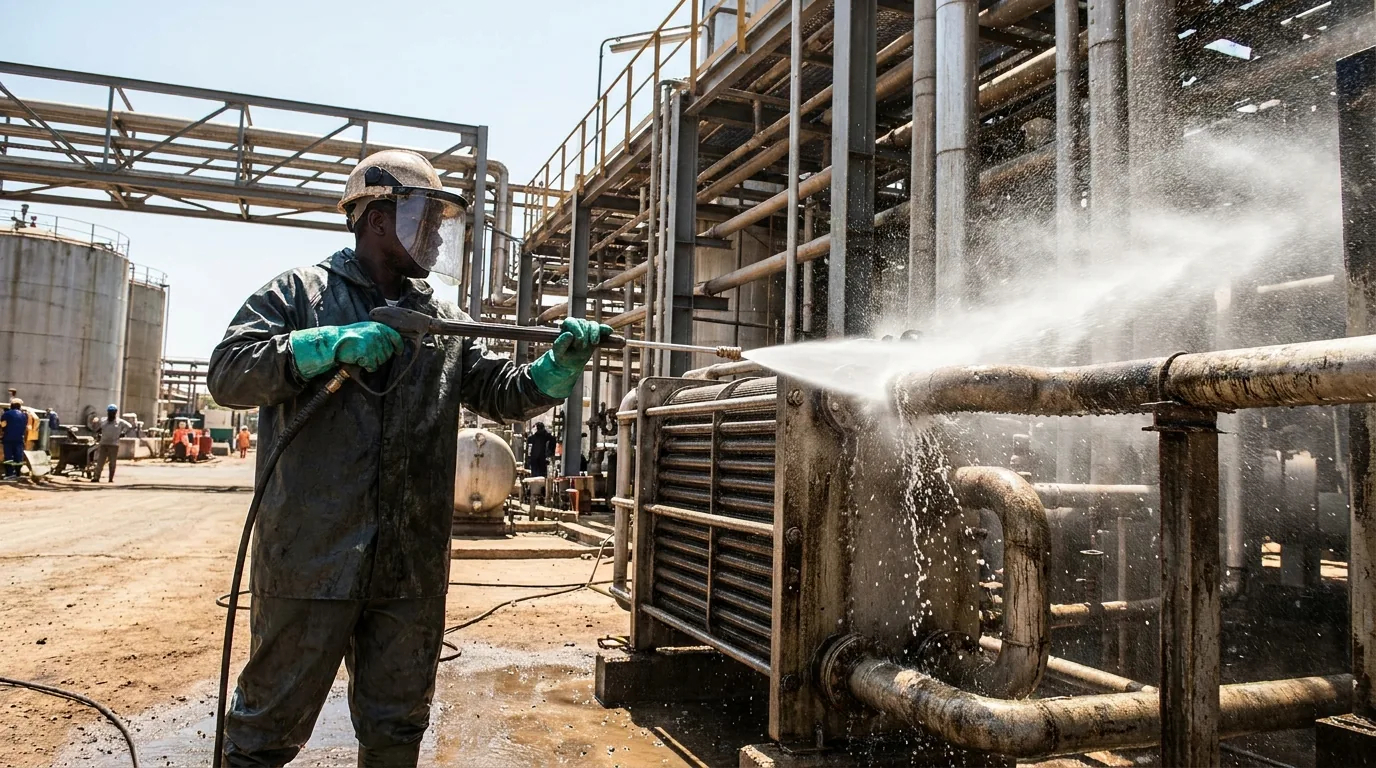
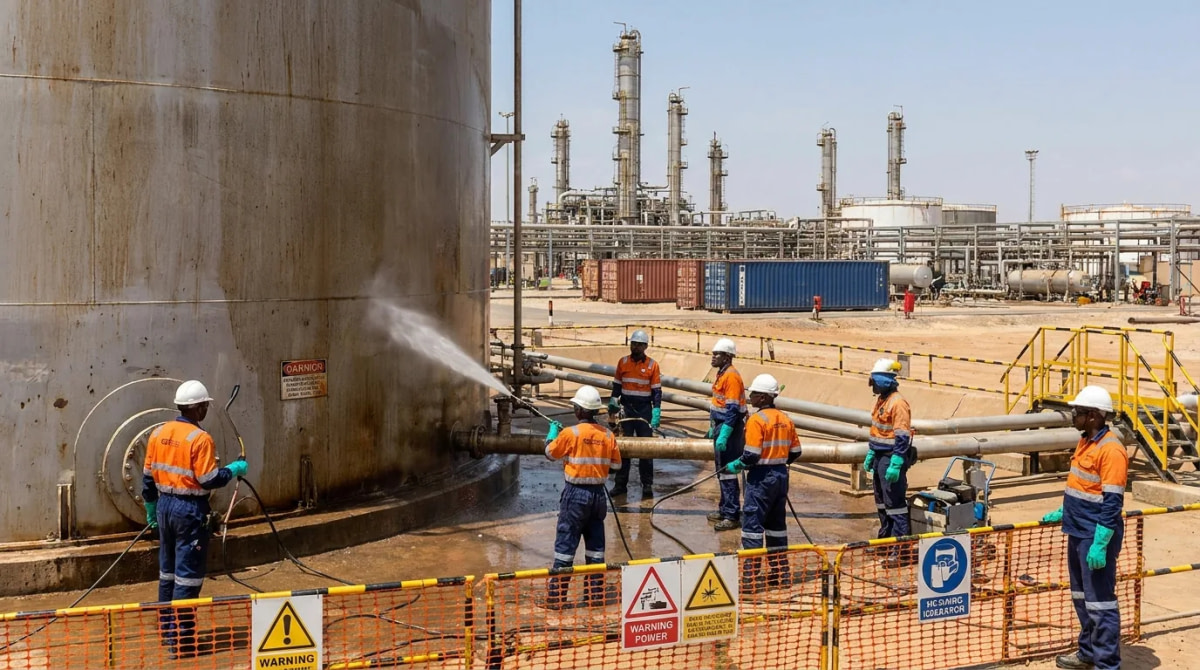
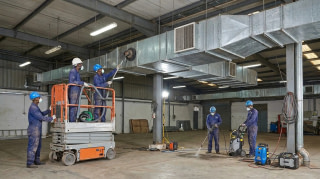
Hydroblasting uses water jets from 200 to 2,800 bar to strip scale and deposits.
Operators rely on a toolkit of proven techniques, often combined:
-
Hydroblasting: high-pressure water jets (200 to 2,800 bar) descale heat exchangers, pipes and tanks. See our guide to high-pressure and hydroblasting cleaning .
-
Vacuum and sludge removal: vacuum trucks extract sludge, slurry and liquid waste from tank bottoms.
-
Chemical cleaning: acid, alkaline or solvent solutions dissolve scale and hydrocarbons, as detailed in our article on industrial chemical cleaning .
-
Degassing: removing flammable and toxic vapours before any entry or hot work.
-
Robotic cleaning: remotely operated machines clean tanks and pipes without sending workers into hazardous spaces.
The right combination depends on the asset, the residue and the level of risk involved.
The risks: confined spaces and hazardous atmospheres
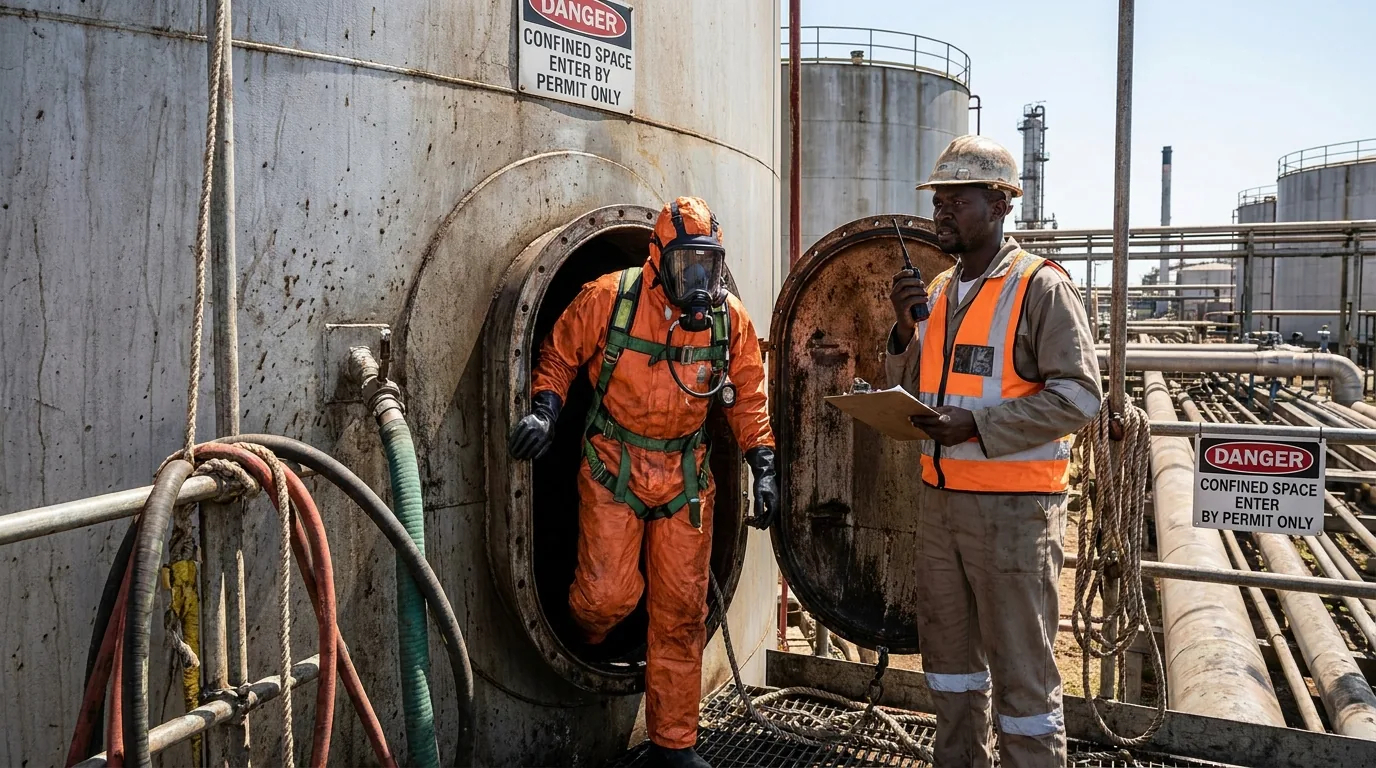
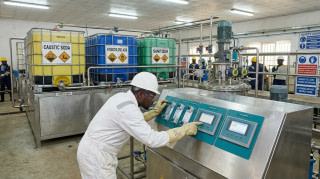
Confined-space entry requires gas testing, an attendant and strict permits.
Oil and gas cleaning is among the most dangerous work in industry. Tanks, vessels and pipelines are confined spaces with limited access, poor ventilation and the potential for hazardous atmospheres.
-
Toxic gases: hydrogen sulphide, polycyclic aromatic hydrocarbons, formaldehyde and lead compounds are common.
-
Oxygen deficiency: confined spaces can be fatally low in oxygen.
-
Flammability: residual hydrocarbons and vapours create explosion risk.
-
Physical hazards: high-pressure jets, slips and restricted egress.
These dangers are exactly why dedicated tank and confined-space cleaning protocols exist, and why this work is never improvised.
Safety and compliance essentials
Compliance is built into every step. Before and during the job, expect:
| Requirement |
Purpose |
| Work permits and isolation |
Lock out energy and authorise the task |
| Gas testing and degassing |
Confirm a safe atmosphere before entry |
| PPE and respiratory protection |
Protect against gases and chemicals |
| Confined-space attendant |
Monitor and enable rescue |
| Certified waste disposal |
Handle hazardous residues legally |
Crews should hold recognised certifications such as HAZWOPER and confined-space training. Where possible, robotic and non-entry methods are preferred because they remove people from the danger zone altogether.
Choosing a qualified contractor
This is not work for a general cleaning company. Before engaging a provider, verify:
-
Proven oil and gas experience with references on similar assets.
-
Certified, trained crews (HAZWOPER, confined space) and a strong safety record.
-
Proper equipment: hydroblasting units, vacuum trucks, gas detectors and rescue gear.
-
Compliant waste management for hazardous residues.
Across hubs like Lagos, Port Harcourt, Accra, Nairobi and Johannesburg, comparing specialised contractors and checking their certifications is the only safe way to choose.
Frequently asked questions
What methods are used to clean oil and gas tanks?
Common methods include hydroblasting, vacuum and sludge removal, chemical cleaning, degassing and robotic cleaning. They are often combined depending on the tank, the residue and the safety constraints.
Why is oil and gas cleaning so hazardous?
Tanks and pipelines are confined spaces that can contain toxic gases, low oxygen and flammable vapours. Without gas testing, permits and proper PPE, entry can be fatal, which is why specialised protocols are mandatory.
Can tanks be cleaned without human entry?
Increasingly, yes. Robotic and non-entry methods use remotely operated machines to clean tanks and pipes, removing workers from the most dangerous part of the job while improving consistency.
What certifications should a cleaning crew have?
Recognised qualifications such as HAZWOPER and confined-space training validate that operators can handle hazardous materials and dangerous environments. Always confirm certifications before work begins.
How is hazardous cleaning waste handled?
Sludge, contaminated water and residues are collected and disposed of through certified hazardous-waste channels, in line with environmental regulations, not released on site.