A clean factory is not just about appearances. For manufacturers, cleaning directly affects equipment uptime, product quality, worker safety and the ability to pass audits. Yet not every cleaning company is equipped for the demands of a production plant. Here is what factory cleaning services really involve, and what manufacturers should expect from a professional industrial cleaning partner.
Key takeaways
- Factory cleaning is specialised work: it protects uptime, product quality, safety and compliance.
- Expect production-line and machinery degreasing, floor care, high-level dusting and waste handling.
- A good provider delivers a customised scope, trained and insured teams, and cleaning around production.
- The right schedule mixes daily upkeep with weekly, monthly and periodic deep cleans.
- Always check references, safety record, insurance and the ability to handle hazardous waste.
Why factory cleaning is not ordinary janitorial work
A manufacturing plant is a demanding environment: production lines, heavy machinery, grease and oil, dust, chemical residues and strict deadlines. General office cleaning cannot cope with it. Poor cleaning means more breakdowns, contaminated products, safety incidents and failed audits.
Done well, industrial cleaning keeps equipment running, protects product quality and keeps the plant compliant with health and safety rules. It is an investment in uptime, not just appearance. For the full landscape of methods, see our complete guide to industrial cleaning .
The services to expect from an industrial cleaning company
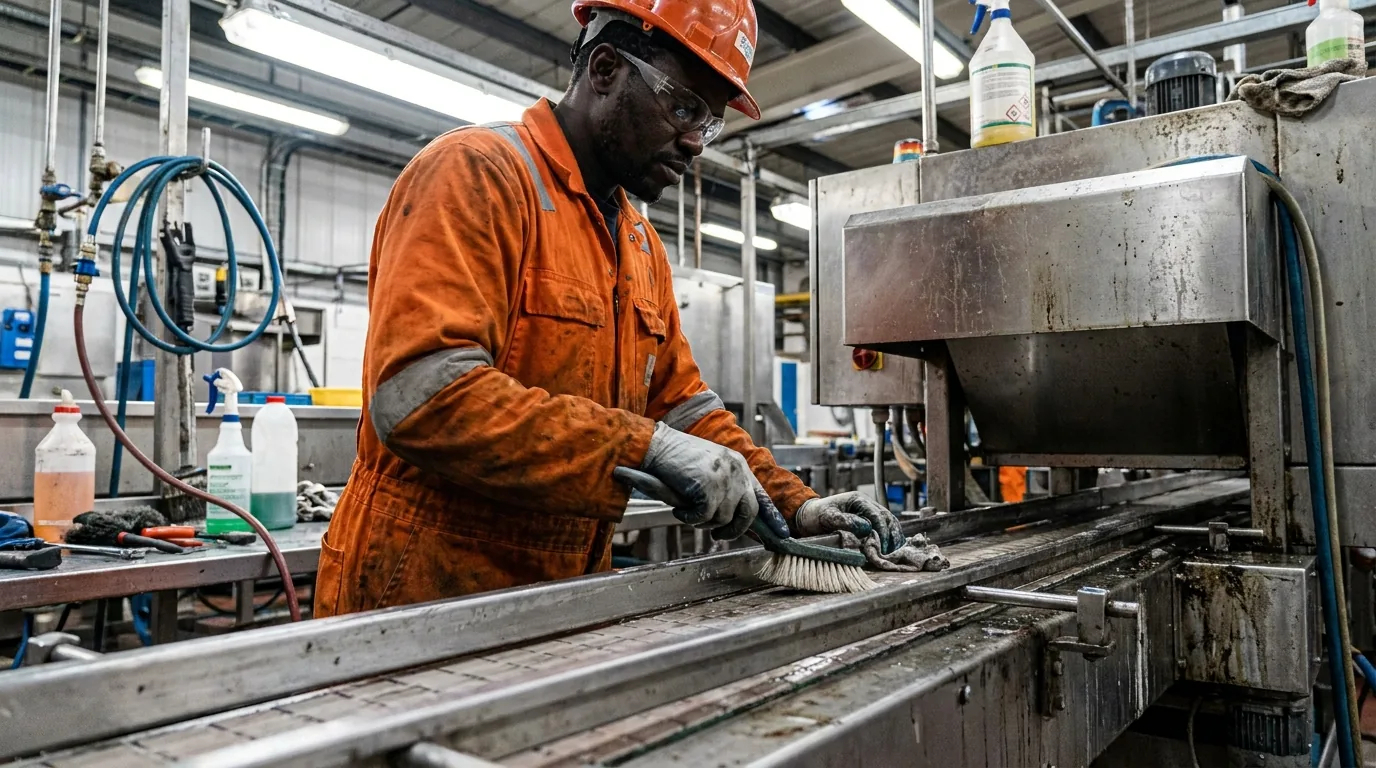
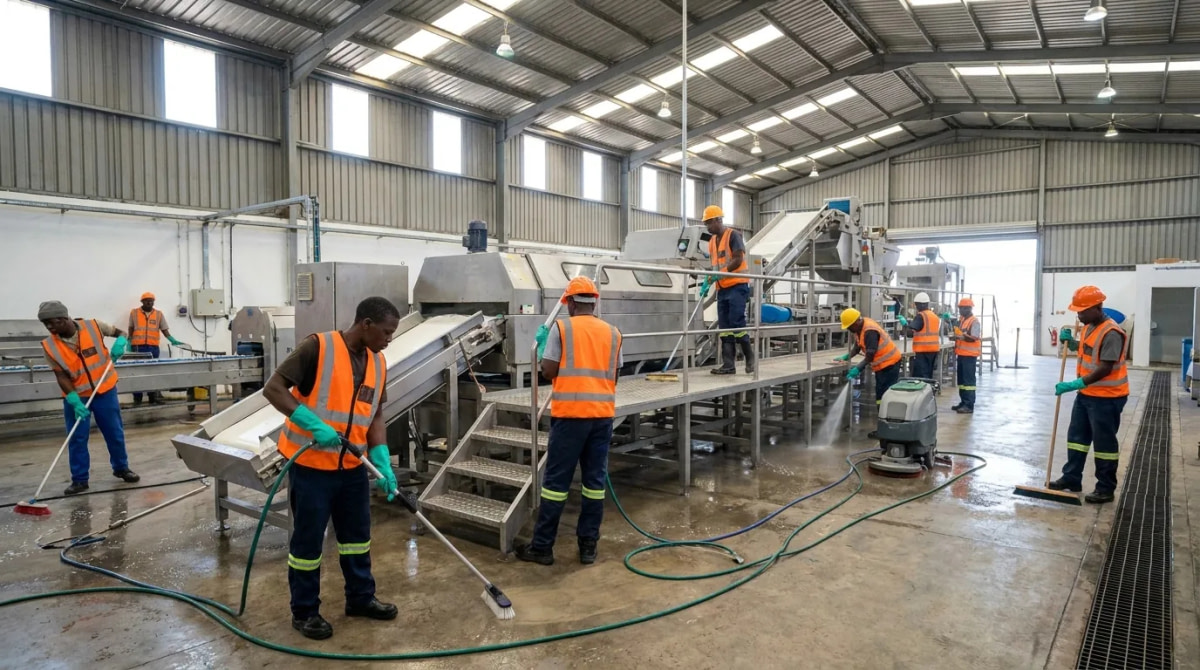
Degreasing production lines and machinery helps maintain efficiency and reduce breakdowns.
A capable provider should offer a complete package tailored to manufacturing:
-
Production line and machinery cleaning: degreasing and removing oil, dust and residues to keep equipment efficient.
-
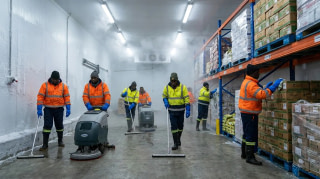
Floor care: scrubbing, degreasing, sealing and, where relevant, stripping and re-coating industrial floors.
-
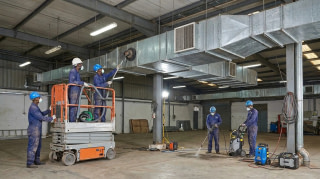
High-level cleaning: dusting beams, ducts, lighting and hard-to-reach structures.
-
Washrooms and break areas: hygiene for the workforce.
-
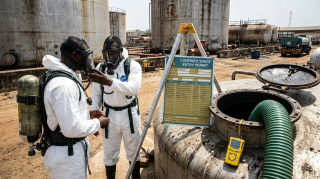
Waste and hazardous residue removal: safe handling and disposal of cleaning and process waste.
-
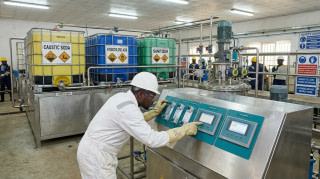
Specialised methods: for heavy grime or process residues, chemical cleaning (acid, alkaline, solvent) may be required.
In food or sensitive production, expect strict hygiene protocols, as detailed in our article on cleaning in the food industry (HACCP) .
What a professional partner brings to the table
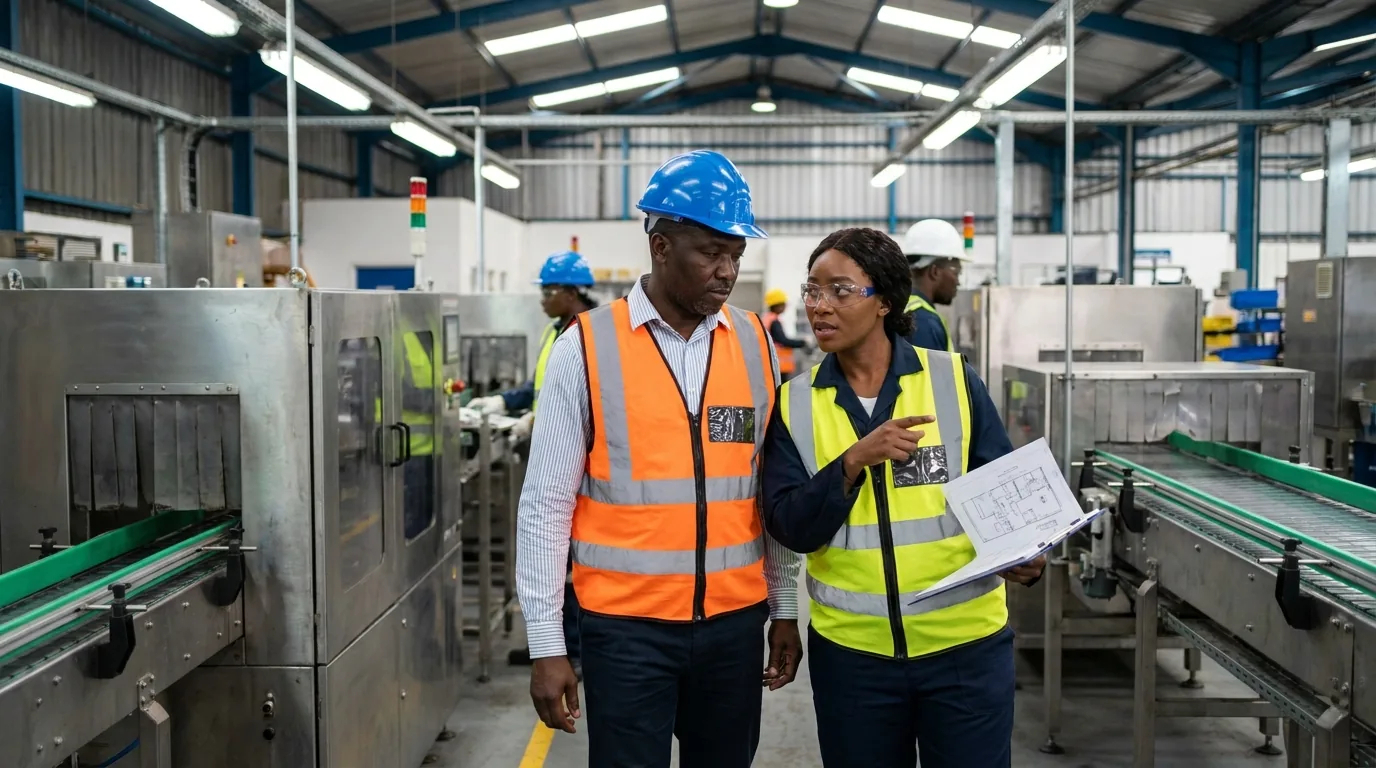
A serious provider starts with a site walkthrough and a customised scope of work.
Beyond the broom, a serious industrial cleaning company should provide:
-
A customised scope of work: a plan built around your layout, equipment and operating hours, not a generic checklist.
-
Trained, insured teams: staff who know machinery, chemicals and safety protocols, with liability cover.
-
Cleaning around production: night, weekend or shift-based work, zone by zone, so output is not disrupted.
-
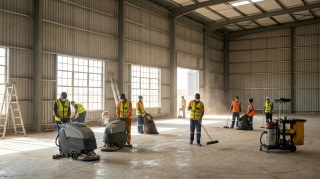
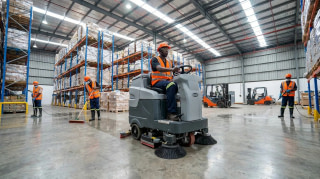
The right equipment: scrubber-dryers, high-level vacuums, pressure washers and the correct cleaning agents.
-
Reporting and consistency: clear schedules, checklists and accountability for the results.
The same rigour applies to connected facilities such as storage sites, covered in our guide to warehouse and distribution center cleaning .
Cleaning frequency: building the right schedule
There is no single answer; the right rhythm depends on the process, the contaminants and the standards involved:
| Frequency |
Typical scope |
Examples |
| Daily |
High-traffic and critical areas |
Floors, key machines, washrooms |
| Weekly |
General maintenance |
Wider floor care, less critical zones |
| Monthly |
Deeper cleaning and inspection |
Machinery detail, high-level dusting |
| Quarterly or annual |
Full facility deep clean |
Ducts, structures, floor re-coating |
A good provider helps you design this schedule rather than selling a one-size-fits-all contract.
How to choose the right cleaning company
Before signing, run through a short checklist:
-
Track record in machining and manufacturing environments, with references.
-
Safety and insurance: trained staff, PPE, liability cover and the ability to handle hazardous waste.
-
Flexibility: willingness to work around your production calendar.
-
Transparency: a detailed quote, a clear scope and measurable deliverables.
Across Lagos, Accra, Nairobi and Johannesburg, comparing several providers and requesting site visits is the surest way to find a partner that fits your plant.
Frequently asked questions
What is included in factory cleaning services?
Typically production-line and machinery degreasing, industrial floor care, high-level dusting, washrooms, and waste or hazardous residue removal. The exact scope is customised to the plant, its equipment and the products made.
Can a factory be cleaned without stopping production?
Yes. Experienced providers schedule work at night, on weekends or around shifts and clean zone by zone, so manufacturing continues with minimal disruption.
How often should a manufacturing plant be cleaned?
Critical and high-traffic areas usually need daily cleaning, with weekly and monthly maintenance and quarterly or annual deep cleans. The process and hygiene standards dictate the schedule.
Why not just use in-house staff?
Factory cleaning requires specialised machines, the right chemicals and trained, insured teams that follow safety protocols. A dedicated provider delivers safer, more consistent results and frees your staff for production.
What should I check before hiring a provider?
References in manufacturing, safety and insurance documents, the ability to handle hazardous waste, flexibility around your schedule, and a transparent, detailed quote and scope of work.