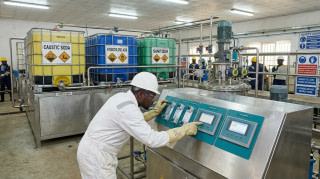
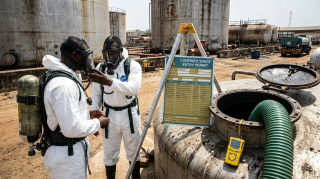
Power plants live and die by efficiency, and nothing erodes it faster than the scale, ash and carbon that build up on boilers, turbines and condensers. Cleaning these assets is highly technical work, carried out under tight shutdown schedules and strict safety rules. Here is how industrial cleaning keeps power plants and energy facilities running at peak performance.
Key takeaways
- Deposits like scale, fly ash and carbon cut power plant efficiency and reliability.
- Boiler and heat-exchanger cleaning combines mechanical brushing, chemical descaling and hydro-jetting.
- Turbines and sensitive parts are often cleaned with dry ice blasting, with no disassembly.
- Most deep cleaning happens during planned shutdowns and turnarounds.
- Strict safety, permits and certified crews are non-negotiable in energy facilities.
Why power plants need specialised cleaning
Power generation equipment continuously accumulates scale, fly ash, carbon and combustion by-products across boilers, turbines, condensers, cooling systems and ductwork. These deposits insulate heat-transfer surfaces, restrict flow and force the plant to burn more fuel for the same output. Left unchecked, they cut efficiency, trigger breakdowns and shorten asset life.
Specialised industrial cleaning restores performance and protects safety. It is one of the most technical fields in the discipline covered by our complete guide to industrial cleaning , demanding the right method for each component.
Boiler and heat exchanger cleaning
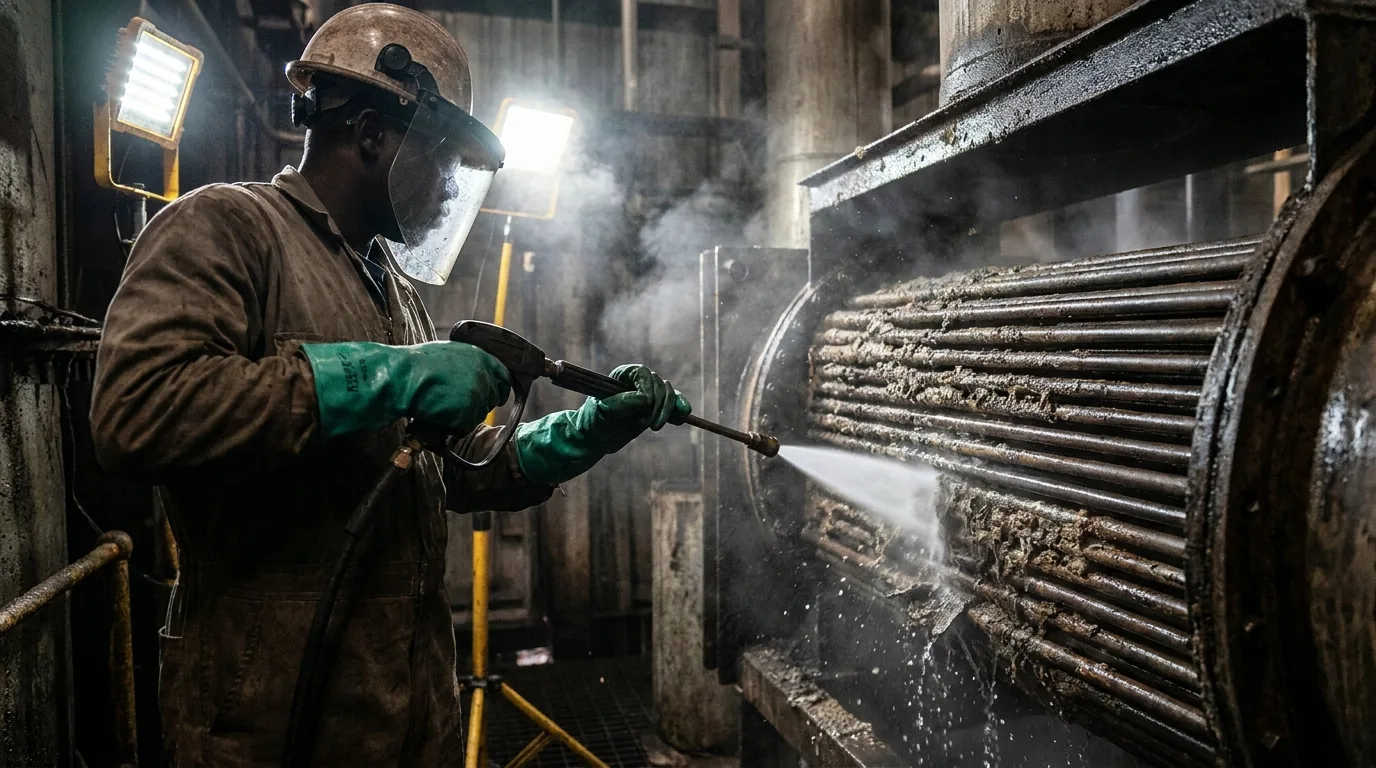
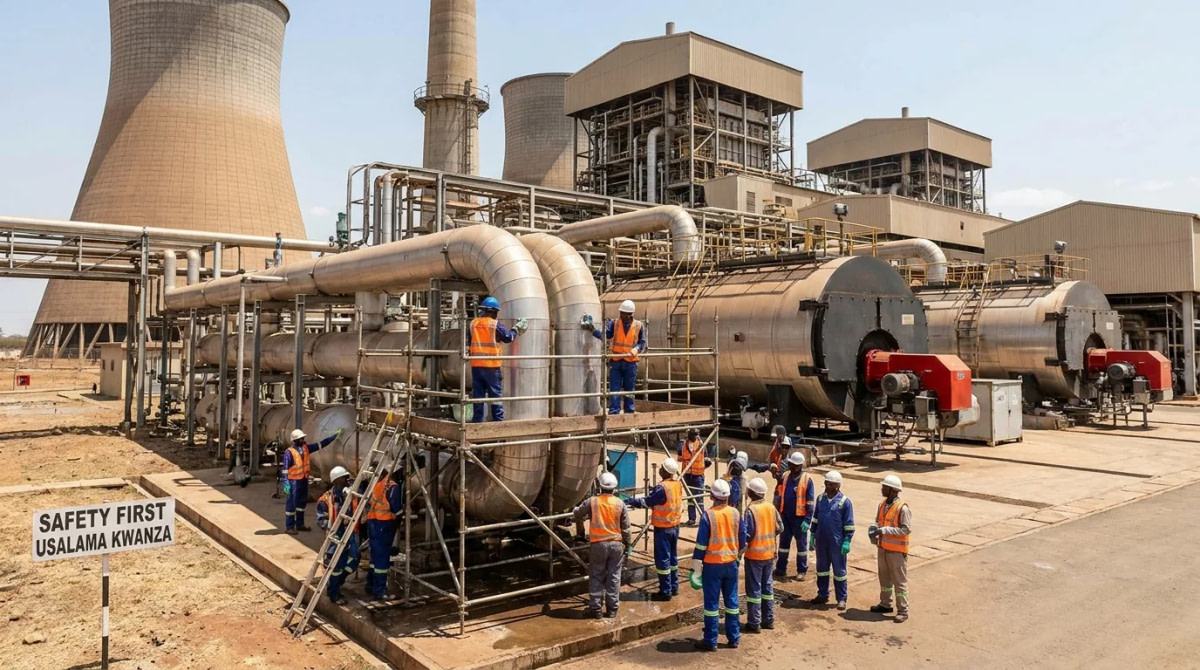
Boiler tubes are cleaned by combining mechanical brushing, chemical descaling and hydro-jetting.
Boilers and heat exchangers are the heart of a thermal plant, and the most prone to scaling. Cleaning them usually combines three approaches:
-
Mechanical cleaning: rotating wire brushes or nylon scrapers on flexible shafts fed through the tubes.
-
Chemical descaling: acid or alkaline solutions dissolve mineral scale, as covered in our article on industrial chemical cleaning .
-
High-pressure hydro-jetting: water jets blast deposits from tube bundles, detailed in our guide to high-pressure and hydroblasting cleaning .
Prevention matters too: strict feedwater treatment with softeners and reverse osmosis reduces scale formation between cleanings.
Turbine and equipment cleaning
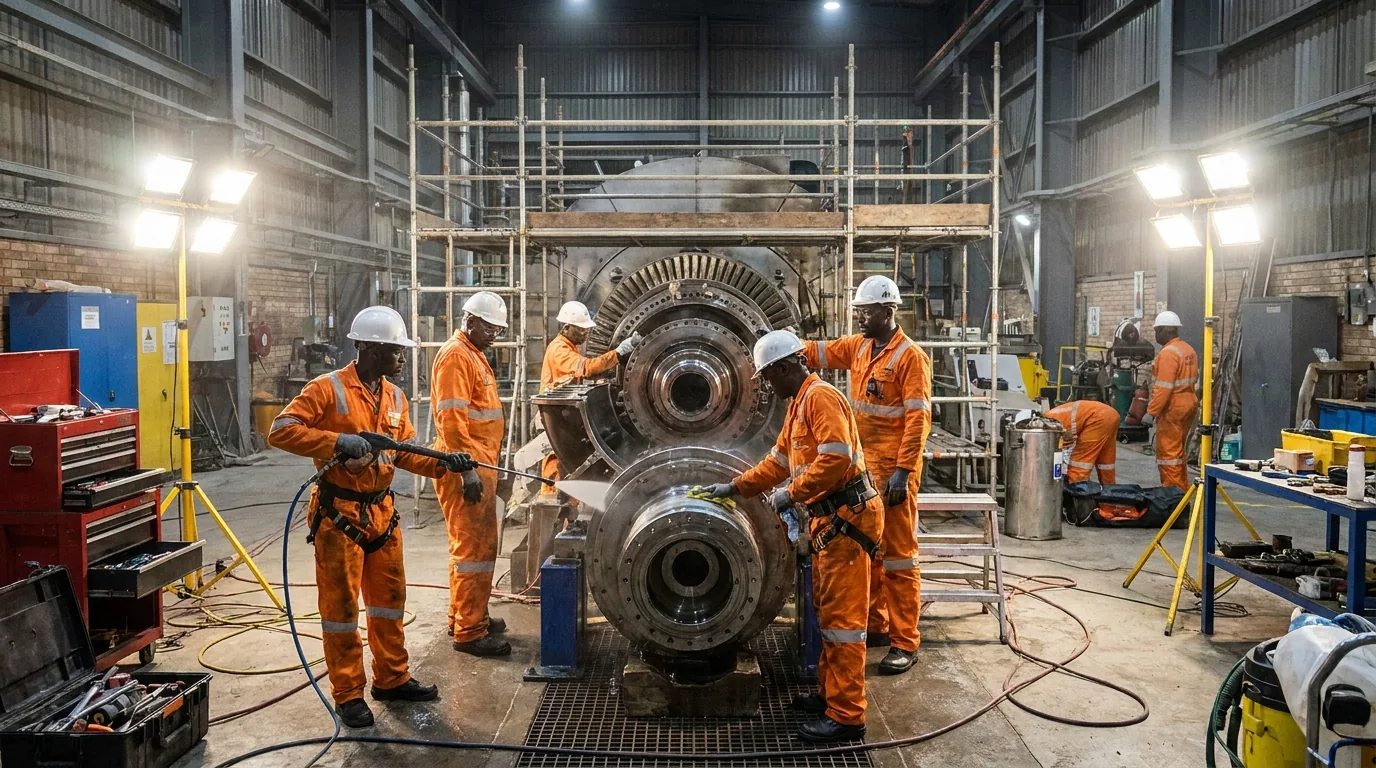
Turbines and sensitive parts are often cleaned with dry ice blasting during outages.
Turbines and delicate components need gentler, residue-free methods. Dry ice blasting is widely used: it cleans turbine runners, blades, draft tubes and penstocks without water, abrasives or disassembly, restoring efficiency while protecting surfaces. Compare it with other techniques in our article on dry ice blasting vs abrasive cleaning .
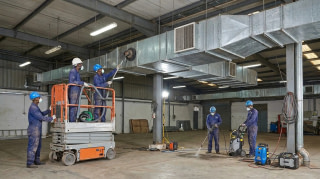
Beyond turbines, cleaning routinely covers condensers, cooling systems, air-intake systems, ductwork, baghouses and balance-of-plant equipment, each restored to keep the whole plant efficient.
Shutdown and turnaround cleaning
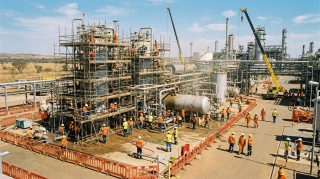
Most deep cleaning cannot happen while a plant is running. It is scheduled during planned shutdowns or turnarounds, when units are taken offline for inspection and maintenance. These windows are tightly planned because every extra hour offline costs generation.
Cleaning contractors therefore work fast, around the clock and in coordination with other maintenance teams, to clean boilers, turbines, condensers and ducts within the outage schedule. The same outage discipline applies in oil and gas facilities , where speed and safety must coexist.
Safety, compliance and choosing a provider
Energy facilities combine high voltage, high pressure, confined spaces and hazardous residues. A qualified provider brings:
| Requirement |
Why it matters |
| Permits and lockout/tagout |
Isolate energy before any work |
| Gas testing and ventilation |
Make confined spaces safe to enter |
| Trained, certified crews |
Handle hazards and sensitive equipment |
| Right method per component |
Avoid damaging turbines or tubes |
| Certified waste disposal |
Manage ash, scale and chemicals legally |
Across energy sector hubs in Lagos, Accra, Nairobi and Johannesburg, choose a contractor with proven power-generation references, a strong safety record and the equipment to match your plant.
Frequently asked questions
Why is power plant cleaning important?
Deposits such as scale, fly ash and carbon reduce heat transfer and flow, forcing the plant to use more fuel and raising breakdown risk. Regular cleaning restores efficiency, reliability and equipment life.
How are boiler tubes cleaned?
Through a mix of mechanical brushing, chemical descaling and high-pressure hydro-jetting, chosen according to the type and severity of the deposits. Good feedwater treatment limits scaling between cleanings.
How are turbines cleaned without damage?
Dry ice blasting is a preferred method: it removes deposits without water, abrasives or disassembly, protecting delicate surfaces while restoring efficiency.
When is power plant cleaning carried out?
Most deep cleaning takes place during planned shutdowns or turnarounds, when units are offline. Some methods, such as certain dry ice applications, can be done with minimal downtime.
What safety measures apply?
Energy facilities require permits, lockout/tagout, gas testing, ventilation, trained and certified crews, and compliant disposal of ash, scale and chemical waste.
Sources